PDFTests Originals

Emphatic Structures – Test 1

C1 Advanced GrammarEnglish

This C1 grammar test covers the main emphatic structures in English: it-clefts and wh-clefts, inversion after negative and limiting adverbials, emphatic do, fronting and other intensifying devices. It is designed for advanced learners and for teachers preparing students for C1-level exams. It includes affirmative, negative and question forms.
Questions
30
Time
30 min
PDF
4 pages
Answer key
Included
  • 100% free
  • No sign-up or email
  • Print-ready A4 PDF
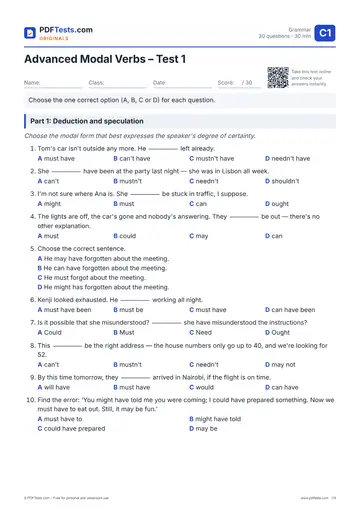
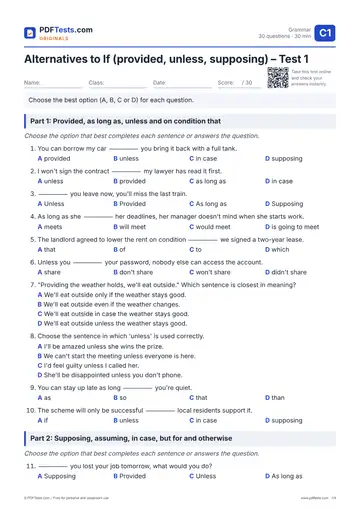
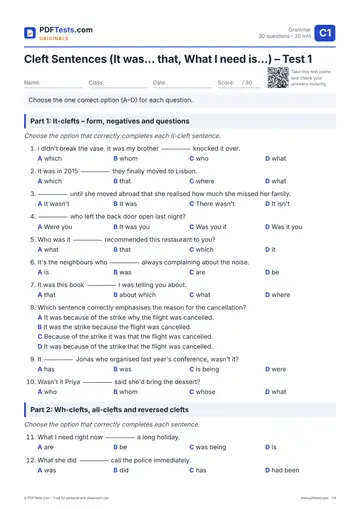
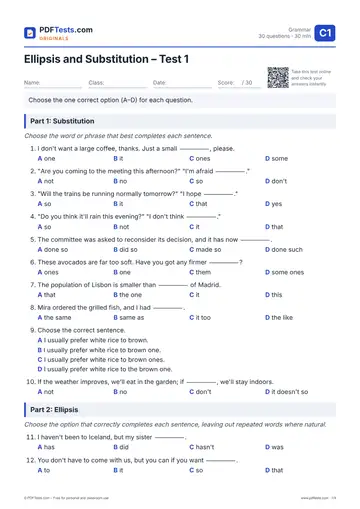
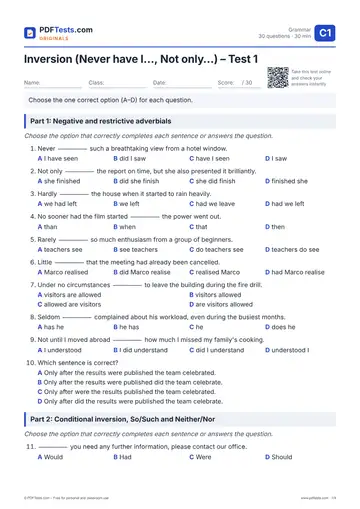
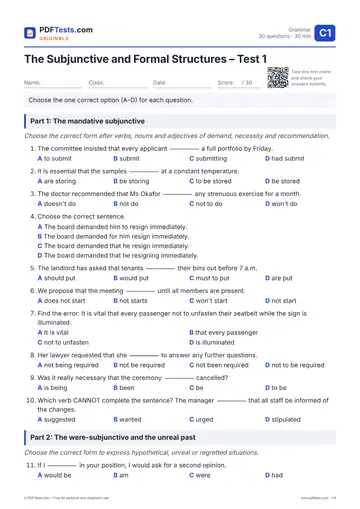
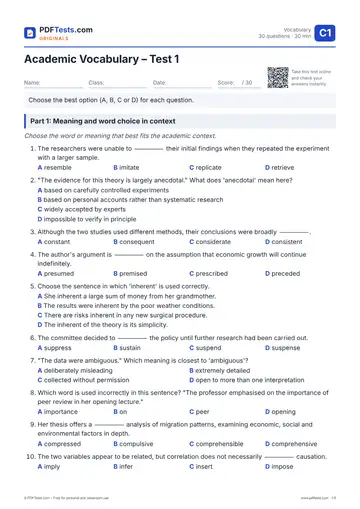
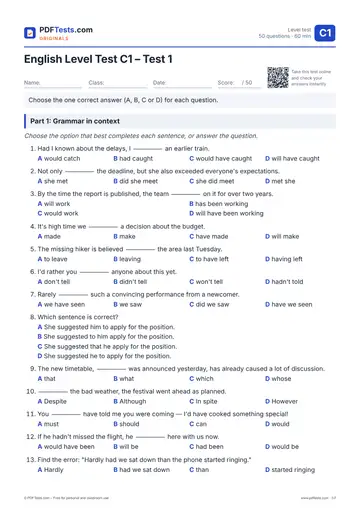
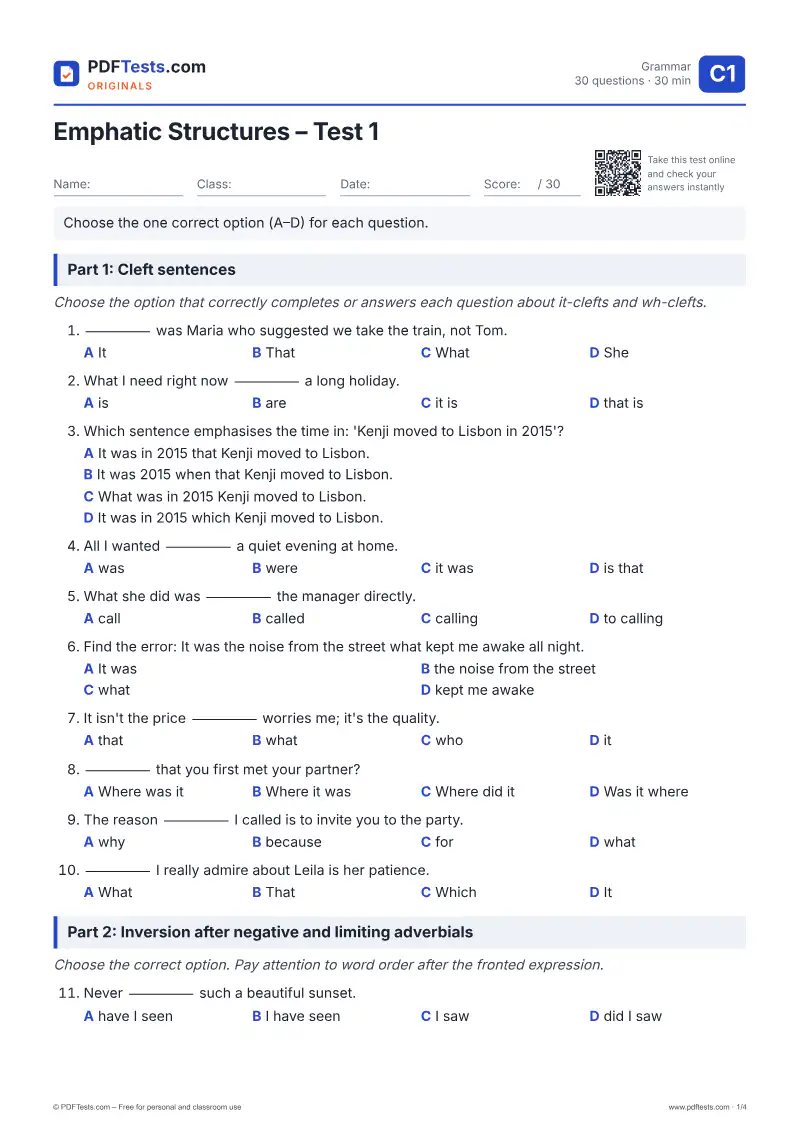
Preview of page 1 of Emphatic Structures – Test 1 Open PDF

Take the test online

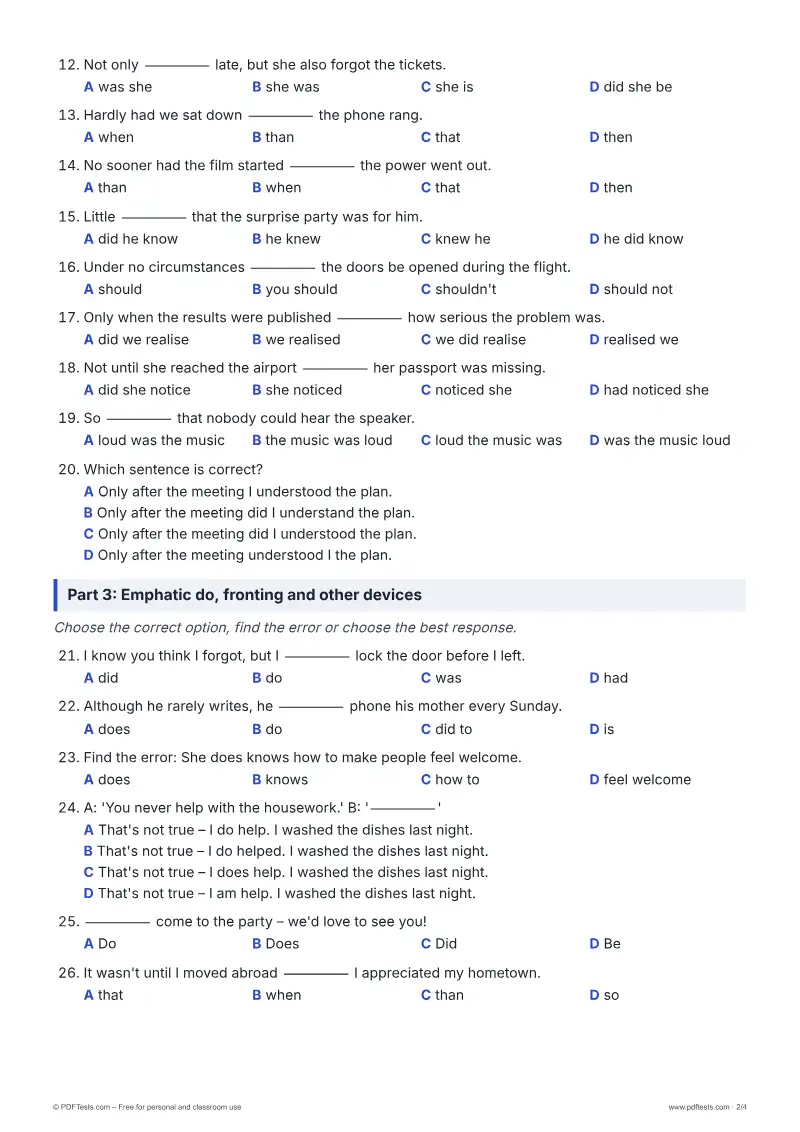
Choose the one correct option (A–D) for each question. Choose your answers, then press “Check my answers”.

Part 1: Cleft sentences

Choose the option that correctly completes or answers each question about it-clefts and wh-clefts.

  1. _____ was Maria who suggested we take the train, not Tom.

  2. What I need right now _____ a long holiday.

  3. Which sentence emphasises the time in: 'Kenji moved to Lisbon in 2015'?

  4. All I wanted _____ a quiet evening at home.

  5. What she did was _____ the manager directly.

  6. Find the error: It was the noise from the street what kept me awake all night.

  7. It isn't the price _____ worries me; it's the quality.

  8. _____ that you first met your partner?

  9. The reason _____ I called is to invite you to the party.

  10. _____ I really admire about Leila is her patience.

Part 2: Inversion after negative and limiting adverbials

Choose the correct option. Pay attention to word order after the fronted expression.

  1. Never _____ such a beautiful sunset.

  2. Not only _____ late, but she also forgot the tickets.

  3. Hardly had we sat down _____ the phone rang.

  4. No sooner had the film started _____ the power went out.

  5. Little _____ that the surprise party was for him.

  6. Under no circumstances _____ the doors be opened during the flight.

  7. Only when the results were published _____ how serious the problem was.

  8. Not until she reached the airport _____ her passport was missing.

  9. So _____ that nobody could hear the speaker.

  10. Which sentence is correct?

Part 3: Emphatic do, fronting and other devices

Choose the correct option, find the error or choose the best response.

  1. I know you think I forgot, but I _____ lock the door before I left.

  2. Although he rarely writes, he _____ phone his mother every Sunday.

  3. Find the error: She does knows how to make people feel welcome.

  4. A: 'You never help with the housework.' B: '_____'

  5. _____ come to the party – we'd love to see you!

  6. It wasn't until I moved abroad _____ I appreciated my hometown.

  7. Which sentence uses fronting correctly for contrast?

  8. What _____ are you doing here at this hour?

  9. The director _____ came to congratulate us after the show.

  10. Find the error: Rarely we have seen such enthusiasm among the students.

Preview

About this test

This C1 grammar test covers the main emphatic structures in English: it-clefts and wh-clefts, inversion after negative and limiting adverbials, emphatic do, fronting and other intensifying devices. It is designed for advanced learners and for teachers preparing students for C1-level exams. It includes affirmative, negative and question forms.

Topics covered

It-cleft sentencesWh-cleft sentencesInversion after negative adverbialsNot only / No sooner / HardlyEmphatic doFronting for contrastIntensifiers and emphatic pronouns

How to use this test

  1. Download the PDF and print it, or take the test online below.
  2. Answer every question without a dictionary or time pressure.
  3. Check your answers and note the topics you need to review.

Notes for teachers

Use this test after teaching cleft sentences and negative inversion, or as a diagnostic before C1 exam preparation. The distractors target typical advanced-level errors, such as using 'what' instead of 'that' in it-clefts, forgetting auxiliary inversion, mixing 'than' and 'when' after No sooner and Hardly, and adding '-s' or '-ed' to the main verb after emphatic do. As a follow-up, ask students to rewrite a neutral paragraph using at least five different emphatic structures.