PDFTests Originals

Prueba de nivel de inglés C2 – Test 1

C2 Maestría Prueba de nivelInglés

Esta prueba de nivel C2 comprueba si el alumno domina con seguridad el nivel más alto del MCER. Abarca la inversión, el subjuntivo, las condicionales avanzadas, las colocaciones, las expresiones idiomáticas, la formación de palabras, la detección de errores y un texto de lectura exigente. Es ideal para alumnos de nivel avanzado, candidatos a exámenes oficiales y profesores que necesitan una prueba de nivel rápida y fiable.

Preguntas
50
Tiempo
60 min
PDF
7 páginas
Soluciones
Incluidas
  • 100 % gratis
  • Sin registro
  • PDF A4 listo para imprimir
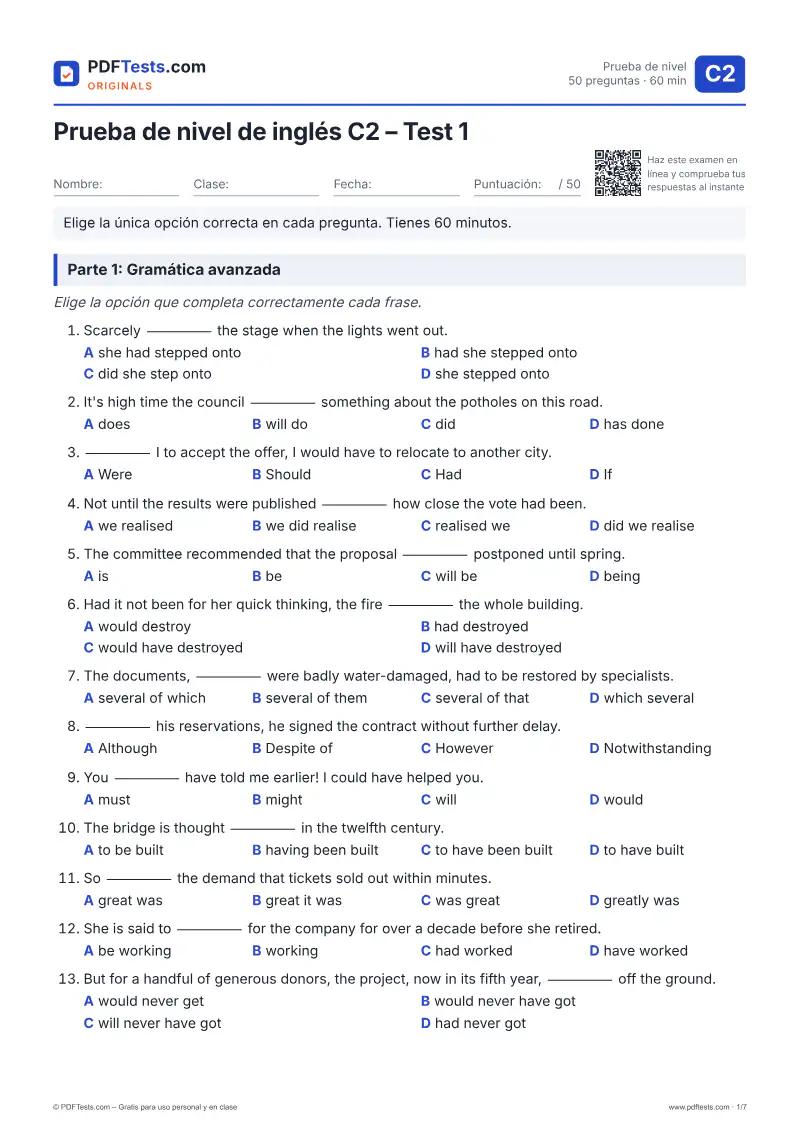
Vista previa de la página 1: Prueba de nivel de inglés C2 – Test 1 Abrir PDF

Haz el examen en línea

Elige la única opción correcta en cada pregunta. Tienes 60 minutos. Elige tus respuestas y pulsa «Comprobar respuestas».

Parte 1: Gramática avanzada

Elige la opción que completa correctamente cada frase.

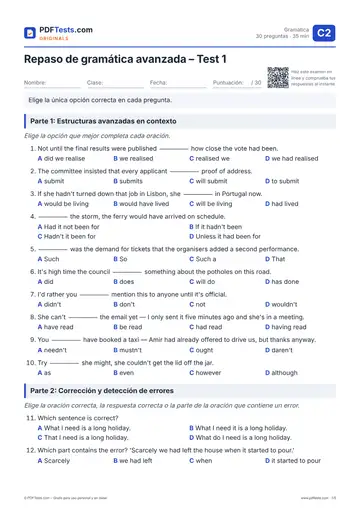
  1. Scarcely _____ the stage when the lights went out.

  2. It's high time the council _____ something about the potholes on this road.

  3. _____ I to accept the offer, I would have to relocate to another city.

  4. Not until the results were published _____ how close the vote had been.

  5. The committee recommended that the proposal _____ postponed until spring.

  6. Had it not been for her quick thinking, the fire _____ the whole building.

  7. The documents, _____ were badly water-damaged, had to be restored by specialists.

  8. _____ his reservations, he signed the contract without further delay.

  9. You _____ have told me earlier! I could have helped you.

  10. The bridge is thought _____ in the twelfth century.

  11. So _____ the demand that tickets sold out within minutes.

  12. She is said to _____ for the company for over a decade before she retired.

  13. But for a handful of generous donors, the project, now in its fifth year, _____ off the ground.

  14. The more I learn about the issue, _____.

  15. Try as she _____, she couldn't get the lid off the jar.

  16. Rarely _____ such a compelling debut novel.

Parte 2: Vocabulario, colocaciones y expresiones idiomáticas

Elige la palabra o expresión que mejor completa cada frase.

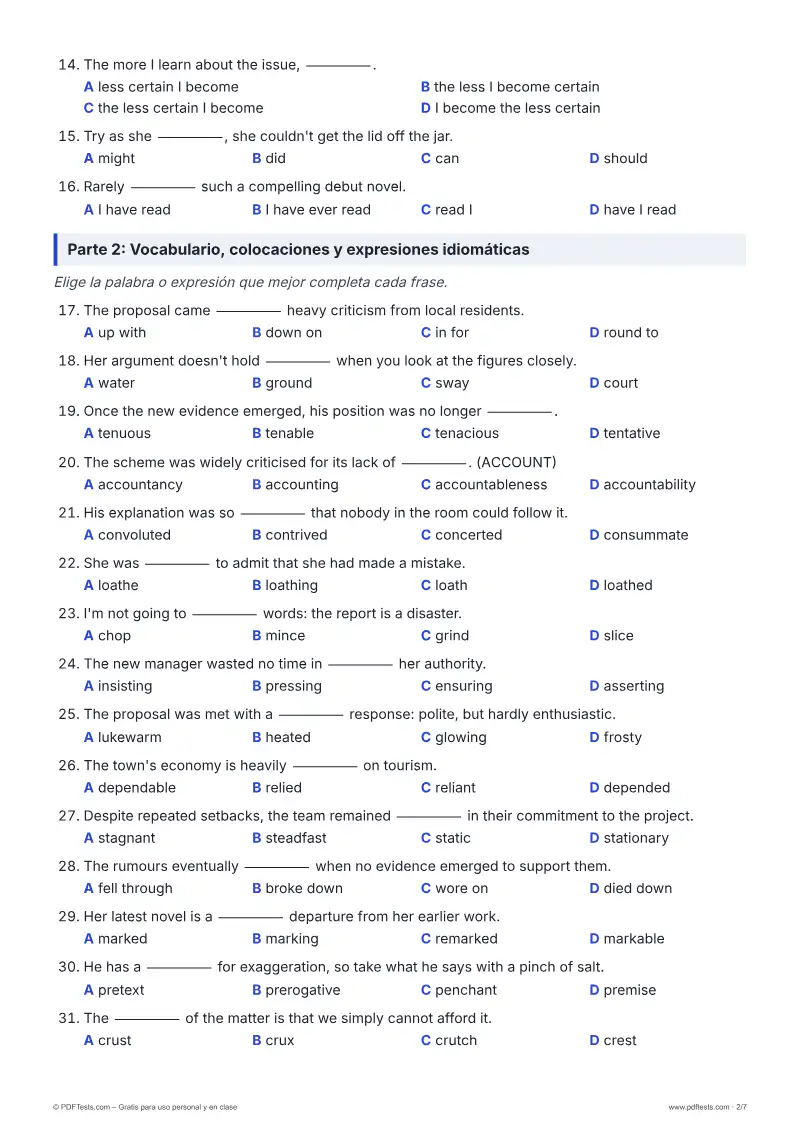
  1. The proposal came _____ heavy criticism from local residents.

  2. Her argument doesn't hold _____ when you look at the figures closely.

  3. Once the new evidence emerged, his position was no longer _____.

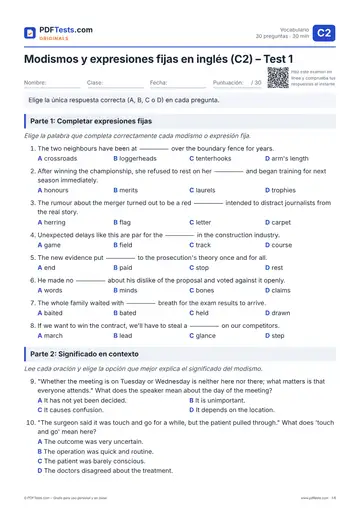
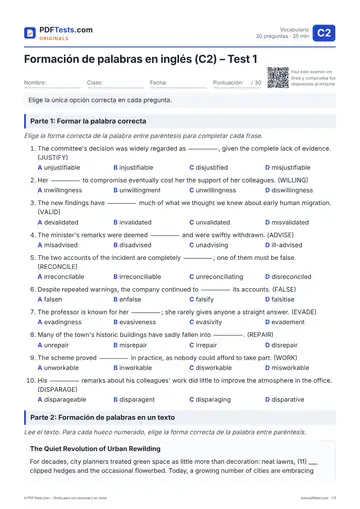
  4. The scheme was widely criticised for its lack of _____. (ACCOUNT)

  5. His explanation was so _____ that nobody in the room could follow it.

  6. She was _____ to admit that she had made a mistake.

  7. I'm not going to _____ words: the report is a disaster.

  8. The new manager wasted no time in _____ her authority.

  9. The proposal was met with a _____ response: polite, but hardly enthusiastic.

  10. The town's economy is heavily _____ on tourism.

  11. Despite repeated setbacks, the team remained _____ in their commitment to the project.

  12. The rumours eventually _____ when no evidence emerged to support them.

  13. Her latest novel is a _____ departure from her earlier work.

  14. He has a _____ for exaggeration, so take what he says with a pinch of salt.

  15. The _____ of the matter is that we simply cannot afford it.

  16. Getting the grant is a long _____, but it's worth applying anyway.

Parte 3: Corrección, detección de errores y paráfrasis

Elige la frase correcta, identifica el error o selecciona la mejor opción, según se indique en cada pregunta.

  1. Which sentence is correct?

  2. Which sentence is incorrect?

  3. Which sentence is correct?

  4. Which word is incorrect? 'The committee, whom many believed was biased, eventually reversed its decision.'

  5. Which part is incorrect? 'Under no circumstances you should open the door to strangers.'

  6. Which sentence is grammatically and logically correct?

  7. Which sentence is closest in meaning to: 'I had no sooner sat down than the phone rang.'?

  8. Which sentence best rephrases: 'It wasn't necessary for you to bring a gift, but it was kind of you.'?

  9. She's not so much a teacher _____ a mentor to her students.

  10. I'd sooner you _____ the decision until we've spoken to the lawyers.

  11. The defendant denied _____ at the scene of the crime.

  12. What _____ me most was her complete lack of remorse.

Parte 4: Comprensión lectora

Lee el texto y elige la mejor respuesta para cada pregunta.

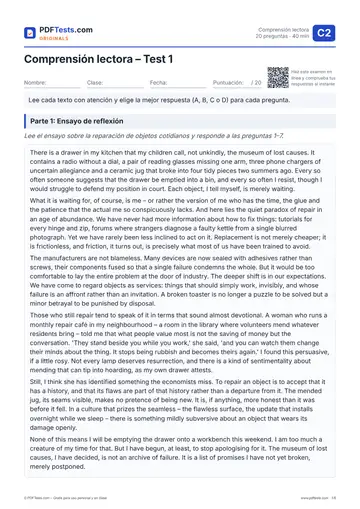
Every translator eventually confronts a paradox: the more faithfully one renders the words of a text, the more one risks betraying its spirit. A pun, a regional idiom or the particular rhythm of a sentence rarely survives a literal transfer intact. Faced with this, translators have long divided into two loose camps. One favours what might be called transparency, producing a version that reads as though it had been written in the target language. The other prefers to let the foreignness of the original show through, on the grounds that readers ought to be reminded they are encountering another culture rather than a domesticated copy of their own.

Neither position is as straightforward as its advocates sometimes suggest. A seamless translation can be praised for its readability while quietly erasing everything that made the source distinctive. The reader comes away believing they have understood a writer whose humour, allusions and cadences have in fact been replaced. Conversely, a translation that clings to the contours of the original may preserve its strangeness at the cost of making it almost unreadable, so that the foreignness the translator wished to honour becomes merely an obstacle.

What tends to be overlooked in this debate is that translation is not a single decision but thousands of small ones, each made under different pressures. A translator might domesticate a joke that would otherwise fall flat, yet deliberately retain an unfamiliar word for a dish or a garment, trusting the context to carry its meaning. Far from being inconsistent, such choices reflect a recognition that no single principle can govern every line.

It is perhaps for this reason that the most accomplished translators are often reluctant to theorise about their work. Asked to explain a particular choice, they are as likely to speak of the 'feel' of a passage as of any rule. This is not mysticism; it is the accumulated judgement of someone who has spent years listening closely to two languages at once. The translation that results is less a copy than a performance: faithful, at its best, not to every word but to the experience of reading the original.

  1. What paradox does the writer describe in the first paragraph?

  2. The second group of translators believes that a translation should

  3. According to the second paragraph, a 'seamless' translation may

  4. The phrase 'clings to the contours of the original' most nearly means

  5. How does the writer view translators who combine different approaches within one text?

  6. What does the final paragraph suggest about experienced translators' reluctance to theorise?

Vista previa

Sobre este examen

Esta prueba de nivel C2 comprueba si el alumno domina con seguridad el nivel más alto del MCER. Abarca la inversión, el subjuntivo, las condicionales avanzadas, las colocaciones, las expresiones idiomáticas, la formación de palabras, la detección de errores y un texto de lectura exigente. Es ideal para alumnos de nivel avanzado, candidatos a exámenes oficiales y profesores que necesitan una prueba de nivel rápida y fiable.

Temas

Inversión y énfasisSubjuntivo y pasado irrealCondicionales avanzadasColocaciones y expresiones idiomáticasFormación de palabrasIdentificación de erroresComprensión lectora

Cómo usar este examen

  1. Descarga el PDF e imprímelo, o haz el examen en línea más abajo.
  2. Responde todas las preguntas sin diccionario y sin prisas.
  3. Comprueba tus respuestas y apunta los temas que debes repasar.

Notas para el profesor

Utiliza la puntuación total como orientación: 42 puntos o más indican un nivel C2 consolidado; entre 32 y 41, un C1 sólido que aún avanza hacia el C2; y menos de 32, un nivel C1 o inferior. La prueba se centra en errores típicos del nivel avanzado, como omitir la inversión tras adverbios negativos, confundir loath y loathe, los participios sin sujeto claro (dangling participles) y el uso incorrecto de suggest + objeto + infinitivo. Como actividad de seguimiento, pide a los alumnos que reescriban las frases en las que se han equivocado y que resuman el texto de lectura en unas 80 palabras.