PDFTests Originals

Passive Voice – Test 1

B1 Intermediate GrammarFrench

This 30-question B1 French grammar test covers the passive voice: forming it with être and the past participle, agreement, tenses, negatives and questions. It also tests the agent with par or de and common alternatives such as on, se faire and the pronominal passive. It suits intermediate learners and teachers who want a ready-to-print check of this structure.
Questions
30
Time
25 min
PDF
4 pages
Answer key
Included
  • 100% free
  • No sign-up or email
  • Print-ready A4 PDF
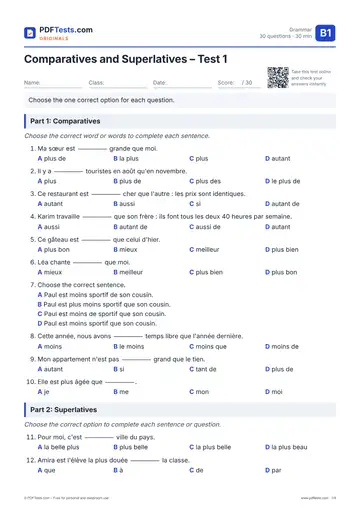
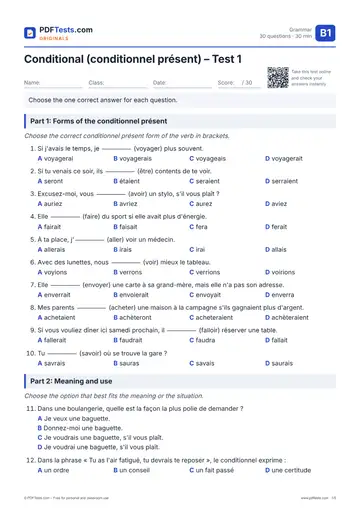
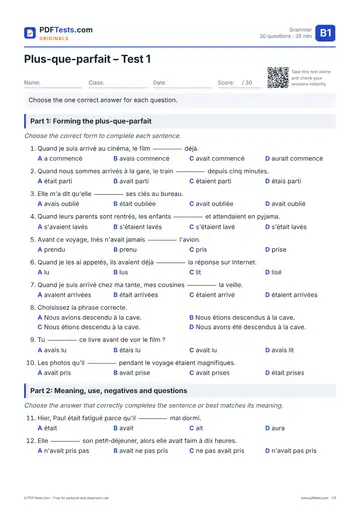
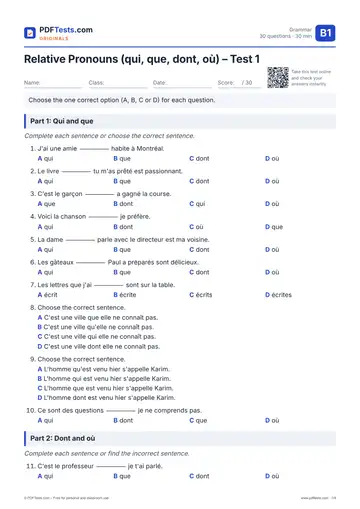
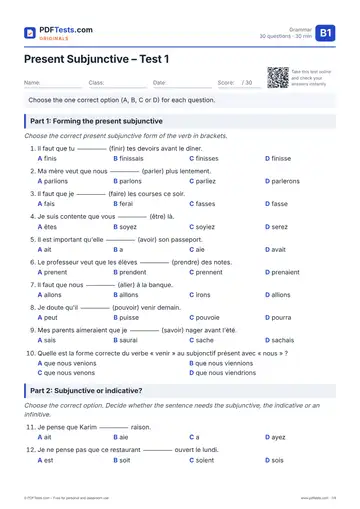
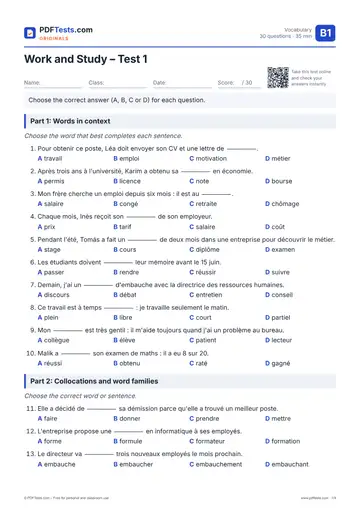
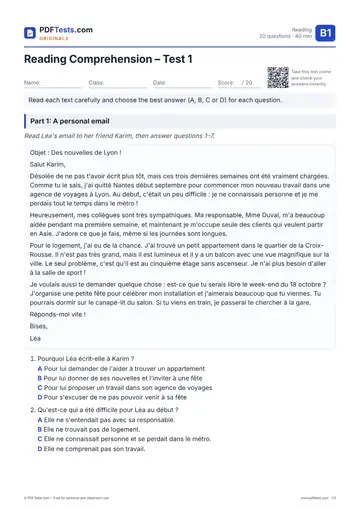
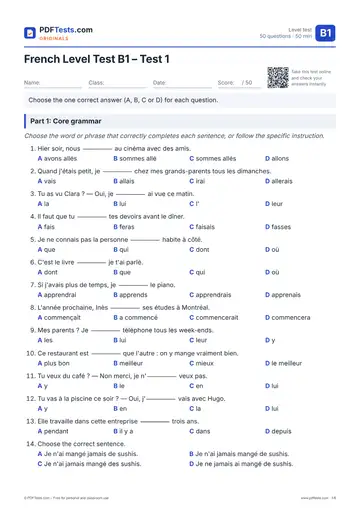
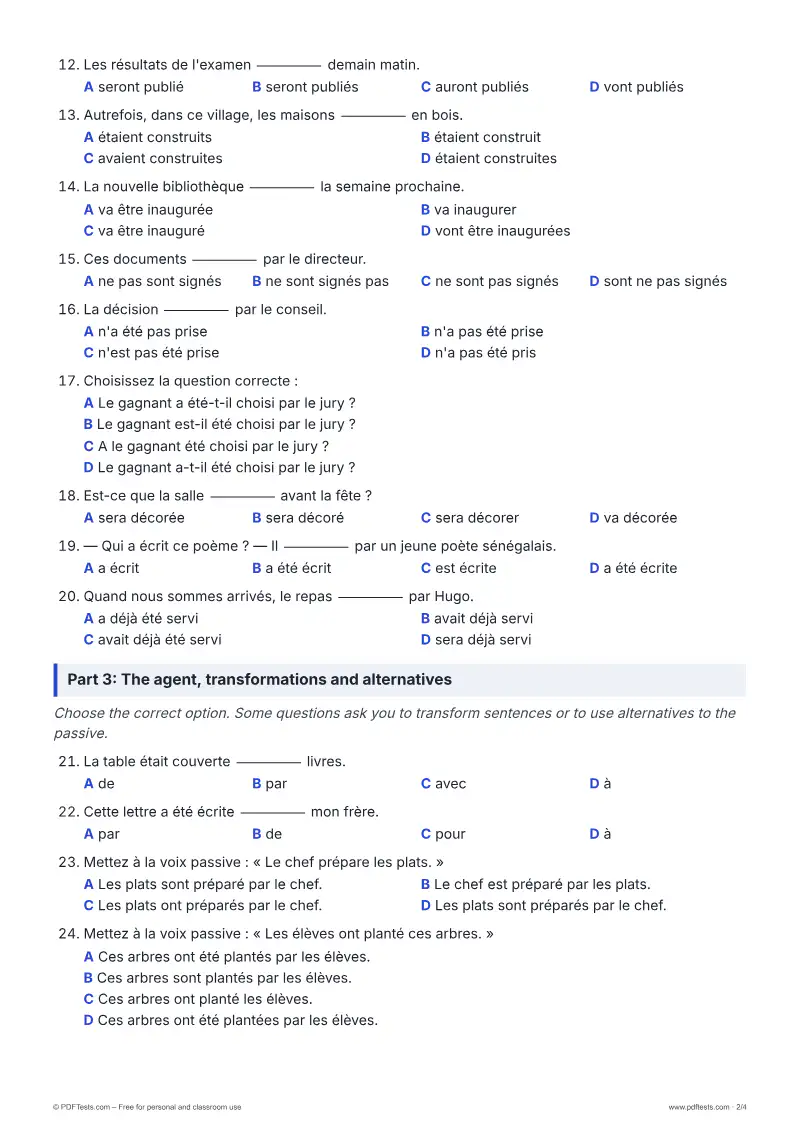
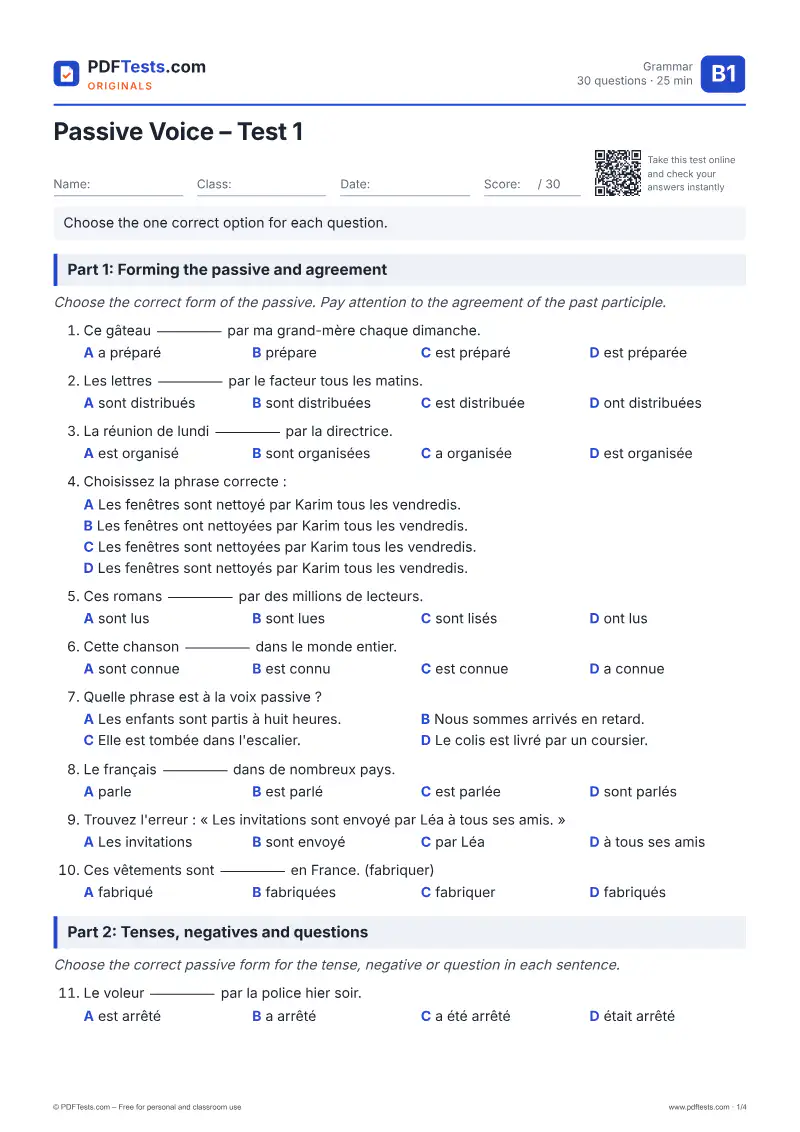
Preview of page 1 of Passive Voice – Test 1 Open PDF

Take the test online

Choose the one correct option for each question. Choose your answers, then press “Check my answers”.

Part 1: Forming the passive and agreement

Choose the correct form of the passive. Pay attention to the agreement of the past participle.

  1. Ce gâteau _____ par ma grand-mère chaque dimanche.

  2. Les lettres _____ par le facteur tous les matins.

  3. La réunion de lundi _____ par la directrice.

  4. Choisissez la phrase correcte :

  5. Ces romans _____ par des millions de lecteurs.

  6. Cette chanson _____ dans le monde entier.

  7. Quelle phrase est à la voix passive ?

  8. Le français _____ dans de nombreux pays.

  9. Trouvez l'erreur : « Les invitations sont envoyé par Léa à tous ses amis. »

  10. Ces vêtements sont _____ en France. (fabriquer)

Part 2: Tenses, negatives and questions

Choose the correct passive form for the tense, negative or question in each sentence.

  1. Le voleur _____ par la police hier soir.

  2. Les résultats de l'examen _____ demain matin.

  3. Autrefois, dans ce village, les maisons _____ en bois.

  4. La nouvelle bibliothèque _____ la semaine prochaine.

  5. Ces documents _____ par le directeur.

  6. La décision _____ par le conseil.

  7. Choisissez la question correcte :

  8. Est-ce que la salle _____ avant la fête ?

  9. — Qui a écrit ce poème ? — Il _____ par un jeune poète sénégalais.

  10. Quand nous sommes arrivés, le repas _____ par Hugo.

Part 3: The agent, transformations and alternatives

Choose the correct option. Some questions ask you to transform sentences or to use alternatives to the passive.

  1. La table était couverte _____ livres.

  2. Cette lettre a été écrite _____ mon frère.

  3. Mettez à la voix passive : « Le chef prépare les plats. »

  4. Mettez à la voix passive : « Les élèves ont planté ces arbres. »

  5. Mettez à la voix active : « Ce tableau a été peint par une artiste brésilienne. »

  6. Quelle phrase a le même sens que « On a volé mon vélo » ?

  7. Ce vin _____ frais, de préférence à 8 degrés.

  8. Choisissez la phrase correcte :

  9. Nadia _____ voler son sac dans le métro.

  10. Trouvez l'erreur : « Le nouveau pont sera inauguré de le maire en juin. »

Preview

About this test

This 30-question B1 French grammar test covers the passive voice: forming it with être and the past participle, agreement, tenses, negatives and questions. It also tests the agent with par or de and common alternatives such as on, se faire and the pronominal passive. It suits intermediate learners and teachers who want a ready-to-print check of this structure.

Topics covered

Passive with être + past participlePast participle agreementPassive in different tensesNegatives and questionsAgent: par vs deActive to passive transformationAlternatives: on, se faire, pronominal passive

How to use this test

  1. Download the PDF and print it, or take the test online below.
  2. Answer every question without a dictionary or time pressure.
  3. Check your answers and note the topics you need to review.

Notes for teachers

Use this test after teaching the passive in the present and passé composé, or as a review before B2. It targets frequent errors: missing participle agreement, confusing être verbs of movement with the passive, misplacing ne...pas and inversion, and passivising indirect objects (*Je suis demandé de…*). For follow-up, ask students to rewrite a short news article from active to passive and to discuss when on sounds more natural.