PDFTests Originals

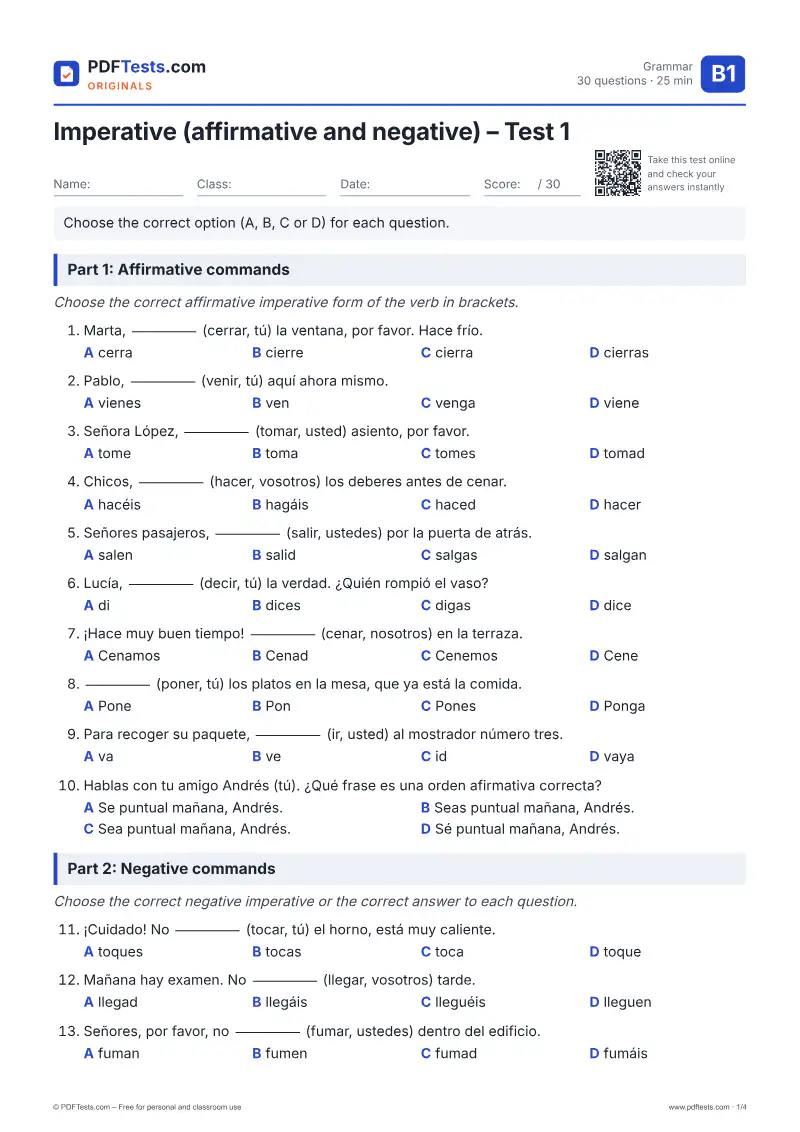
Imperative (affirmative and negative) – Test 1

B1 Intermediate GrammarSpanish

This B1 test checks your use of the Spanish imperative for tú, usted, vosotros, ustedes and nosotros. It covers affirmative and negative commands, common irregular verbs, and where object and reflexive pronouns go. It suits intermediate learners and teachers who need a quick, printable check of this key grammar point.
Questions
30
Time
25 min
PDF
4 pages
Answer key
Included
  • 100% free
  • No sign-up or email
  • Print-ready A4 PDF
Preview of page 1 of Imperative (affirmative and negative) – Test 1 Open PDF

Take the test online

Choose the correct option (A, B, C or D) for each question. Choose your answers, then press “Check my answers”.

Part 1: Affirmative commands

Choose the correct affirmative imperative form of the verb in brackets.

  1. Marta, _____ (cerrar, tú) la ventana, por favor. Hace frío.

  2. Pablo, _____ (venir, tú) aquí ahora mismo.

  3. Señora López, _____ (tomar, usted) asiento, por favor.

  4. Chicos, _____ (hacer, vosotros) los deberes antes de cenar.

  5. Señores pasajeros, _____ (salir, ustedes) por la puerta de atrás.

  6. Lucía, _____ (decir, tú) la verdad. ¿Quién rompió el vaso?

  7. ¡Hace muy buen tiempo! _____ (cenar, nosotros) en la terraza.

  8. _____ (poner, tú) los platos en la mesa, que ya está la comida.

  9. Para recoger su paquete, _____ (ir, usted) al mostrador número tres.

  10. Hablas con tu amigo Andrés (tú). ¿Qué frase es una orden afirmativa correcta?

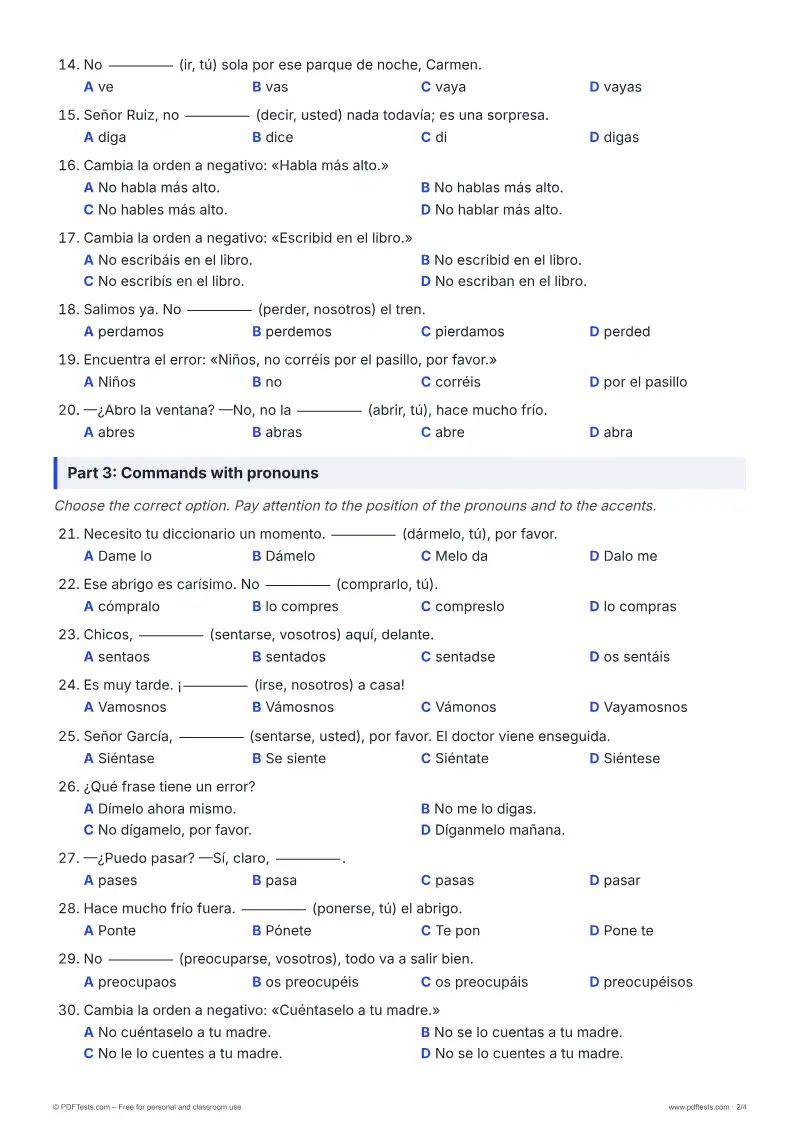
Part 2: Negative commands

Choose the correct negative imperative or the correct answer to each question.

  1. ¡Cuidado! No _____ (tocar, tú) el horno, está muy caliente.

  2. Mañana hay examen. No _____ (llegar, vosotros) tarde.

  3. Señores, por favor, no _____ (fumar, ustedes) dentro del edificio.

  4. No _____ (ir, tú) sola por ese parque de noche, Carmen.

  5. Señor Ruiz, no _____ (decir, usted) nada todavía; es una sorpresa.

  6. Cambia la orden a negativo: «Habla más alto.»

  7. Cambia la orden a negativo: «Escribid en el libro.»

  8. Salimos ya. No _____ (perder, nosotros) el tren.

  9. Encuentra el error: «Niños, no corréis por el pasillo, por favor.»

  10. —¿Abro la ventana? —No, no la _____ (abrir, tú), hace mucho frío.

Part 3: Commands with pronouns

Choose the correct option. Pay attention to the position of the pronouns and to the accents.

  1. Necesito tu diccionario un momento. _____ (dármelo, tú), por favor.

  2. Ese abrigo es carísimo. No _____ (comprarlo, tú).

  3. Chicos, _____ (sentarse, vosotros) aquí, delante.

  4. Es muy tarde. ¡_____ (irse, nosotros) a casa!

  5. Señor García, _____ (sentarse, usted), por favor. El doctor viene enseguida.

  6. ¿Qué frase tiene un error?

  7. —¿Puedo pasar? —Sí, claro, _____.

  8. Hace mucho frío fuera. _____ (ponerse, tú) el abrigo.

  9. No _____ (preocuparse, vosotros), todo va a salir bien.

  10. Cambia la orden a negativo: «Cuéntaselo a tu madre.»

Preview

About this test

This B1 test checks your use of the Spanish imperative for tú, usted, vosotros, ustedes and nosotros. It covers affirmative and negative commands, common irregular verbs, and where object and reflexive pronouns go. It suits intermediate learners and teachers who need a quick, printable check of this key grammar point.

Topics covered

Affirmative imperativeNegative imperativeIrregular tú commandsUsted and ustedes commandsNosotros commandsPronouns with imperativesReflexive verbs in commands

How to use this test

  1. Download the PDF and print it, or take the test online below.
  2. Answer every question without a dictionary or time pressure.
  3. Check your answers and note the topics you need to review.

Notes for teachers

Use this test after teaching both affirmative and negative commands, or as a diagnostic before revising them. It targets typical B1 errors: using the indicative in negative commands (*no corréis), mixing up tú and usted forms, missing accents on forms with attached pronouns (dámelo, siéntese), and wrong forms such as *vámosnos or *no dígamelo. As a follow-up, ask students to write a set of house rules or recipe instructions using both affirmative and negative commands.