PDFTests Originals

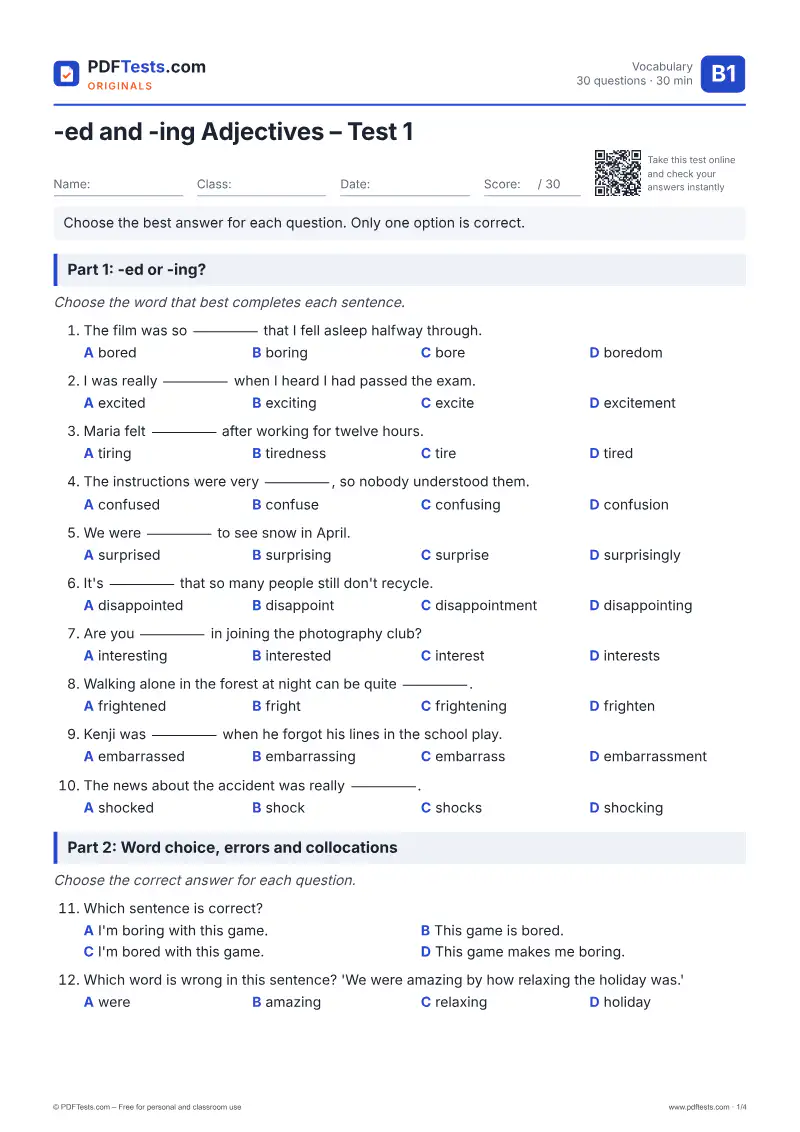
-ed and -ing Adjectives – Test 1

B1 Intermediate VocabularyEnglish

This B1 vocabulary test practises the difference between -ed adjectives (how people feel) and -ing adjectives (what causes the feeling), such as bored/boring and excited/exciting. It includes gap fills, error spotting, collocations, word formation and a short reading text. It suits intermediate learners, classroom revision and self-study.
Questions
30
Time
30 min
PDF
4 pages
Answer key
Included
  • 100% free
  • No sign-up or email
  • Print-ready A4 PDF
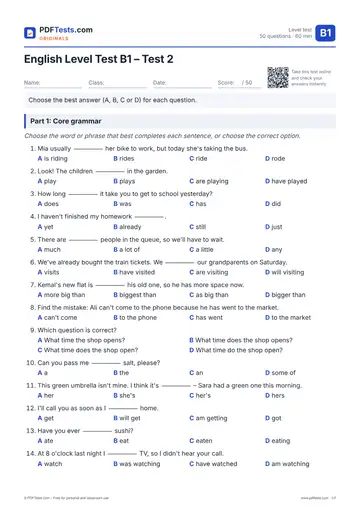
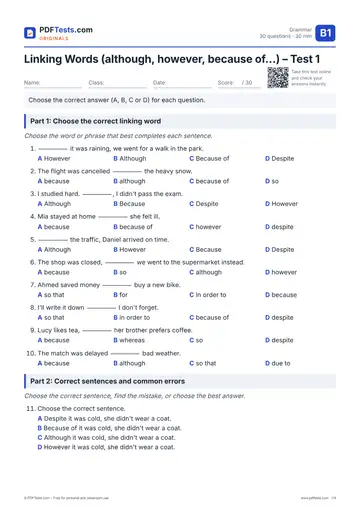
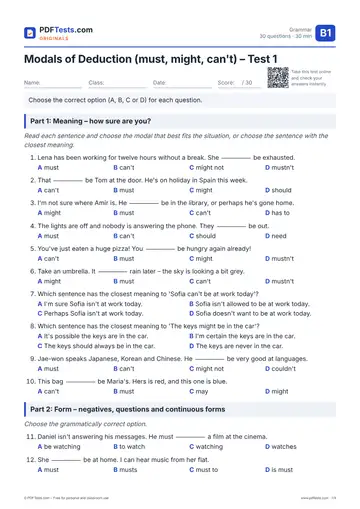
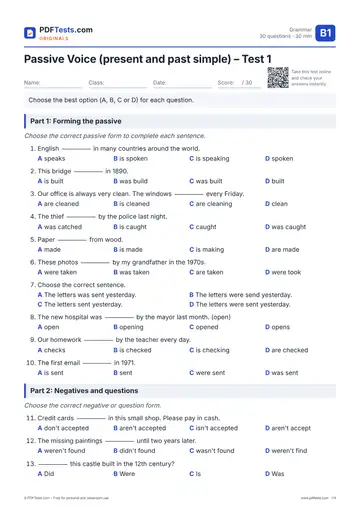
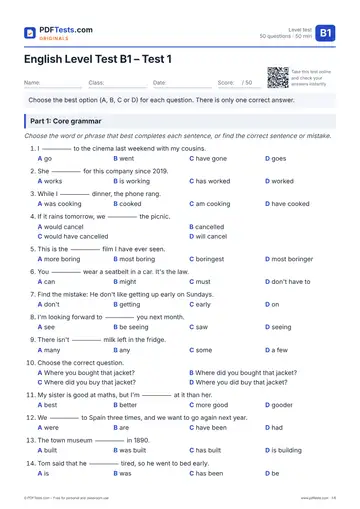
Preview of page 1 of -ed and -ing Adjectives – Test 1 Open PDF

Take the test online

Choose the best answer for each question. Only one option is correct. Choose your answers, then press “Check my answers”.

Part 1: -ed or -ing?

Choose the word that best completes each sentence.

  1. The film was so _____ that I fell asleep halfway through.

  2. I was really _____ when I heard I had passed the exam.

  3. Maria felt _____ after working for twelve hours.

  4. The instructions were very _____, so nobody understood them.

  5. We were _____ to see snow in April.

  6. It's _____ that so many people still don't recycle.

  7. Are you _____ in joining the photography club?

  8. Walking alone in the forest at night can be quite _____.

  9. Kenji was _____ when he forgot his lines in the school play.

  10. The news about the accident was really _____.

Part 2: Word choice, errors and collocations

Choose the correct answer for each question.

  1. Which sentence is correct?

  2. Which word is wrong in this sentence? 'We were amazing by how relaxing the holiday was.'

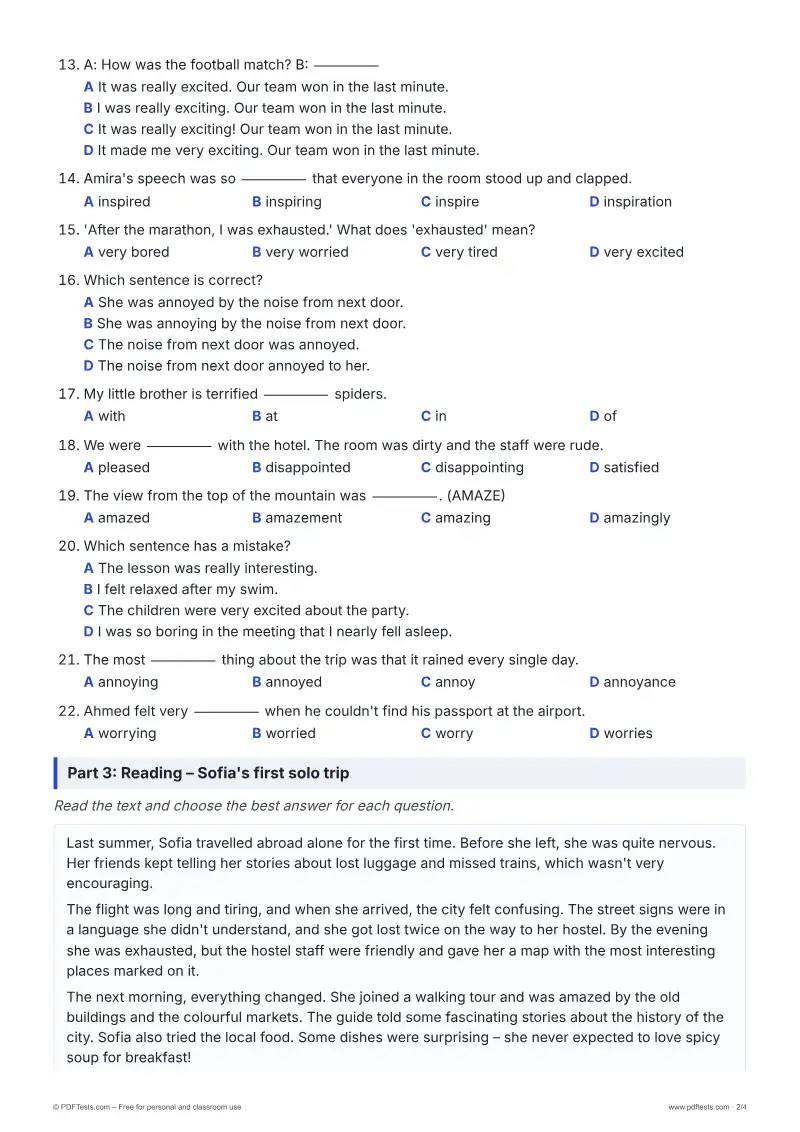
  3. A: How was the football match? B: _____

  4. Amira's speech was so _____ that everyone in the room stood up and clapped.

  5. 'After the marathon, I was exhausted.' What does 'exhausted' mean?

  6. Which sentence is correct?

  7. My little brother is terrified _____ spiders.

  8. We were _____ with the hotel. The room was dirty and the staff were rude.

  9. The view from the top of the mountain was _____. (AMAZE)

  10. Which sentence has a mistake?

  11. The most _____ thing about the trip was that it rained every single day.

  12. Ahmed felt very _____ when he couldn't find his passport at the airport.

Part 3: Reading – Sofia's first solo trip

Read the text and choose the best answer for each question.

Last summer, Sofia travelled abroad alone for the first time. Before she left, she was quite nervous. Her friends kept telling her stories about lost luggage and missed trains, which wasn't very encouraging.

The flight was long and tiring, and when she arrived, the city felt confusing. The street signs were in a language she didn't understand, and she got lost twice on the way to her hostel. By the evening she was exhausted, but the hostel staff were friendly and gave her a map with the most interesting places marked on it.

The next morning, everything changed. She joined a walking tour and was amazed by the old buildings and the colourful markets. The guide told some fascinating stories about the history of the city. Sofia also tried the local food. Some dishes were surprising – she never expected to love spicy soup for breakfast!

The only disappointing part of the trip was the weather on the last day. It rained so much that her boat trip was cancelled. Still, Sofia came home feeling relaxed and proud of herself. 'Travelling alone was a little frightening at first,' she says, 'but it was the most satisfying experience of my life.'

  1. How did her friends' stories make Sofia feel before the trip?

  2. In paragraph 2, 'the city felt confusing' means that _____.

  3. Which word in paragraph 2 means 'extremely tired'?

  4. How did Sofia feel on the walking tour?

  5. The guide's stories were _____.

  6. Why were some dishes 'surprising'?

  7. What was disappointing about the trip?

  8. When Sofia came home, she felt _____.

Preview

About this test

This B1 vocabulary test practises the difference between -ed adjectives (how people feel) and -ing adjectives (what causes the feeling), such as bored/boring and excited/exciting. It includes gap fills, error spotting, collocations, word formation and a short reading text. It suits intermediate learners, classroom revision and self-study.

Topics covered

-ed vs -ing adjectivesFeelings and emotionsWord formationAdjective + preposition collocationsMeaning in contextReading for vocabulary

How to use this test

  1. Download the PDF and print it, or take the test online below.
  2. Answer every question without a dictionary or time pressure.
  3. Check your answers and note the topics you need to review.

Notes for teachers

The test targets a very common learner error: using -ing adjectives to describe feelings (e.g. 'I am boring' instead of 'I am bored'). Part 1 checks basic form and meaning, Part 2 adds error spotting, collocations and word formation, and Part 3 checks the adjectives in a longer reading context. As a follow-up, ask students to write five sentences about a recent trip or event, using one -ed and one -ing adjective from the same word family in each sentence.