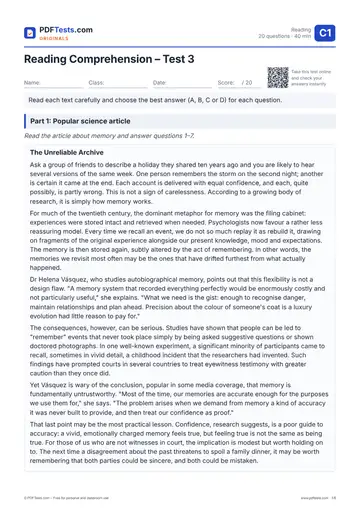
This C1 reading comprehension test has three original texts of different genres: a magazine article about the value of boredom, a short story about a radio presenter's final broadcast, and a workplace advice column. The 20 multiple-choice questions test gist, detail, inference, writer's purpose and vocabulary in context. It suits advanced learners preparing for C1 exams and teachers who want a ready-made reading assessment.
Read each text carefully and choose the best answer (A, B, C or D) for each question. Choose your answers, then press “Check my answers”.
0%
Your result
[["Keep practising","This topic needs more practice. Start with the guide, then try a worksheet."],["Good start","You know the basics. Read the guide and practise the parts you missed."],["Very good!","Just a few slips. Review your mistakes, then try the next test."],["Excellent!","You have mastered this topic. Ready for the next challenge?"]]
Please describe the problem in a few words. Sorry, the report could not be sent. Please email us at [email protected].
Preview
About this test
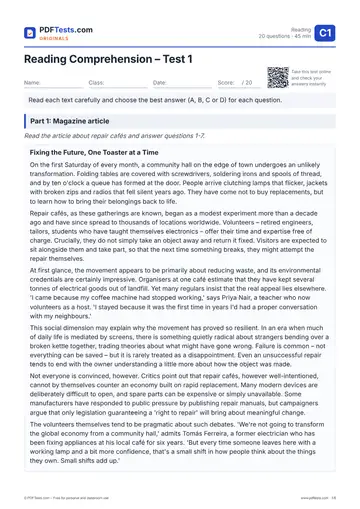
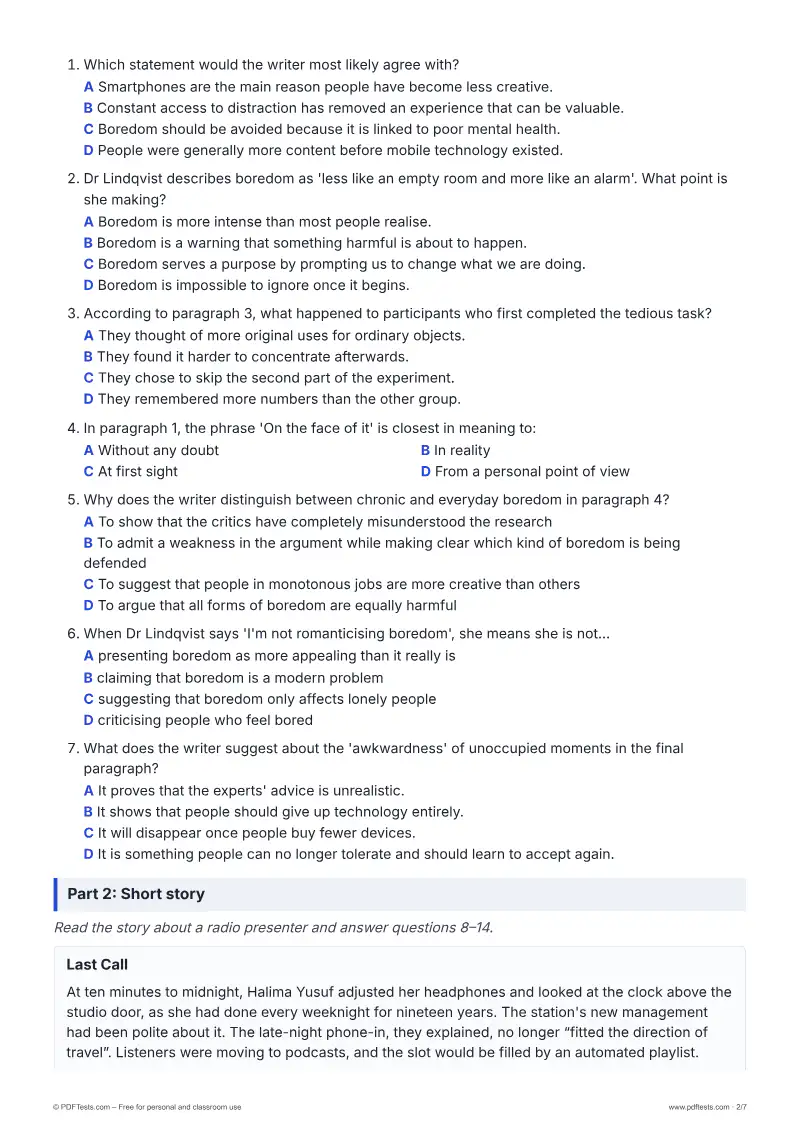
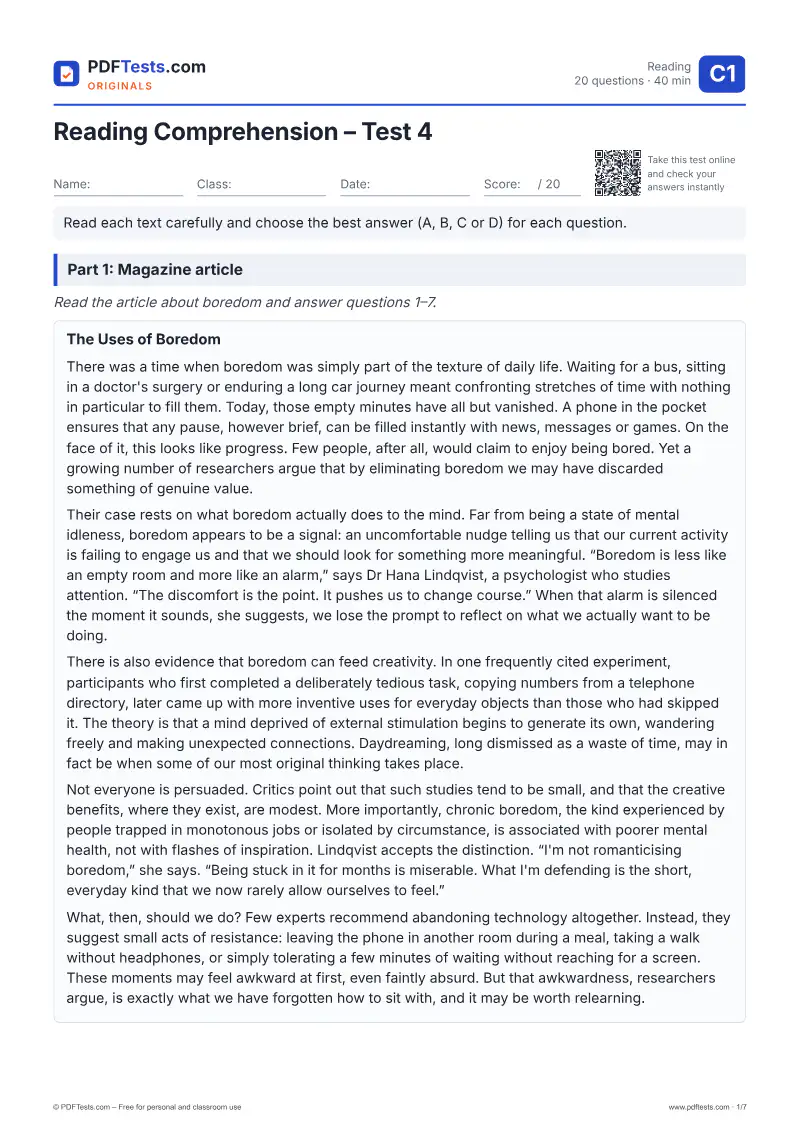
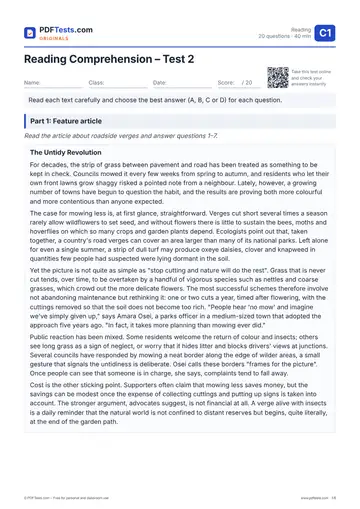
This C1 reading comprehension test has three original texts of different genres: a magazine article about the value of boredom, a short story about a radio presenter's final broadcast, and a workplace advice column. The 20 multiple-choice questions test gist, detail, inference, writer's purpose and vocabulary in context. It suits advanced learners preparing for C1 exams and teachers who want a ready-made reading assessment.
Topics covered
Reading comprehensionGist and main ideaInferenceVocabulary in contextWriter's purpose and attitudeNarrative fictionAdvice column
How to use this test
Download the PDF and print it, or take the test online below.
Answer every question without a dictionary or time pressure.
Check your answers and note the topics you need to review.
Notes for teachers
Use the three sections as a single 40-minute test or as separate lessons. Many questions target C1 skills that learners often find hard: telling an author's own view apart from a reported one, reading implied emotion in fiction, and working out idioms from context. Distractors often repeat words from the text but distort the meaning, so ask students to justify each answer with evidence from the passage. As a follow-up, students could write a reply to Jonah or a short opinion paragraph on boredom.
 C1
 Open PDF
 C1
 C1
 C1
 C1
 C1
 C1
 C1