PDFTests Originals

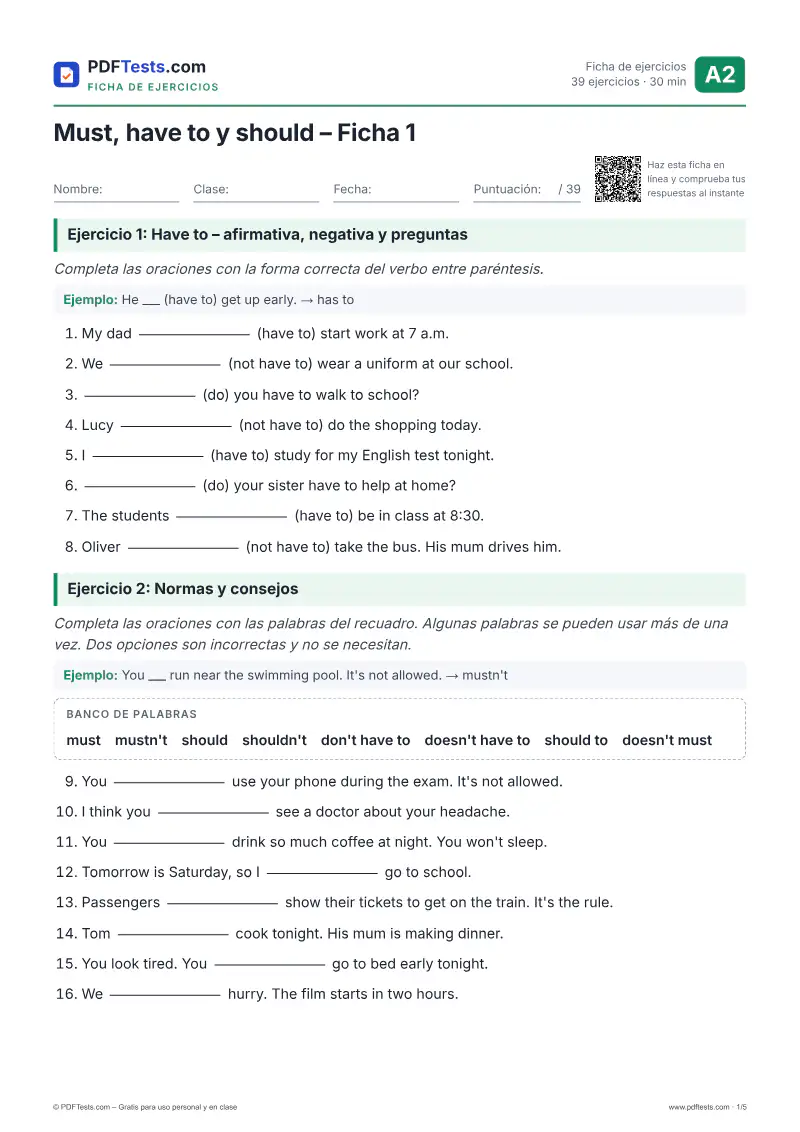
Must, have to y should – Ficha 1

A2 Elemental FichaInglés

Esta ficha sirve para practicar must, have to y should en el nivel A2. El alumnado usa estos verbos para hablar de normas, obligación, ausencia de obligación y consejos, y practica las formas afirmativa, negativa e interrogativa. Es adecuada para trabajar en clase o para el estudio autónomo en el nivel elemental.
ejercicios
39
Tiempo
30 min
PDF
5 páginas
Soluciones
Incluidas
  • 100 % gratis
  • Sin registro
  • PDF A4 listo para imprimir
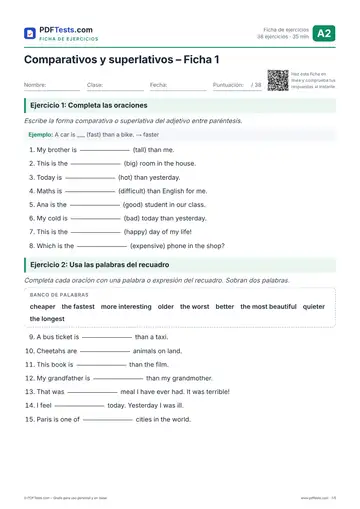
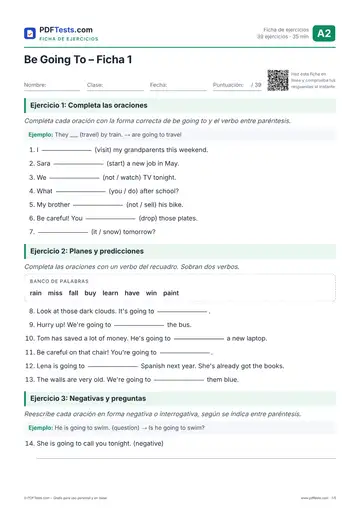
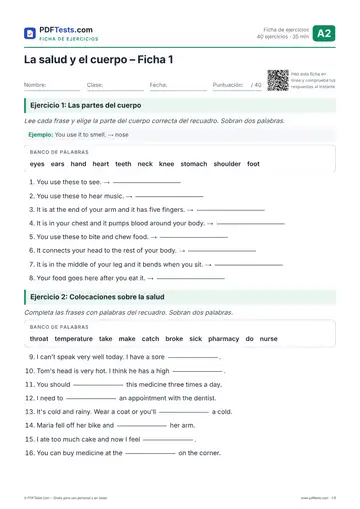
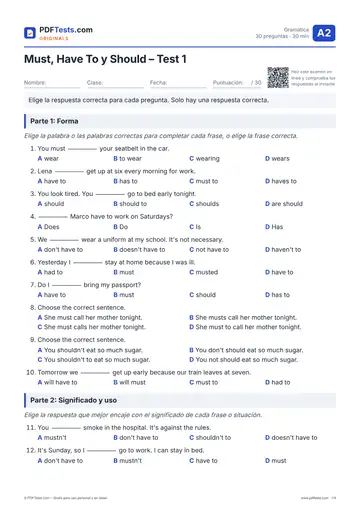
Vista previa de la página 1: Must, have to y should – Ficha 1 Abrir PDF

Haz la ficha en línea

Escribe tus respuestas y pulsa «Comprobar respuestas». Se aceptan otras respuestas correctas.

Ejercicio 1: Have to – afirmativa, negativa y preguntas

Completa las oraciones con la forma correcta del verbo entre paréntesis.

Ejemplo: He ___ (have to) get up early. → has to

  1. My dad (have to) start work at 7 a.m.

  2. We (not have to) wear a uniform at our school.

  3. (do) you have to walk to school?

  4. Lucy (not have to) do the shopping today.

  5. I (have to) study for my English test tonight.

  6. (do) your sister have to help at home?

  7. The students (have to) be in class at 8:30.

  8. Oliver (not have to) take the bus. His mum drives him.

Ejercicio 2: Normas y consejos

Completa las oraciones con las palabras del recuadro. Algunas palabras se pueden usar más de una vez. Dos opciones son incorrectas y no se necesitan.

Ejemplo: You ___ run near the swimming pool. It's not allowed. → mustn't

Banco de palabras mustmustn'tshouldshouldn'tdon't have todoesn't have toshould todoesn't must

  1. You use your phone during the exam. It's not allowed.

  2. I think you see a doctor about your headache.

  3. You drink so much coffee at night. You won't sleep.

  4. Tomorrow is Saturday, so I go to school.

  5. Passengers show their tickets to get on the train. It's the rule.

  6. Tom cook tonight. His mum is making dinner.

  7. You look tired. You go to bed early tonight.

  8. We hurry. The film starts in two hours.

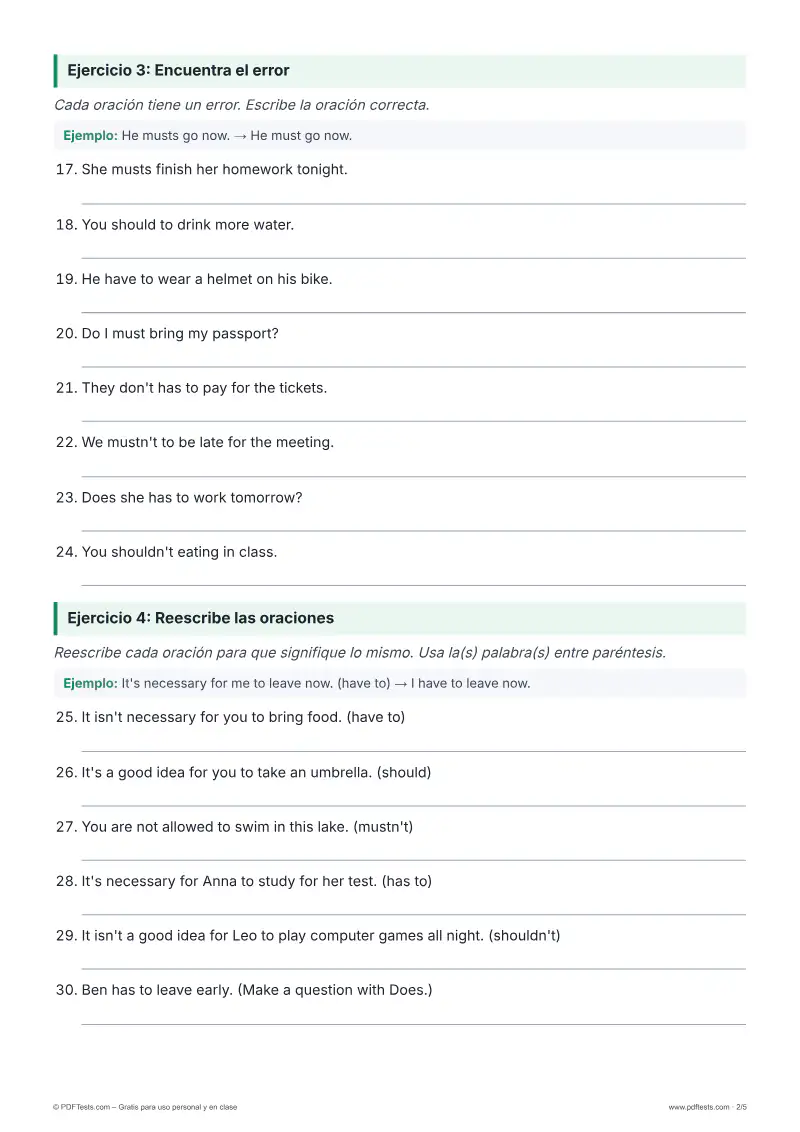
Ejercicio 3: Encuentra el error

Cada oración tiene un error. Escribe la oración correcta.

Ejemplo: He musts go now. → He must go now.

  1. She musts finish her homework tonight.

  2. You should to drink more water.

  3. He have to wear a helmet on his bike.

  4. Do I must bring my passport?

  5. They don't has to pay for the tickets.

  6. We mustn't to be late for the meeting.

  7. Does she has to work tomorrow?

  8. You shouldn't eating in class.

Ejercicio 4: Reescribe las oraciones

Reescribe cada oración para que signifique lo mismo. Usa la(s) palabra(s) entre paréntesis.

Ejemplo: It's necessary for me to leave now. (have to) → I have to leave now.

  1. It isn't necessary for you to bring food. (have to)

  2. It's a good idea for you to take an umbrella. (should)

  3. You are not allowed to swim in this lake. (mustn't)

  4. It's necessary for Anna to study for her test. (has to)

  5. It isn't a good idea for Leo to play computer games all night. (shouldn't)

  6. Ben has to leave early. (Make a question with Does.)

  7. Sara has to wear glasses. (Make it negative.)

  8. We should buy a present. (Make a question.)

Ejercicio 5: Ordena las palabras

Ordena las palabras para formar oraciones o preguntas.

Ejemplo: must / quiet / be / you → You must be quiet.

  1. you / have / to / do / work / on Saturdays / ?

  2. shouldn't / you / late / stay / up

  3. must / seatbelt / wear / a / you

  4. doesn't / my / have / brother / to / cook

  5. I / should / what / do / ?

  6. mustn't / in / the / library / talk / we

  7. have / to / does / uniform / wear / a / she / ?

¿Te ha resultado útil esta página?

Informar de un error

¿Has visto una respuesta incorrecta, una errata o una explicación poco clara? Avísanos y lo corregiremos.

Vista previa

Sobre este examen

Ficha de inglés A2 en PDF sobre must, have to y should: obligación, prohibición y consejos, con negativas y preguntas. Con soluciones.

Temas

must y mustn'thave to y don't have toshould y shouldn'tnormas y obligacióndar consejospreguntas y negativas

Notas para el profesor

Empiece pidiendo a la clase que diga normas del colegio o de casa y clasifíquelas en la pizarra en 'must/have to', 'mustn't' y 'don't have to' antes de hacer los ejercicios. Los errores más frecuentes son añadir 'to' después de must o should (should to go), añadir -s a must (she musts) y decir 'does she has to'. Insista en que mustn't significa 'no está permitido', mientras que don't have to significa 'no es necesario'. Como actividad de ampliación, pida que, por parejas, escriban cinco normas y tres consejos para un alumno nuevo del centro.

Todos los exámenes de Inglés A2 →