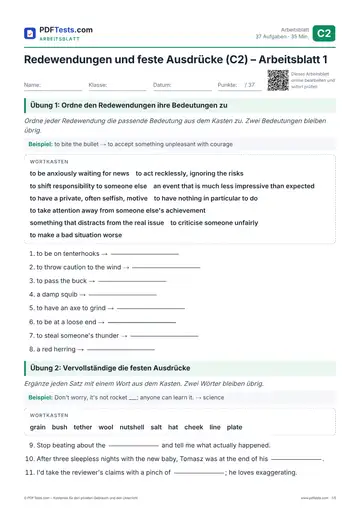
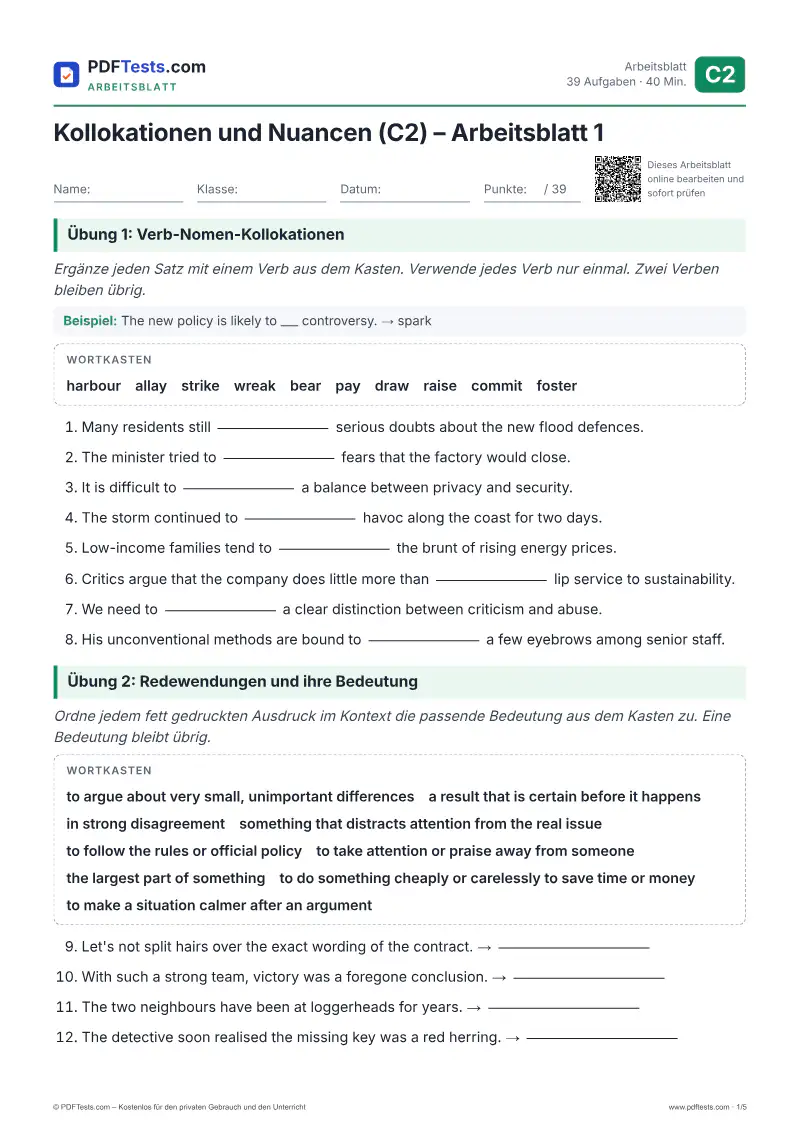
Ordne jedem fett gedruckten Ausdruck im Kontext die passende Bedeutung aus dem Kasten zu. Eine Bedeutung bleibt übrig.
Let's not split hairs over the exact wording of the contract.
Auswählen… to argue about very small, unimportant differences a result that is certain before it happens in strong disagreement something that distracts attention from the real issue to follow the rules or official policy to take attention or praise away from someone the largest part of something to do something cheaply or carelessly to save time or money to make a situation calmer after an argument
Richtige Antwort: to argue about very small, unimportant differences . 'Split hairs' bedeutet, sich auf winzige, unwichtige Unterschiede zu konzentrieren (Haarspalterei).
With such a strong team, victory was a foregone conclusion.
Auswählen… to argue about very small, unimportant differences a result that is certain before it happens in strong disagreement something that distracts attention from the real issue to follow the rules or official policy to take attention or praise away from someone the largest part of something to do something cheaply or carelessly to save time or money to make a situation calmer after an argument
Richtige Antwort: a result that is certain before it happens . Eine 'foregone conclusion' ist ein Ergebnis, das von vornherein feststeht.
The two neighbours have been at loggerheads for years.
Auswählen… to argue about very small, unimportant differences a result that is certain before it happens in strong disagreement something that distracts attention from the real issue to follow the rules or official policy to take attention or praise away from someone the largest part of something to do something cheaply or carelessly to save time or money to make a situation calmer after an argument
Richtige Antwort: in strong disagreement . Wer 'at loggerheads' ist, ist sich heftig uneinig.
The detective soon realised the missing key was a red herring.
Auswählen… to argue about very small, unimportant differences a result that is certain before it happens in strong disagreement something that distracts attention from the real issue to follow the rules or official policy to take attention or praise away from someone the largest part of something to do something cheaply or carelessly to save time or money to make a situation calmer after an argument
Richtige Antwort: something that distracts attention from the real issue . Ein 'red herring' ist eine falsche Fährte oder ein Ablenkungsmanöver.
Junior staff are expected to toe the line and not question decisions.
Auswählen… to argue about very small, unimportant differences a result that is certain before it happens in strong disagreement something that distracts attention from the real issue to follow the rules or official policy to take attention or praise away from someone the largest part of something to do something cheaply or carelessly to save time or money to make a situation calmer after an argument
Richtige Antwort: to follow the rules or official policy . 'Toe the line' bedeutet, sich an die Regeln zu halten oder sich anzupassen.
I was about to announce the news, but my brother stole my thunder.
Auswählen… to argue about very small, unimportant differences a result that is certain before it happens in strong disagreement something that distracts attention from the real issue to follow the rules or official policy to take attention or praise away from someone the largest part of something to do something cheaply or carelessly to save time or money to make a situation calmer after an argument
Richtige Antwort: to take attention or praise away from someone . 'Steal someone's thunder' bedeutet, jemandem die Aufmerksamkeit zu stehlen, die eigentlich ihm gilt.
The capital city receives the lion's share of the funding.
Auswählen… to argue about very small, unimportant differences a result that is certain before it happens in strong disagreement something that distracts attention from the real issue to follow the rules or official policy to take attention or praise away from someone the largest part of something to do something cheaply or carelessly to save time or money to make a situation calmer after an argument
Richtige Antwort: the largest part of something . 'The lion's share' bedeutet den größten Anteil.
The builders cut corners, and the roof started leaking within a year.
Auswählen… to argue about very small, unimportant differences a result that is certain before it happens in strong disagreement something that distracts attention from the real issue to follow the rules or official policy to take attention or praise away from someone the largest part of something to do something cheaply or carelessly to save time or money to make a situation calmer after an argument
Richtige Antwort: to do something cheaply or carelessly to save time or money . 'Cut corners' bedeutet, notwendige Schritte auszulassen, um Zeit oder Geld zu sparen.
 C2
C2 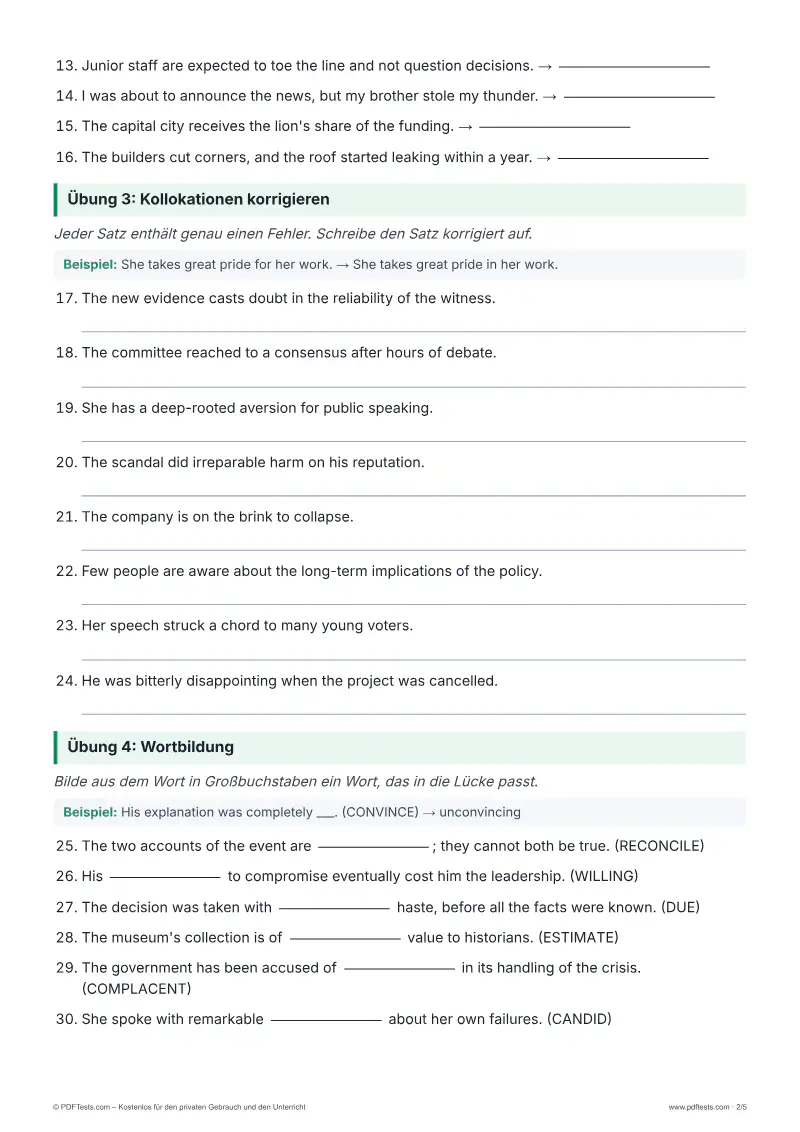
 PDF öffnen
  C2
C2  C2
C2  C2
C2  C2
C2  C2
C2 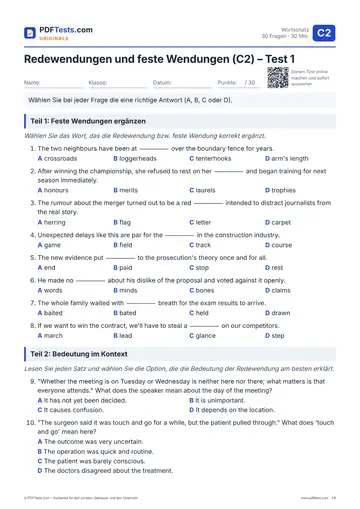 C2
C2  C2
C2