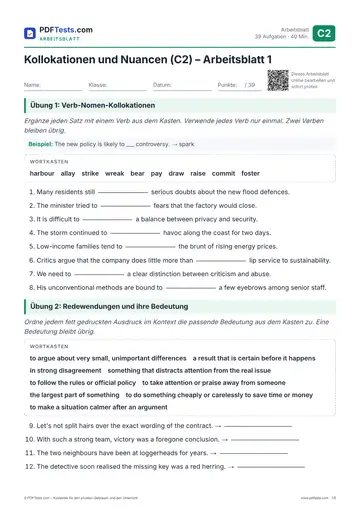
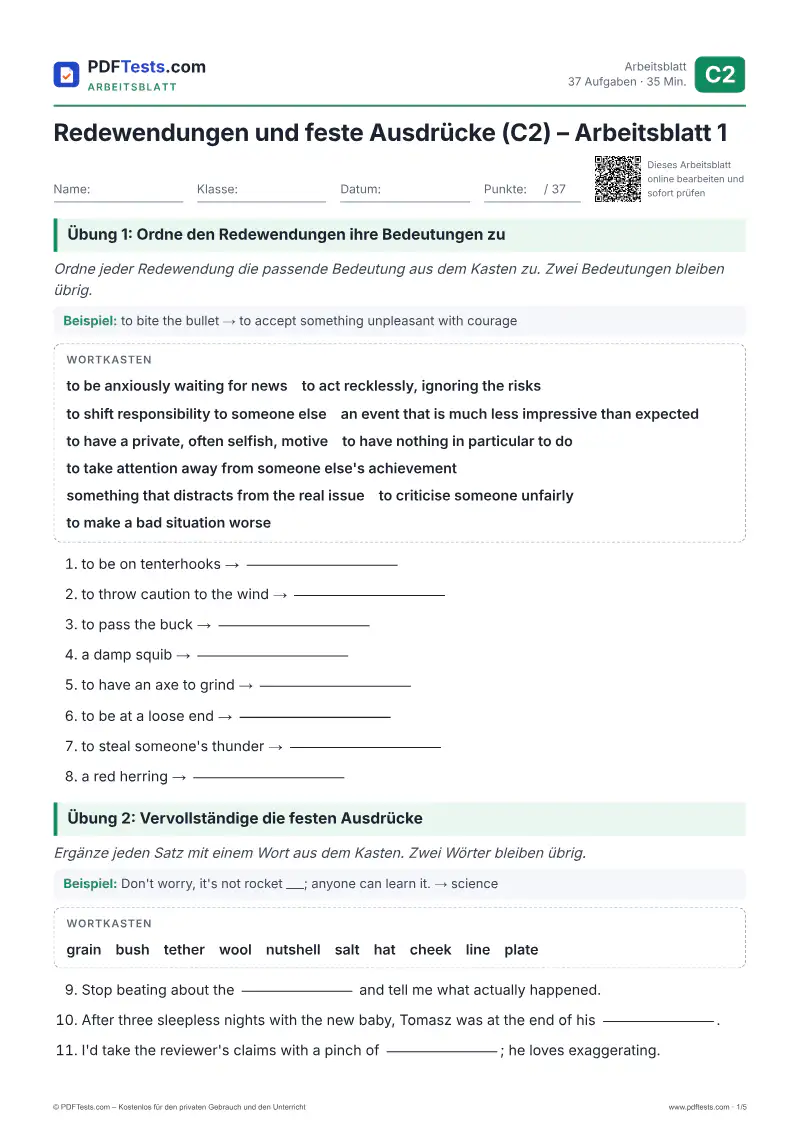
Ordne jeder Redewendung die passende Bedeutung aus dem Kasten zu. Zwei Bedeutungen bleiben übrig.
to be on tenterhooks
Auswählen… to be anxiously waiting for news to act recklessly, ignoring the risks to shift responsibility to someone else an event that is much less impressive than expected to have a private, often selfish, motive to have nothing in particular to do to take attention away from someone else's achievement something that distracts from the real issue to criticise someone unfairly to make a bad situation worse
Richtige Antwort: to be anxiously waiting for news . 'Being on tenterhooks' bedeutet, sich in nervöser Anspannung zu befinden – wie auf glühenden Kohlen zu sitzen.
to throw caution to the wind
Auswählen… to be anxiously waiting for news to act recklessly, ignoring the risks to shift responsibility to someone else an event that is much less impressive than expected to have a private, often selfish, motive to have nothing in particular to do to take attention away from someone else's achievement something that distracts from the real issue to criticise someone unfairly to make a bad situation worse
Richtige Antwort: to act recklessly, ignoring the risks . Man macht sich keine Sorgen mehr über die Gefahr und geht ein Risiko ein.
to pass the buck
Auswählen… to be anxiously waiting for news to act recklessly, ignoring the risks to shift responsibility to someone else an event that is much less impressive than expected to have a private, often selfish, motive to have nothing in particular to do to take attention away from someone else's achievement something that distracts from the real issue to criticise someone unfairly to make a bad situation worse
Richtige Antwort: to shift responsibility to someone else . 'Passing the buck' bedeutet, jemand anderem ein Problem oder die Schuld zuzuschieben.
a damp squib
Auswählen… to be anxiously waiting for news to act recklessly, ignoring the risks to shift responsibility to someone else an event that is much less impressive than expected to have a private, often selfish, motive to have nothing in particular to do to take attention away from someone else's achievement something that distracts from the real issue to criticise someone unfairly to make a bad situation worse
Richtige Antwort: an event that is much less impressive than expected . 'A damp squib' ist eine enttäuschende Sache, die die Erwartungen nicht erfüllt – ein Rohrkrepierer.
to have an axe to grind
Auswählen… to be anxiously waiting for news to act recklessly, ignoring the risks to shift responsibility to someone else an event that is much less impressive than expected to have a private, often selfish, motive to have nothing in particular to do to take attention away from someone else's achievement something that distracts from the real issue to criticise someone unfairly to make a bad situation worse
Richtige Antwort: to have a private, often selfish, motive . Jemand mit 'an axe to grind' hat persönliche Gründe für seine Meinung oder sein Verhalten.
to be at a loose end
Auswählen… to be anxiously waiting for news to act recklessly, ignoring the risks to shift responsibility to someone else an event that is much less impressive than expected to have a private, often selfish, motive to have nothing in particular to do to take attention away from someone else's achievement something that distracts from the real issue to criticise someone unfairly to make a bad situation worse
Richtige Antwort: to have nothing in particular to do . 'Being at a loose end' bedeutet, freie Zeit und nichts vorzuhaben.
to steal someone's thunder
Auswählen… to be anxiously waiting for news to act recklessly, ignoring the risks to shift responsibility to someone else an event that is much less impressive than expected to have a private, often selfish, motive to have nothing in particular to do to take attention away from someone else's achievement something that distracts from the real issue to criticise someone unfairly to make a bad situation worse
Richtige Antwort: to take attention away from someone else's achievement . Man bekommt das Lob oder die Aufmerksamkeit, die eigentlich jemand anderer erwartet hatte.
a red herring
Auswählen… to be anxiously waiting for news to act recklessly, ignoring the risks to shift responsibility to someone else an event that is much less impressive than expected to have a private, often selfish, motive to have nothing in particular to do to take attention away from someone else's achievement something that distracts from the real issue to criticise someone unfairly to make a bad situation worse
Richtige Antwort: something that distracts from the real issue . 'A red herring' ist eine falsche Fährte oder ein Ablenkungsmanöver.
 C2
C2 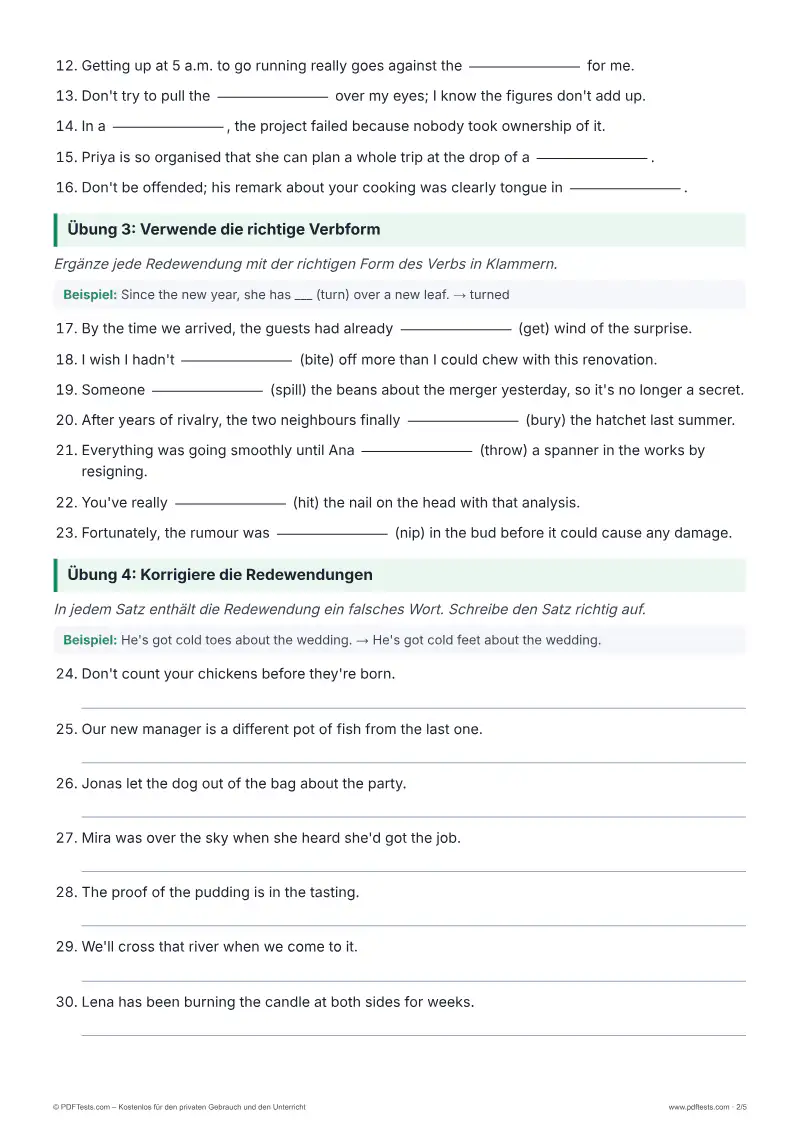
 PDF öffnen
  C2
C2 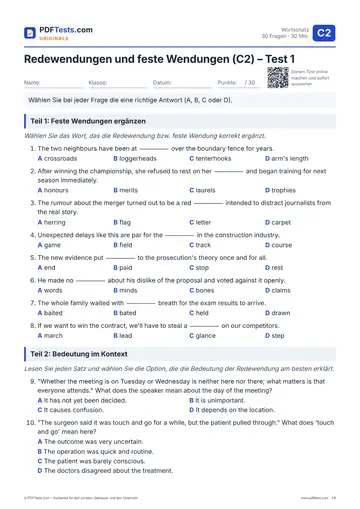 C2
C2  C2
C2  C2
C2  C2
C2  C2
C2  C2
C2