PDFTests Originals

Colocaciones y matices (C2) – Ficha 1

C2 Maestría FichaInglés

Esta ficha de nivel C2 trabaja colocaciones avanzadas y expresiones idiomáticas del inglés en contexto, como 'allay fears', 'bear the brunt' y 'a foregone conclusion'. También incluye preposiciones regidas, formación de palabras y transformaciones con palabra clave. Está pensada para alumnos de nivel Proficiency y candidatos a exámenes oficiales que buscan un inglés preciso y natural.

ejercicios
39
Tiempo
40 min
PDF
5 páginas
Soluciones
Incluidas
  • 100 % gratis
  • Sin registro
  • PDF A4 listo para imprimir
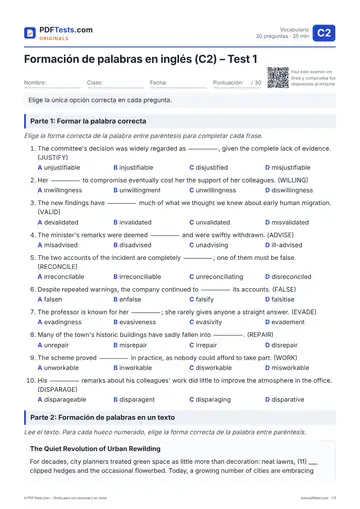
Vista previa de la página 1: Colocaciones y matices (C2) – Ficha 1 Abrir PDF

Haz la ficha en línea

Escribe tus respuestas y pulsa «Comprobar respuestas». Se aceptan otras respuestas correctas.

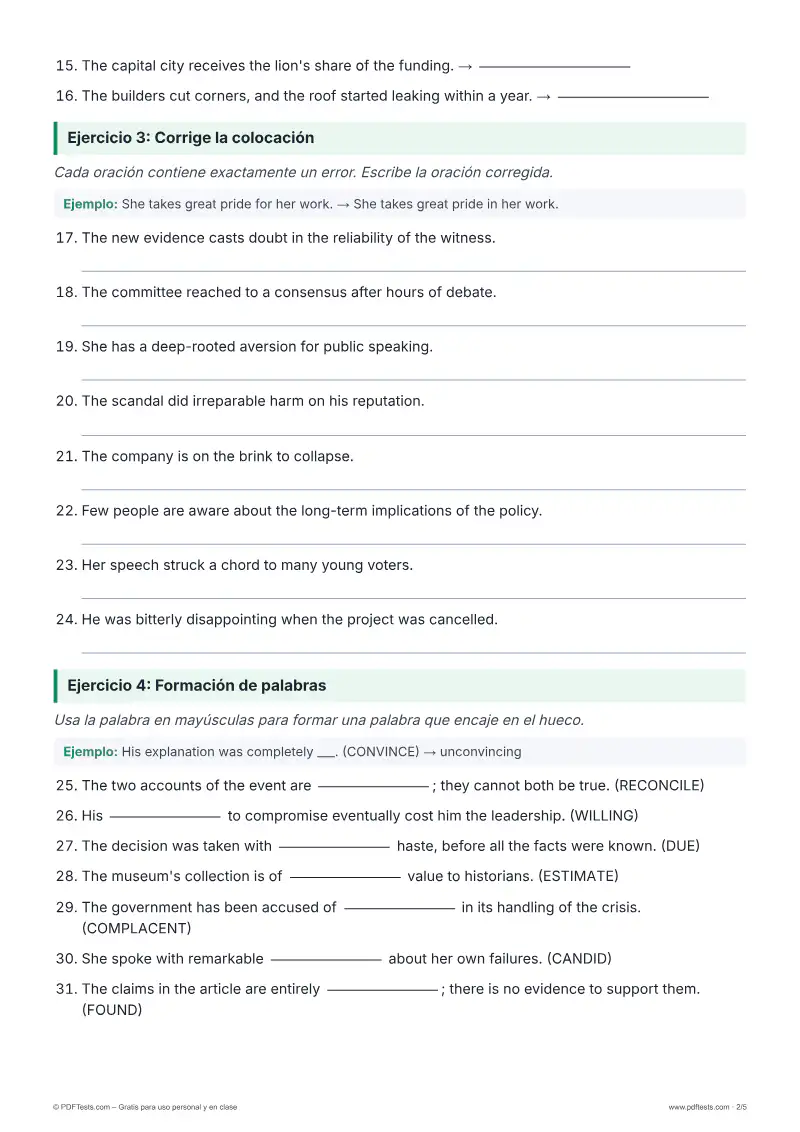
Ejercicio 1: Colocaciones verbo + sustantivo

Completa cada oración con un verbo del recuadro. Usa cada verbo una sola vez. Sobran dos verbos.

Ejemplo: The new policy is likely to ___ controversy. → spark

Banco de palabras harbourallaystrikewreakbearpaydrawraisecommitfoster

  1. Many residents still serious doubts about the new flood defences.

  2. The minister tried to fears that the factory would close.

  3. It is difficult to a balance between privacy and security.

  4. The storm continued to havoc along the coast for two days.

  5. Low-income families tend to the brunt of rising energy prices.

  6. Critics argue that the company does little more than lip service to sustainability.

  7. We need to a clear distinction between criticism and abuse.

  8. His unconventional methods are bound to a few eyebrows among senior staff.

Ejercicio 2: Expresiones idiomáticas y su significado

Relaciona cada expresión en negrita con su significado del recuadro. Sobra un significado.

Banco de palabras to argue about very small, unimportant differencesa result that is certain before it happensin strong disagreementsomething that distracts attention from the real issueto follow the rules or official policyto take attention or praise away from someonethe largest part of somethingto do something cheaply or carelessly to save time or moneyto make a situation calmer after an argument

  1. Let's not split hairs over the exact wording of the contract.

  2. With such a strong team, victory was a foregone conclusion.

  3. The two neighbours have been at loggerheads for years.

  4. The detective soon realised the missing key was a red herring.

  5. Junior staff are expected to toe the line and not question decisions.

  6. I was about to announce the news, but my brother stole my thunder.

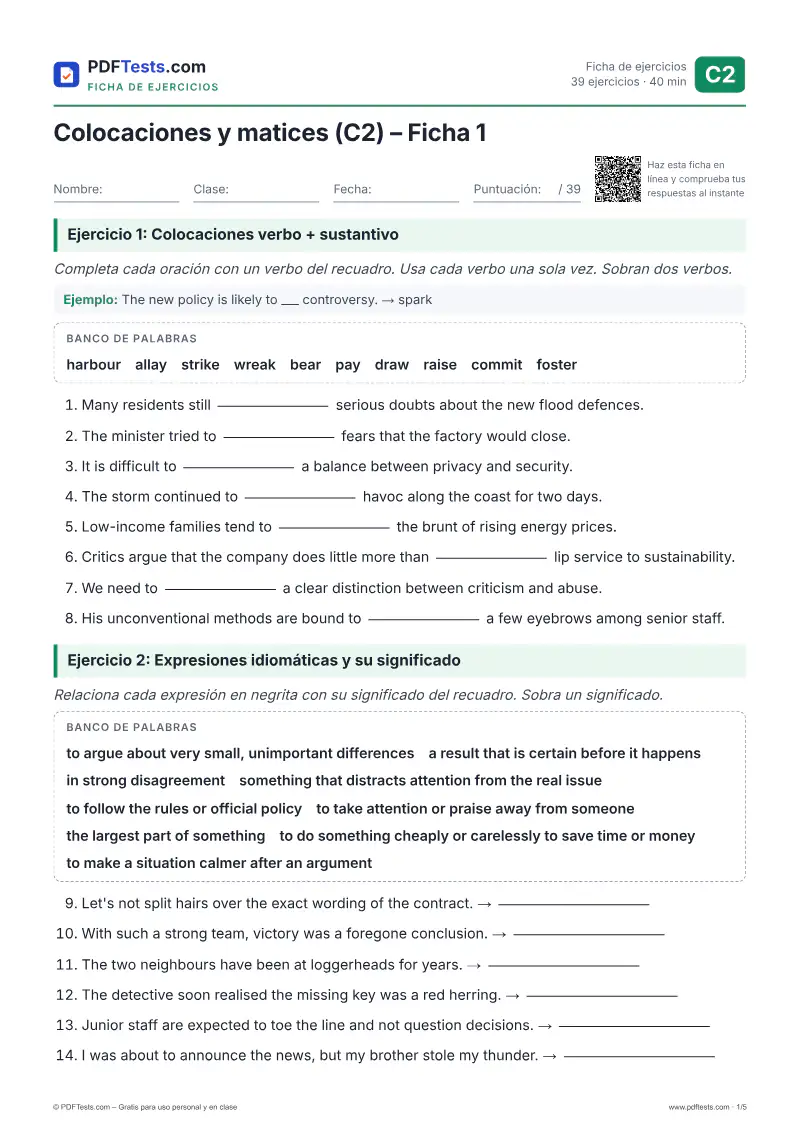
  7. The capital city receives the lion's share of the funding.

  8. The builders cut corners, and the roof started leaking within a year.

Ejercicio 3: Corrige la colocación

Cada oración contiene exactamente un error. Escribe la oración corregida.

Ejemplo: She takes great pride for her work. → She takes great pride in her work.

  1. The new evidence casts doubt in the reliability of the witness.

  2. The committee reached to a consensus after hours of debate.

  3. She has a deep-rooted aversion for public speaking.

  4. The scandal did irreparable harm on his reputation.

  5. The company is on the brink to collapse.

  6. Few people are aware about the long-term implications of the policy.

  7. Her speech struck a chord to many young voters.

  8. He was bitterly disappointing when the project was cancelled.

Ejercicio 4: Formación de palabras

Usa la palabra en mayúsculas para formar una palabra que encaje en el hueco.

Ejemplo: His explanation was completely ___. (CONVINCE) → unconvincing

  1. The two accounts of the event are ; they cannot both be true. (RECONCILE)

  2. His to compromise eventually cost him the leadership. (WILLING)

  3. The decision was taken with haste, before all the facts were known. (DUE)

  4. The museum's collection is of value to historians. (ESTIMATE)

  5. The government has been accused of in its handling of the crisis. (COMPLACENT)

  6. She spoke with remarkable about her own failures. (CANDID)

  7. The claims in the article are entirely ; there is no evidence to support them. (FOUND)

  8. Neither side believed a word the other said, so the negotiations took place in an atmosphere of mutual . (TRUST)

Ejercicio 5: Transformaciones con palabra clave

Completa la segunda oración para que signifique lo mismo que la primera, usando la palabra en mayúsculas. Escribe la oración completa.

Ejemplo: She was the first to tell everyone the news, so I had nothing left to announce. (THUNDER) → She stole ___. → She stole my thunder.

  1. Everyone knew in advance how the vote would end. (FOREGONE) → The outcome of the vote was ___.

  2. The two departments strongly disagree about the budget. (LOGGERHEADS) → The two departments are ___ the budget.

  3. The poorest regions suffered most from the cuts. (BRUNT) → The poorest regions bore ___.

  4. The manager tried to reduce the staff's fears. (ALLAY) → The manager tried ___.

  5. His remarks surprised many of the delegates. (EYEBROWS) → His remarks ___ among many of the delegates.

  6. The company claims to care about environmental issues, but it does nothing. (LIP) → The company only pays ___ environmental issues.

  7. The author did the research quickly and carelessly to save time. (CORNERS) → The author ___ in the research.

¿Te ha resultado útil esta página?

Informar de un error

¿Has visto una respuesta incorrecta, una errata o una explicación poco clara? Avísanos y lo corregiremos.

Vista previa

Sobre este examen

Ficha de inglés C2 en PDF: colocaciones, expresiones idiomáticas, preposiciones regidas, formación de palabras y transformaciones con palabra clave.

Temas

Colocaciones verbo + sustantivoExpresiones idiomáticasPreposiciones regidasFormación de palabrasTransformaciones con palabra clave

Notas para el profesor

Conviene hacer primero los ejercicios 1 y 2, ya que las colocaciones y expresiones que presentan vuelven a aparecer en las transformaciones del ejercicio 5. Los errores más frecuentes son las preposiciones regidas incorrectas ('aware about', 'harm on'), añadir 'to' después de 'reach' y elegir mal el prefijo negativo en la formación de palabras (p. ej., 'disfounded' en lugar de 'unfounded'). Como actividad de ampliación, pida a los alumnos que escriban un breve párrafo de opinión sobre un tema local usando al menos seis de las expresiones trabajadas.
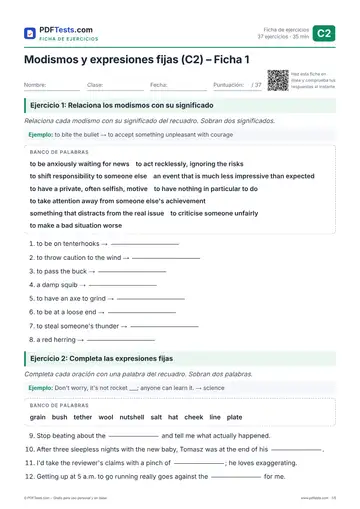
Todos los exámenes de Inglés C2 →