PDFTests Originals

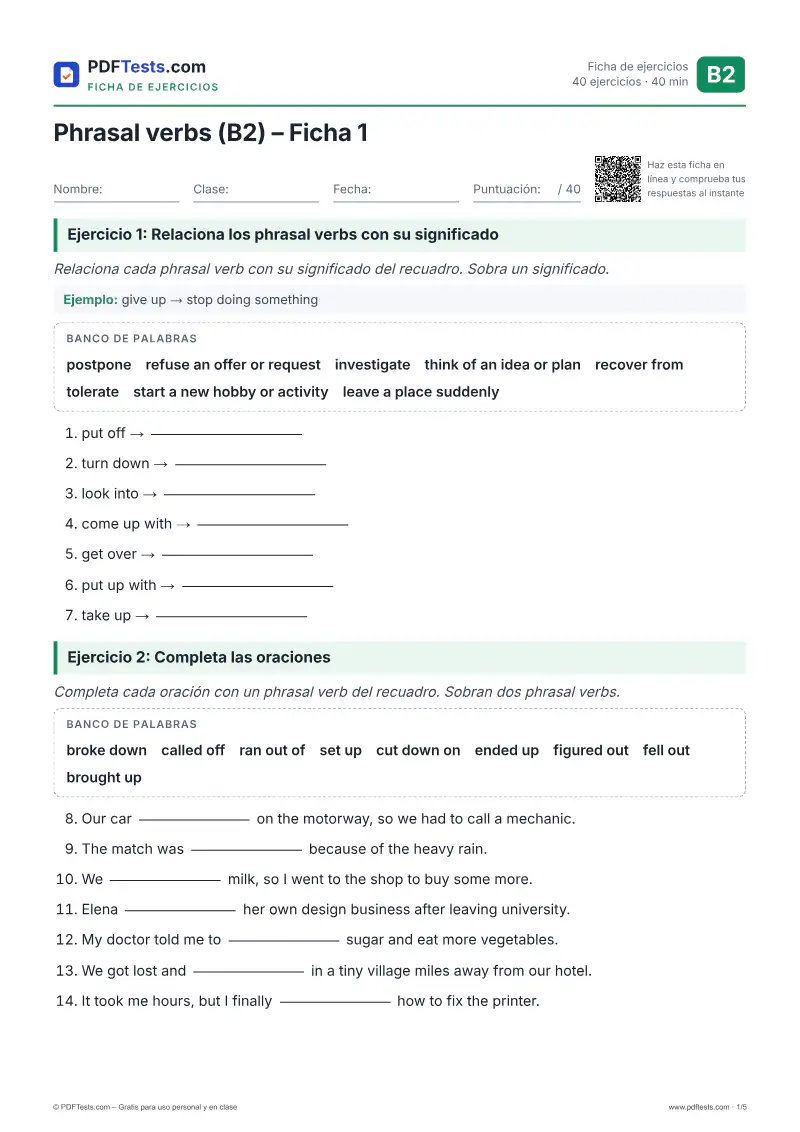
Phrasal verbs (B2) – Ficha 1

B2 Intermedio alto FichaInglés

Esta ficha sirve para practicar phrasal verbs habituales del nivel B2, como put off, come up with, run out of y get over. El alumnado relaciona significados, usa los verbos en contexto y en el tiempo verbal correcto, forma sustantivos como takeover y setback, corrige errores típicos y reescribe oraciones. Es adecuada para estudiantes de nivel intermedio alto que preparan exámenes como el B2 First.
ejercicios
40
Tiempo
40 min
PDF
5 páginas
Soluciones
Incluidas
  • 100 % gratis
  • Sin registro
  • PDF A4 listo para imprimir
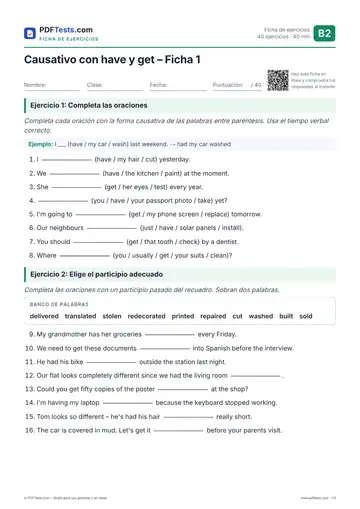
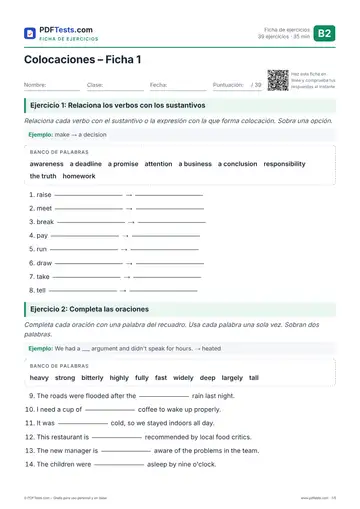
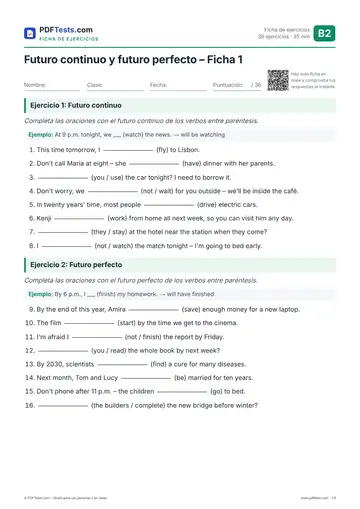
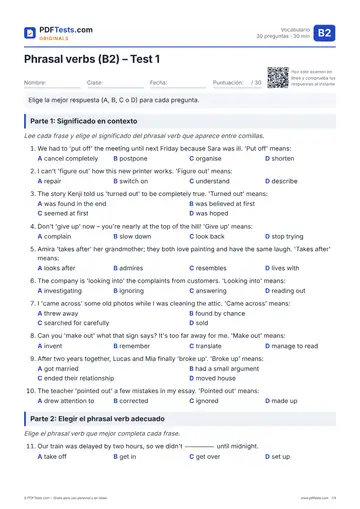
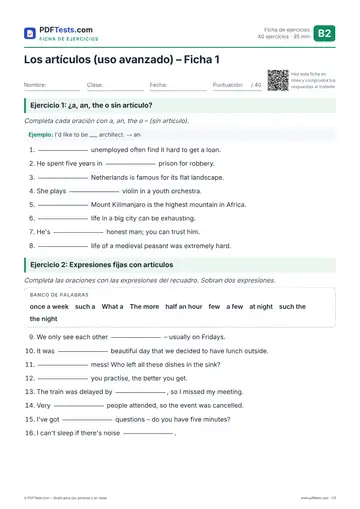
Vista previa de la página 1: Phrasal verbs (B2) – Ficha 1 Abrir PDF

Haz la ficha en línea

Escribe tus respuestas y pulsa «Comprobar respuestas». Se aceptan otras respuestas correctas.

Ejercicio 1: Relaciona los phrasal verbs con su significado

Relaciona cada phrasal verb con su significado del recuadro. Sobra un significado.

Ejemplo: give up → stop doing something

Banco de palabras postponerefuse an offer or requestinvestigatethink of an idea or planrecover fromtoleratestart a new hobby or activityleave a place suddenly

  1. put off

  2. turn down

  3. look into

  4. come up with

  5. get over

  6. put up with

  7. take up

Ejercicio 2: Completa las oraciones

Completa cada oración con un phrasal verb del recuadro. Sobran dos phrasal verbs.

Banco de palabras broke downcalled offran out ofset upcut down onended upfigured outfell outbrought up

  1. Our car on the motorway, so we had to call a mechanic.

  2. The match was because of the heavy rain.

  3. We milk, so I went to the shop to buy some more.

  4. Elena her own design business after leaving university.

  5. My doctor told me to sugar and eat more vegetables.

  6. We got lost and in a tiny village miles away from our hotel.

  7. It took me hours, but I finally how to fix the printer.

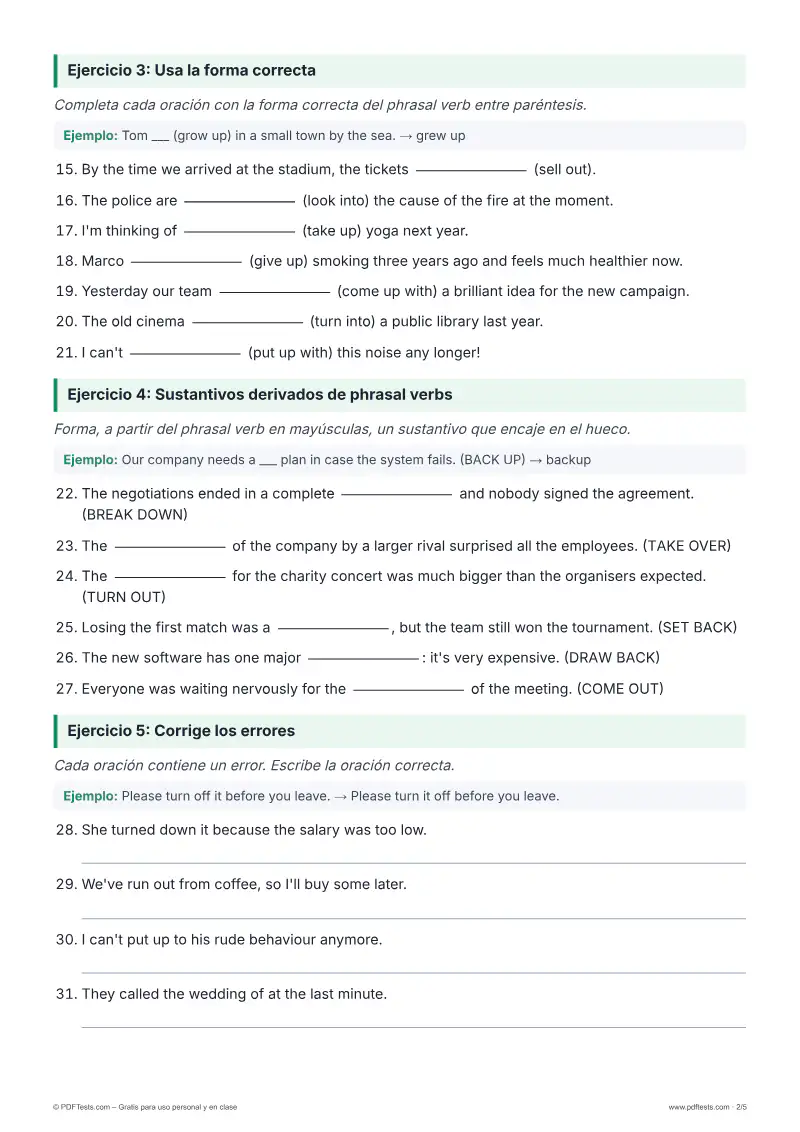
Ejercicio 3: Usa la forma correcta

Completa cada oración con la forma correcta del phrasal verb entre paréntesis.

Ejemplo: Tom ___ (grow up) in a small town by the sea. → grew up

  1. By the time we arrived at the stadium, the tickets (sell out).

  2. The police are (look into) the cause of the fire at the moment.

  3. I'm thinking of (take up) yoga next year.

  4. Marco (give up) smoking three years ago and feels much healthier now.

  5. Yesterday our team (come up with) a brilliant idea for the new campaign.

  6. The old cinema (turn into) a public library last year.

  7. I can't (put up with) this noise any longer!

Ejercicio 4: Sustantivos derivados de phrasal verbs

Forma, a partir del phrasal verb en mayúsculas, un sustantivo que encaje en el hueco.

Ejemplo: Our company needs a ___ plan in case the system fails. (BACK UP) → backup

  1. The negotiations ended in a complete and nobody signed the agreement. (BREAK DOWN)

  2. The of the company by a larger rival surprised all the employees. (TAKE OVER)

  3. The for the charity concert was much bigger than the organisers expected. (TURN OUT)

  4. Losing the first match was a , but the team still won the tournament. (SET BACK)

  5. The new software has one major : it's very expensive. (DRAW BACK)

  6. Everyone was waiting nervously for the of the meeting. (COME OUT)

Ejercicio 5: Corrige los errores

Cada oración contiene un error. Escribe la oración correcta.

Ejemplo: Please turn off it before you leave. → Please turn it off before you leave.

  1. She turned down it because the salary was too low.

  2. We've run out from coffee, so I'll buy some later.

  3. I can't put up to his rude behaviour anymore.

  4. They called the wedding of at the last minute.

  5. He finally got over from his illness after a month.

  6. I need to look out the meaning of this word in a dictionary.

  7. My parents brought me on in a small town by the sea.

Ejercicio 6: Reescribe las oraciones

Reescribe cada oración usando el phrasal verb entre paréntesis sin que cambie el significado.

Ejemplo: The company decided to cancel the trip. (call off) → The company decided to call off the trip.

  1. The concert was postponed until next month. (put off)

  2. I can't tolerate the noise from next door. (put up with)

  3. Anna refused the job offer. (turn down)

  4. Our manager is investigating the problem. (look into)

  5. Scientists conducted a survey of 500 teenagers. (carry out)

  6. It took her a long time to recover from the shock. (get over)

¿Te ha resultado útil esta página?

Informar de un error

¿Has visto una respuesta incorrecta, una errata o una explicación poco clara? Avísanos y lo corregiremos.

Vista previa

Sobre este examen

Ficha de inglés B2 sobre phrasal verbs: significados, colocaciones, tiempos verbales y sustantivos como breakdown y setback. PDF imprimible con soluciones.

Temas

Phrasal verbsSignificado en contextoTiempos verbales con phrasal verbsPhrasal verbs separablesSustantivos derivados de phrasal verbsCorrección de errores

Notas para el profesor

Empiece con el ejercicio de relacionar para comprobar que se entiende el significado y continúe con los ejercicios controlados antes de pasar a la reescritura. Entre los errores más frecuentes están colocar el pronombre detrás de la partícula (turned down it en lugar de turned it down), usar la preposición equivocada (run out from, put up to) y olvidar la pasiva con verbos como call off. Como actividad de ampliación, pida al alumnado que escriba una historia breve con al menos seis de los phrasal verbs y que después la intercambie con un compañero para revisar el uso.

Todos los exámenes de Inglés B2 →