 A1
OriginalLevel test
PDFTests Originals
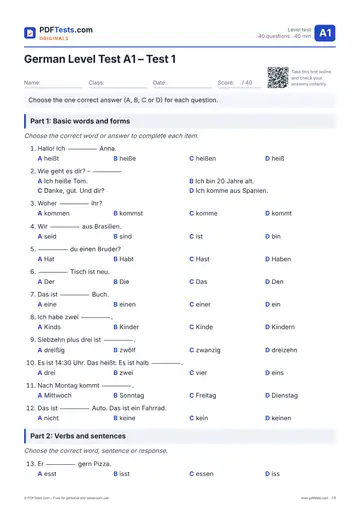
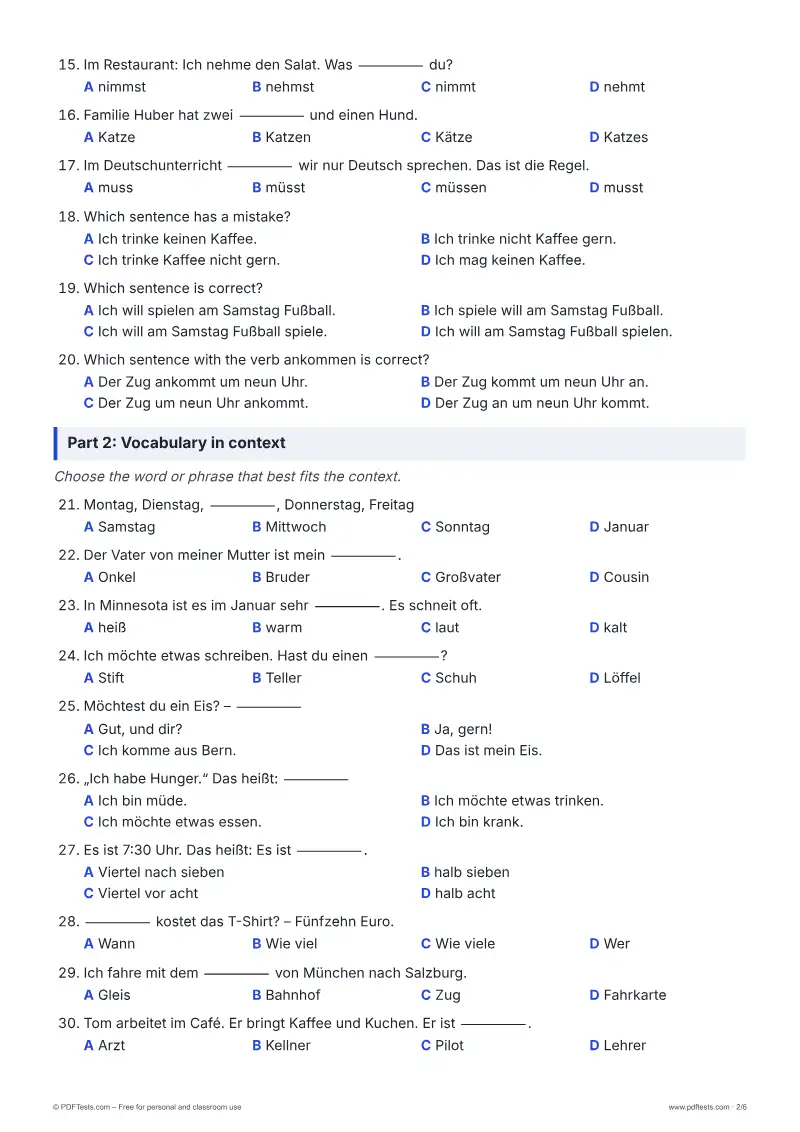
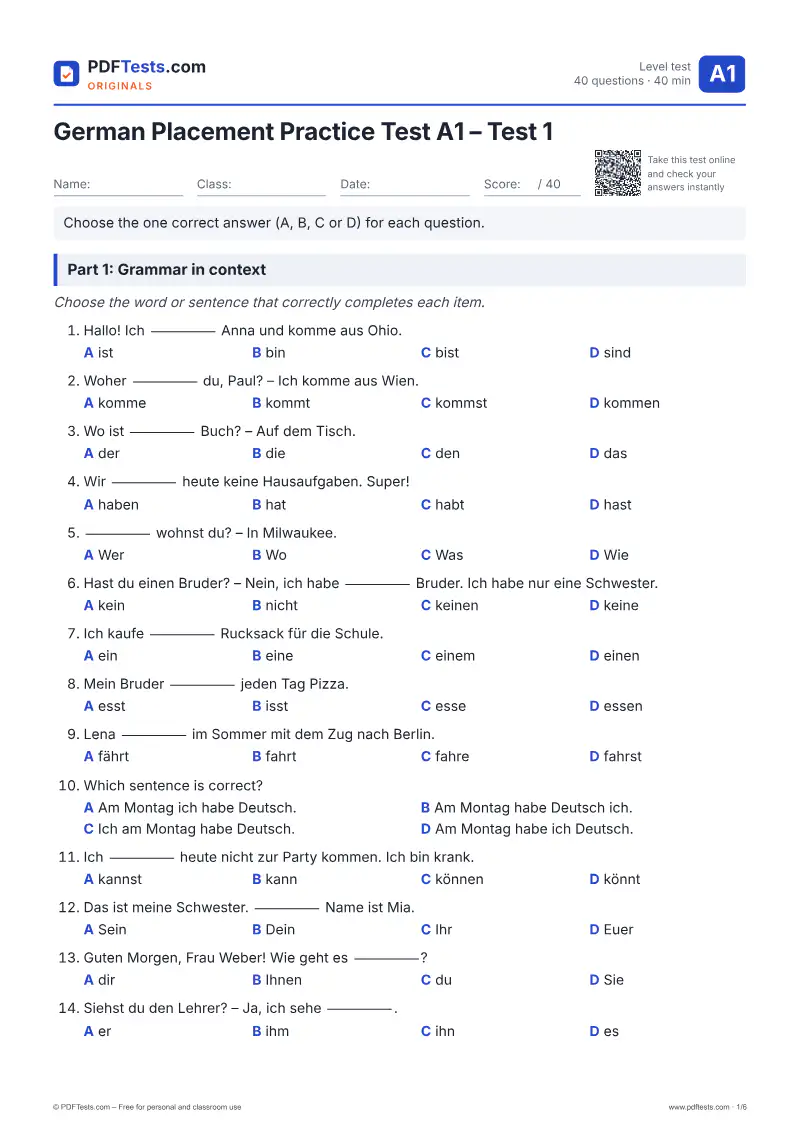
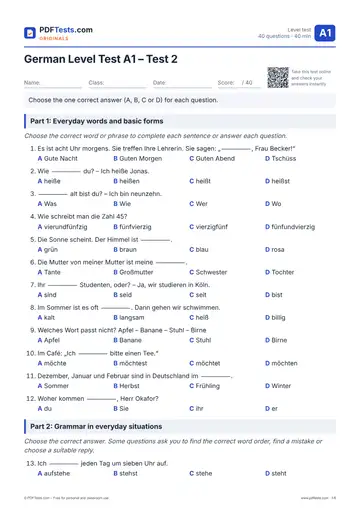
This German placement practice test checks whether a learner is secure at CEFR level A1, roughly a first-year high-school or first-semester college German course. It samples core grammar, everyday vocabulary and reading in contexts from Germany, Austria, Switzerland and German-American life. It suits students choosing a course and teachers who need a quick level check.
 Open PDF
Choose the one correct answer (A, B, C or D) for each question. Choose your answers, then press “Check my answers”.
Your result
No mistakes at all. Well done!
Was this page helpful?
What was the problem?
Thank you for your feedback!
This German placement practice test checks whether a learner is secure at CEFR level A1, roughly a first-year high-school or first-semester college German course. It samples core grammar, everyday vocabulary and reading in contexts from Germany, Austria, Switzerland and German-American life. It suits students choosing a course and teachers who need a quick level check.
Learners who score 32/40 or more are generally secure at A1 and may be ready for a second-level course. A score of 20-31 suggests partial mastery, and below 20 suggests starting at the beginning. Check typical A1 errors: verb endings with du and er/sie, kein vs. nicht, the accusative ending -en (einen, keinen, ihn), verb-second order after time expressions, and the infinitive at the end with modal verbs. For follow-up, have students explain their wrong answers or rewrite the incorrect sentences from Part 1.
A1 OriginalLevel test
 A1
OriginalLevel test
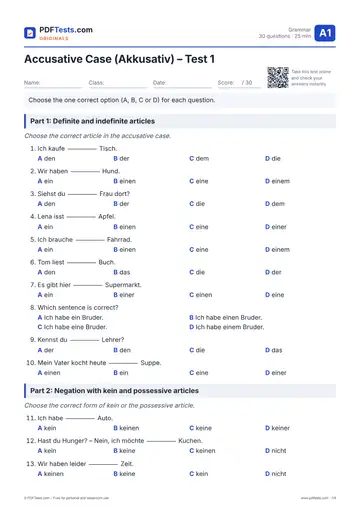 A1
OriginalGrammar
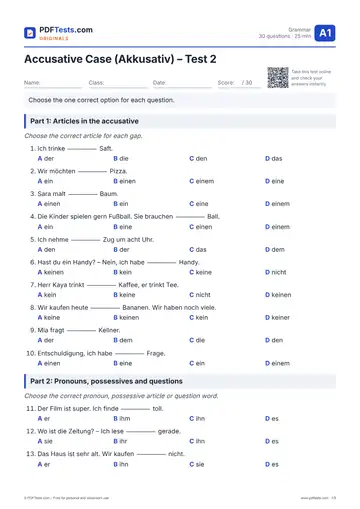 A1
OriginalGrammar
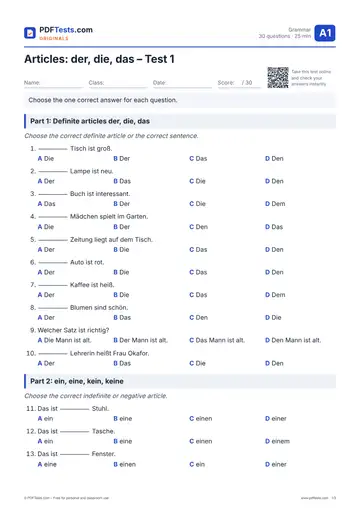 A1
OriginalGrammar
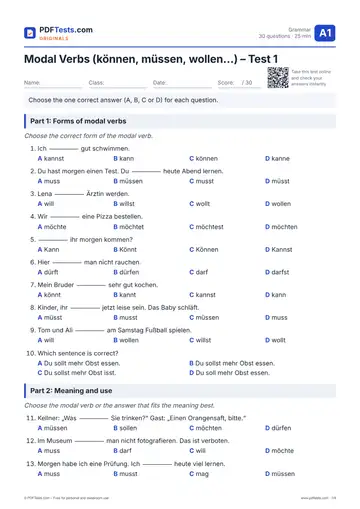 A1
OriginalGrammar
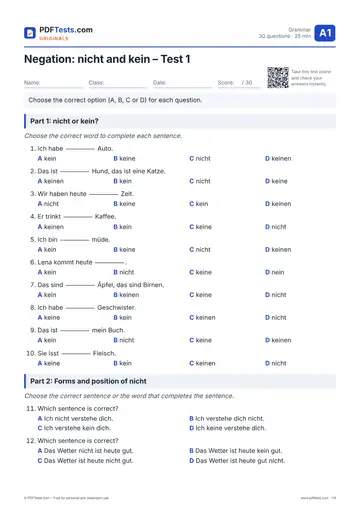 A1
OriginalGrammar
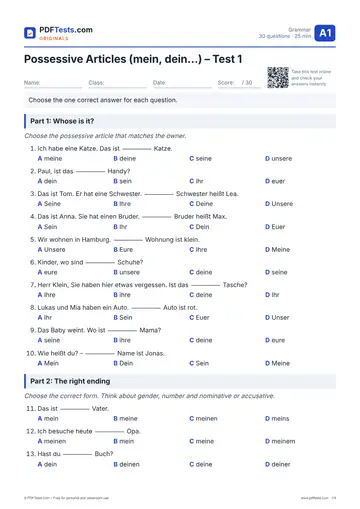 A1
OriginalGrammar
Your PDF is downloading
What would you like to do next?