PDFTests Originals

Modismos y expresiones fijas (C2) – Ficha 1

C2 Maestría FichaInglés

Esta ficha sirve para practicar modismos y expresiones fijas avanzados del inglés en contexto, con especial atención al significado, a las combinaciones fijas de palabras y a las formas de las palabras. Está pensada para estudiantes de nivel C2 y usuarios competentes que quieran emplear el lenguaje idiomático con precisión y naturalidad.

ejercicios
37
Tiempo
35 min
PDF
5 páginas
Soluciones
Incluidas
  • 100 % gratis
  • Sin registro
  • PDF A4 listo para imprimir
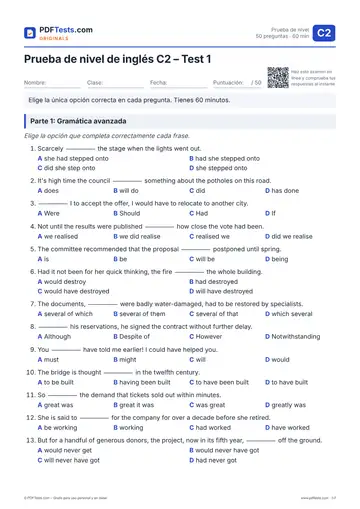
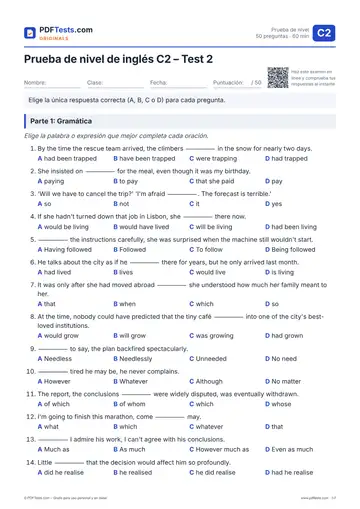
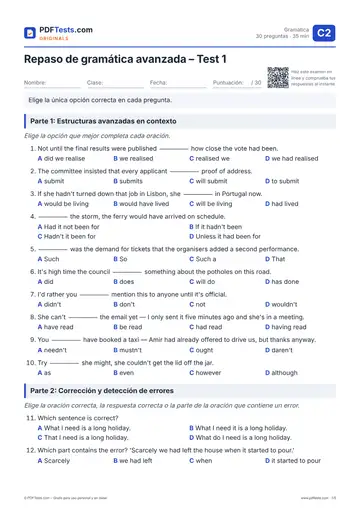
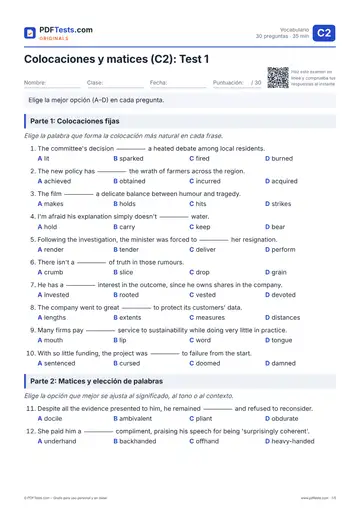
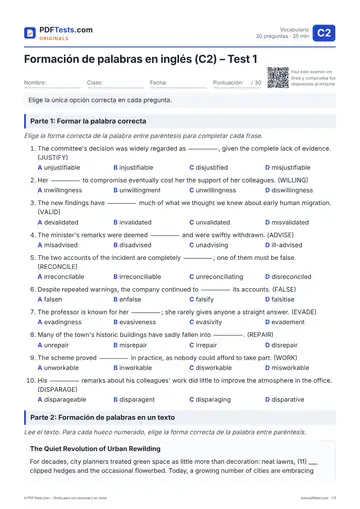
Vista previa de la página 1: Modismos y expresiones fijas (C2) – Ficha 1 Abrir PDF

Haz la ficha en línea

Escribe tus respuestas y pulsa «Comprobar respuestas». Se aceptan otras respuestas correctas.

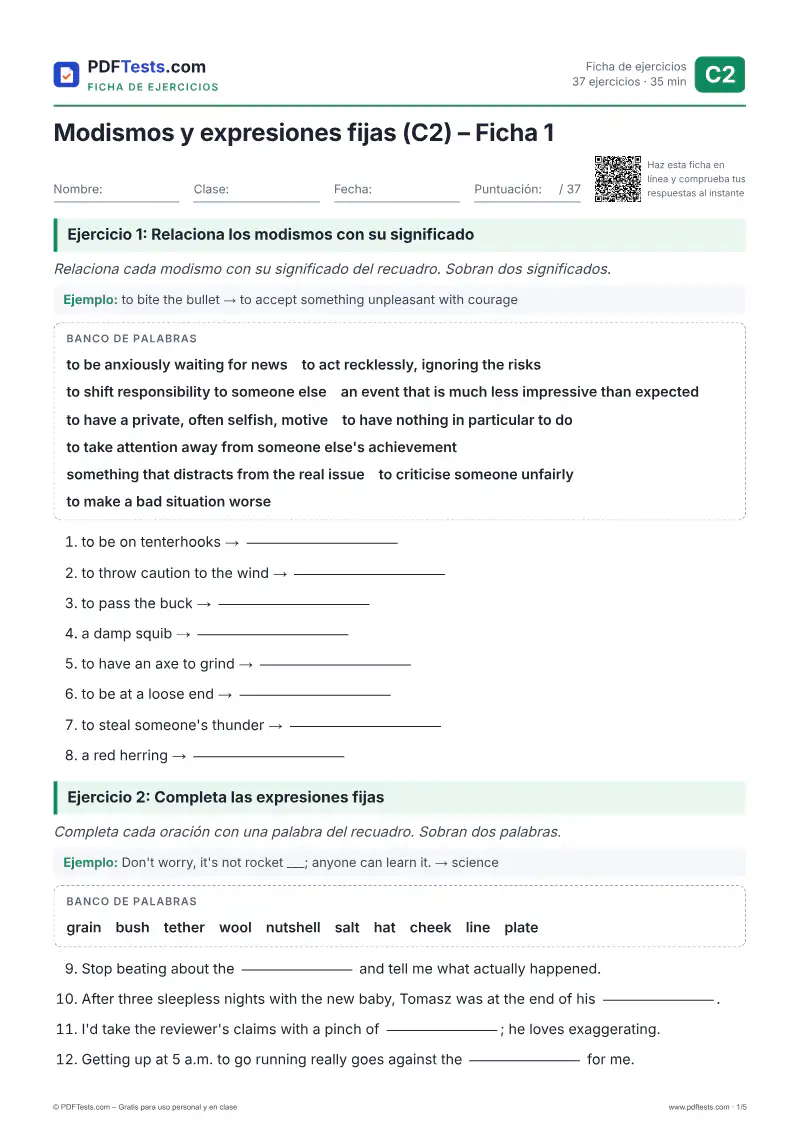
Ejercicio 1: Relaciona los modismos con su significado

Relaciona cada modismo con su significado del recuadro. Sobran dos significados.

Ejemplo: to bite the bullet → to accept something unpleasant with courage

Banco de palabras to be anxiously waiting for newsto act recklessly, ignoring the risksto shift responsibility to someone elsean event that is much less impressive than expectedto have a private, often selfish, motiveto have nothing in particular to doto take attention away from someone else's achievementsomething that distracts from the real issueto criticise someone unfairlyto make a bad situation worse

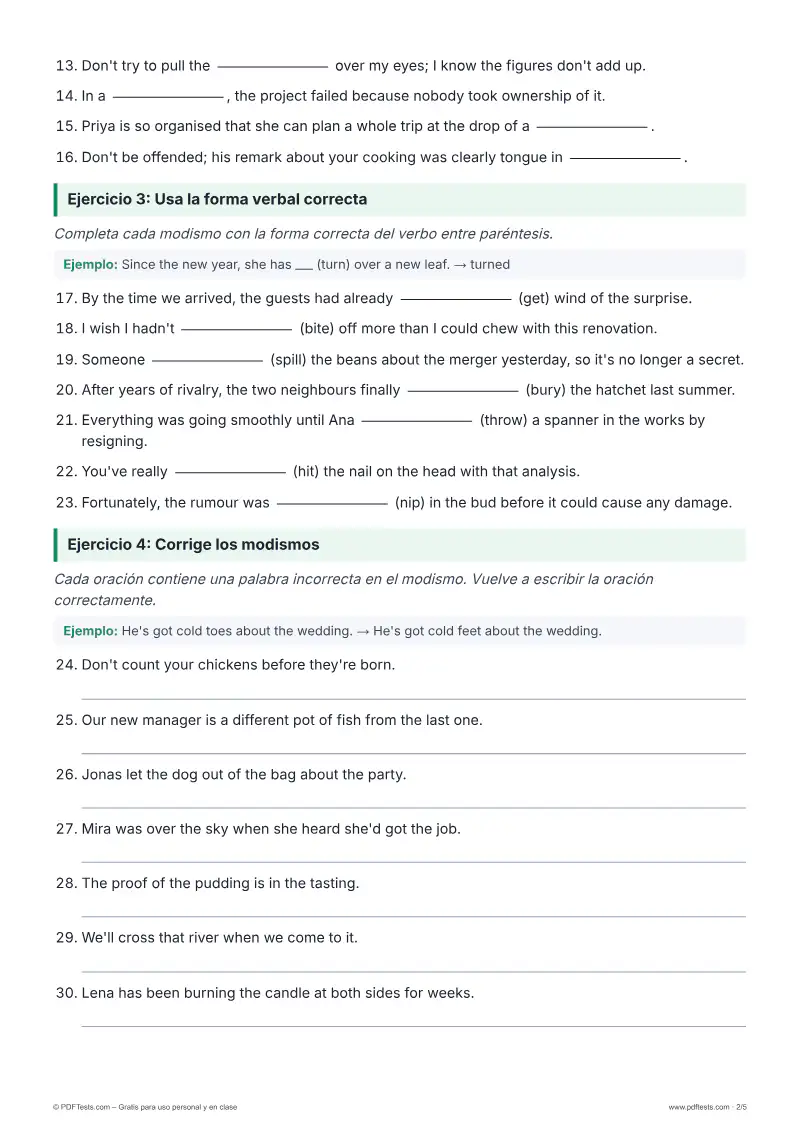
  1. to be on tenterhooks

  2. to throw caution to the wind

  3. to pass the buck

  4. a damp squib

  5. to have an axe to grind

  6. to be at a loose end

  7. to steal someone's thunder

  8. a red herring

Ejercicio 2: Completa las expresiones fijas

Completa cada oración con una palabra del recuadro. Sobran dos palabras.

Ejemplo: Don't worry, it's not rocket ___; anyone can learn it. → science

Banco de palabras grainbushtetherwoolnutshellsalthatcheeklineplate

  1. Stop beating about the and tell me what actually happened.

  2. After three sleepless nights with the new baby, Tomasz was at the end of his .

  3. I'd take the reviewer's claims with a pinch of ; he loves exaggerating.

  4. Getting up at 5 a.m. to go running really goes against the for me.

  5. Don't try to pull the over my eyes; I know the figures don't add up.

  6. In a , the project failed because nobody took ownership of it.

  7. Priya is so organised that she can plan a whole trip at the drop of a .

  8. Don't be offended; his remark about your cooking was clearly tongue in .

Ejercicio 3: Usa la forma verbal correcta

Completa cada modismo con la forma correcta del verbo entre paréntesis.

Ejemplo: Since the new year, she has ___ (turn) over a new leaf. → turned

  1. By the time we arrived, the guests had already (get) wind of the surprise.

  2. I wish I hadn't (bite) off more than I could chew with this renovation.

  3. Someone (spill) the beans about the merger yesterday, so it's no longer a secret.

  4. After years of rivalry, the two neighbours finally (bury) the hatchet last summer.

  5. Everything was going smoothly until Ana (throw) a spanner in the works by resigning.

  6. You've really (hit) the nail on the head with that analysis.

  7. Fortunately, the rumour was (nip) in the bud before it could cause any damage.

Ejercicio 4: Corrige los modismos

Cada oración contiene una palabra incorrecta en el modismo. Vuelve a escribir la oración correctamente.

Ejemplo: He's got cold toes about the wedding. → He's got cold feet about the wedding.

  1. Don't count your chickens before they're born.

  2. Our new manager is a different pot of fish from the last one.

  3. Jonas let the dog out of the bag about the party.

  4. Mira was over the sky when she heard she'd got the job.

  5. The proof of the pudding is in the tasting.

  6. We'll cross that river when we come to it.

  7. Lena has been burning the candle at both sides for weeks.

Ejercicio 5: Forma la palabra correcta

Usa la palabra en mayúsculas para formar una palabra que complete cada expresión fija.

Ejemplo: After the argument, he was ___ shown the door. (CEREMONY) → unceremoniously

  1. It goes without that safety must come first. (SAY)

  2. With such a strong team, the result of the final was a foregone . (CONCLUDE)

  3. When it comes to to detail, she is second to none. (ATTEND)

  4. He made a attempt to apologise, but nobody was convinced. (HEART)

  5. The twins are like two peas in a pod; they're practically . (DISTINGUISH)

  6. To add insult to , the train was cancelled after we'd waited an hour. (INJURE)

  7. The deal almost fell through, but they reached an agreement at the hour. (ELEVEN)

¿Te ha resultado útil esta página?

Informar de un error

¿Has visto una respuesta incorrecta, una errata o una explicación poco clara? Avísanos y lo corregiremos.

Vista previa

Sobre este examen

Ficha de inglés C2 en PDF: modismos y expresiones fijas, significados, palabras clave, formas verbales, corrección de errores y formación de palabras.

Temas

ModismosExpresiones fijasColocacionesFormación de palabrasCorrección de errores

Notas para el profesor

Empiece con el ejercicio de relacionar para activar el significado y pase después a los ejercicios de completar huecos y de corrección, que se centran en la forma exacta de cada expresión. Un error frecuente es cambiar una palabra clave, por ejemplo 'end of the line' en lugar de 'end of my tether', o usar una forma verbal incorrecta, como 'spilled out the beans'. Como actividad de seguimiento, pida al alumnado que escriba una breve anécdota con al menos cinco de las expresiones y que después un compañero revise si están bien empleadas.
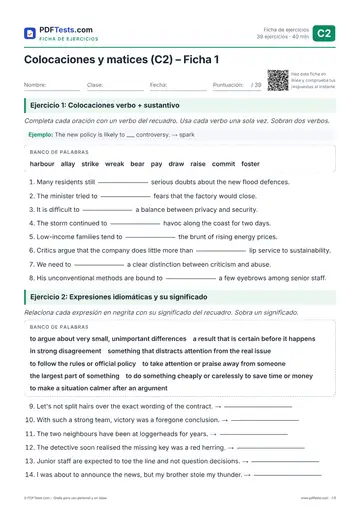
Todos los exámenes de Inglés C2 →