 B1
OriginalReading
PDFTests Originals
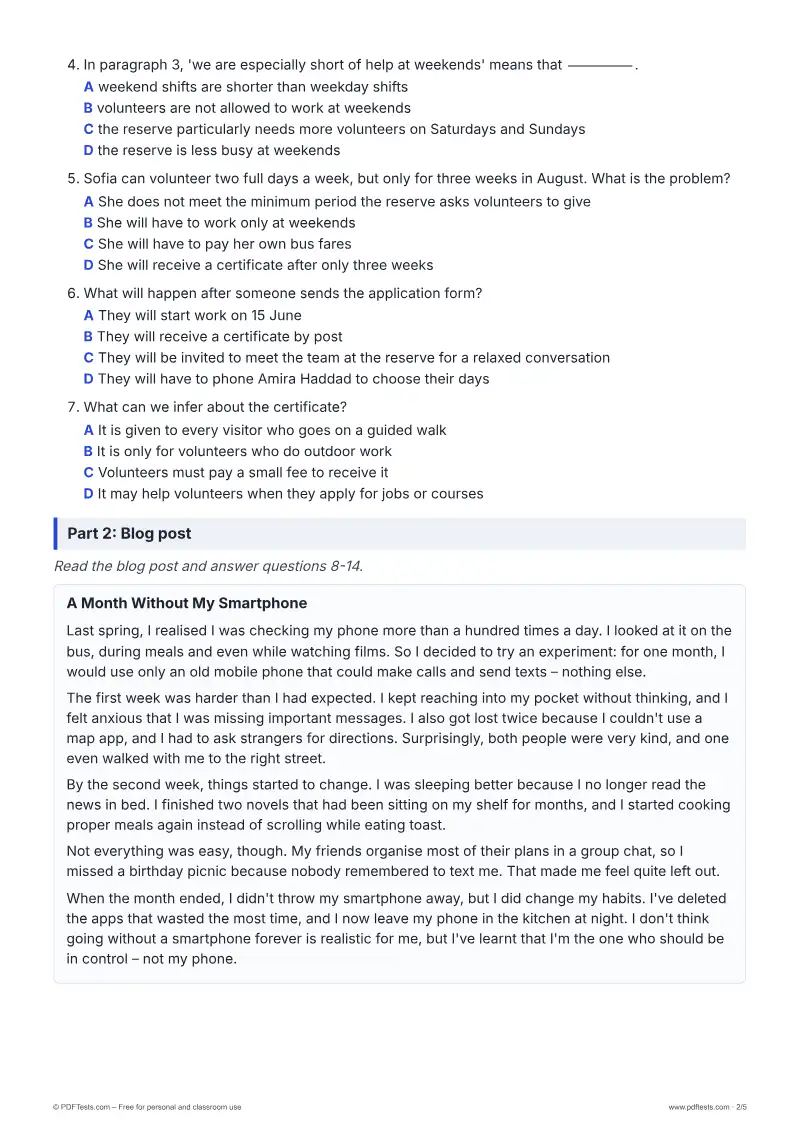
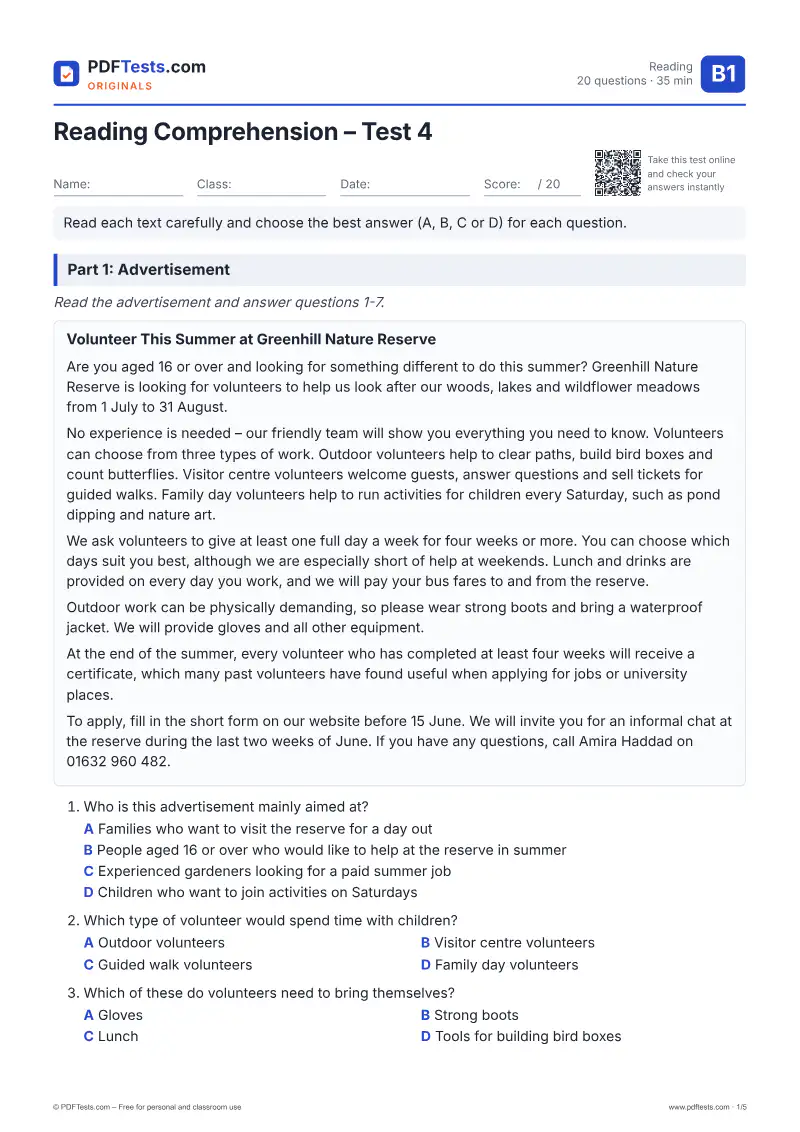
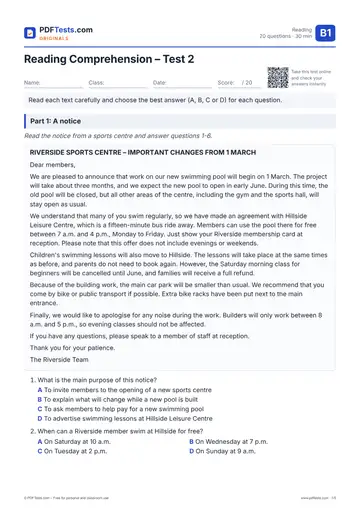
This B1 reading comprehension test contains three original texts: an advertisement for summer volunteers, a personal blog post about living without a smartphone, and a short story about a running race. The 20 multiple-choice questions test gist, detail, inference and vocabulary in context. It suits intermediate learners preparing for B1 exams and teachers who need a ready-made reading assessment.
 Open PDF
Read each text carefully and choose the best answer (A, B, C or D) for each question. Choose your answers, then press “Check my answers”.
Your result
No mistakes at all. Well done!
Was this page helpful?
What was the problem?
Thank you for your feedback!
This B1 reading comprehension test contains three original texts: an advertisement for summer volunteers, a personal blog post about living without a smartphone, and a short story about a running race. The 20 multiple-choice questions test gist, detail, inference and vocabulary in context. It suits intermediate learners preparing for B1 exams and teachers who need a ready-made reading assessment.
Allow about 35 minutes, or set one text per lesson as a warm-up. Many questions target common B1 mistakes: choosing an option that repeats words from the text but changes the meaning, and confusing what a writer says with what can be inferred. After the test, ask students to underline the exact words in the text that support each answer. As a follow-up, learners can write their own short blog post about changing a daily habit.
B1 OriginalReading
 B1
OriginalReading
 B1
OriginalReading
 B1
OriginalReading
 B1
OriginalLevel test
 B1
OriginalLevel test
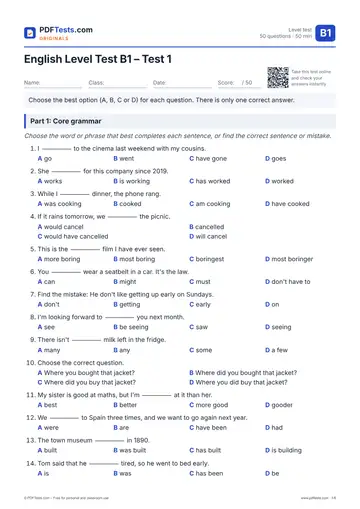 B1
OriginalLevel test
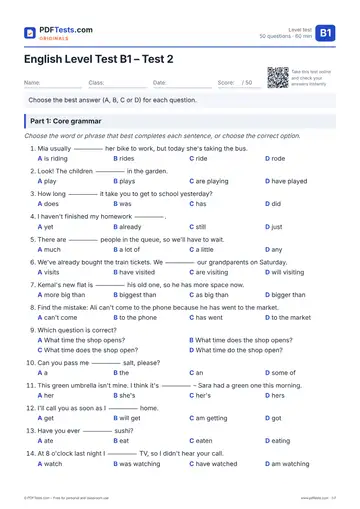 B1
OriginalLevel test
Your PDF is downloading
What would you like to do next?