PDFTests Originals

Commonly Confused Words – Test 1

B2 Upper-intermediate VocabularyEnglish

This B2 vocabulary test checks how well you can tell apart English words that learners often mix up, such as affect and effect, lend and borrow, economic and economical, and historic and historical. It covers meaning, collocations, word choice in context and word families. It suits upper-intermediate learners and teachers preparing students for B2 exams.
Questions
30
Time
30 min
PDF
5 pages
Answer key
Included
  • 100% free
  • No sign-up or email
  • Print-ready A4 PDF
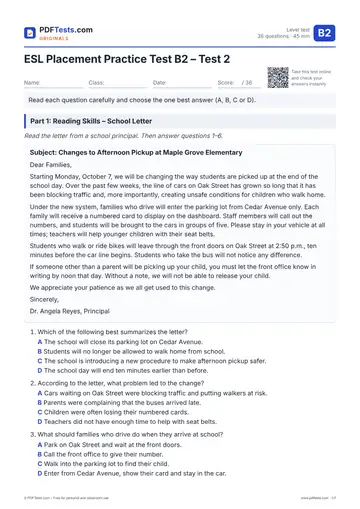
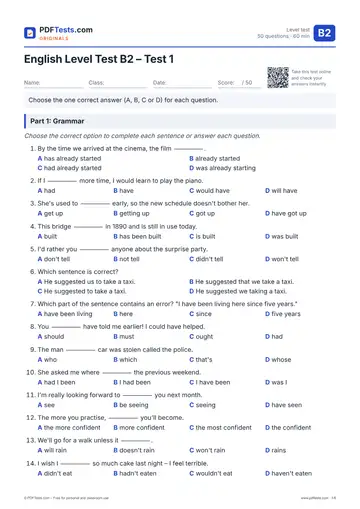
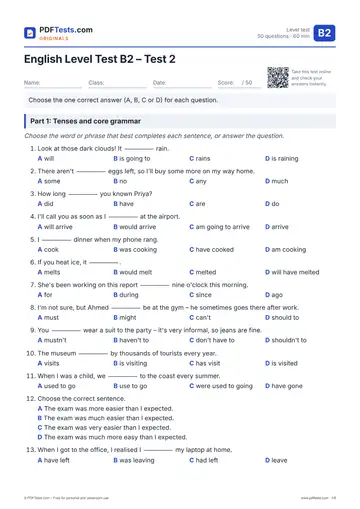
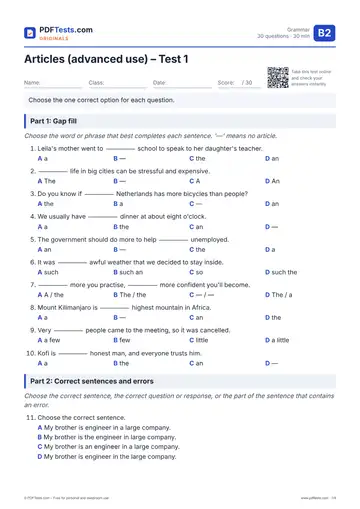
Preview of page 1 of Commonly Confused Words – Test 1 Open PDF

Take the test online

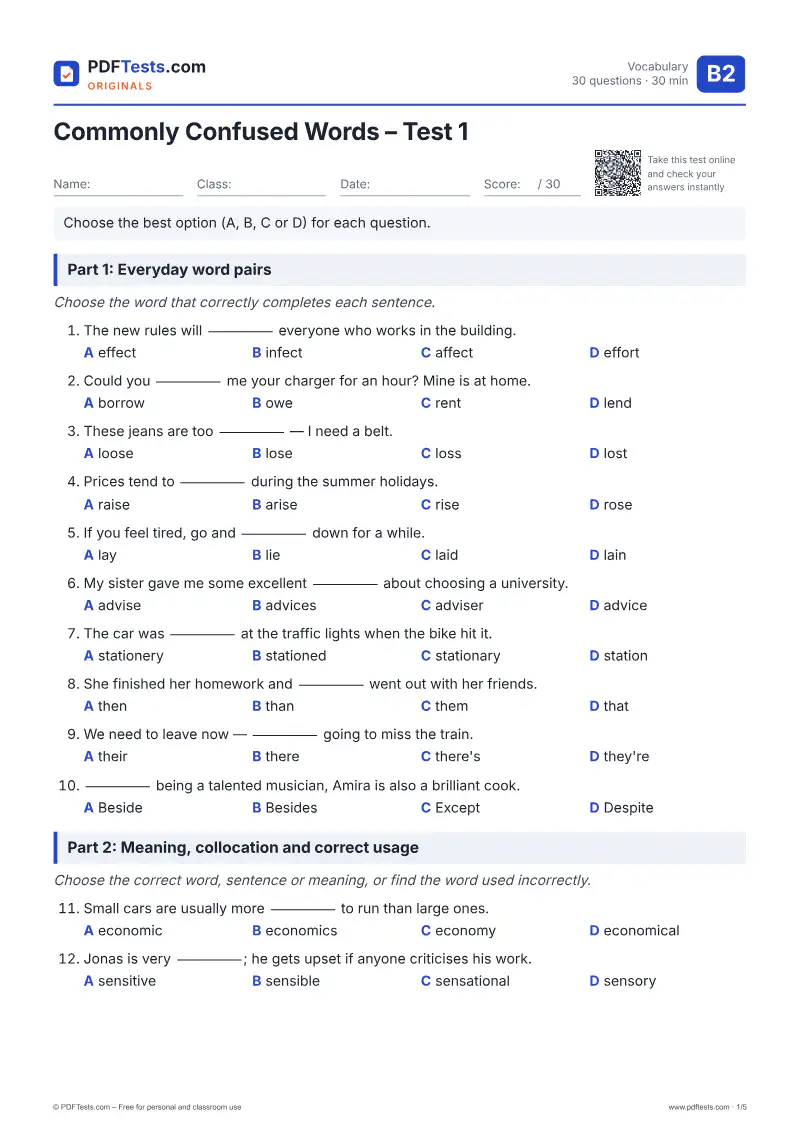
Choose the best option (A, B, C or D) for each question. Choose your answers, then press “Check my answers”.

Part 1: Everyday word pairs

Choose the word that correctly completes each sentence.

  1. The new rules will _____ everyone who works in the building.

  2. Could you _____ me your charger for an hour? Mine is at home.

  3. These jeans are too _____ — I need a belt.

  4. Prices tend to _____ during the summer holidays.

  5. If you feel tired, go and _____ down for a while.

  6. My sister gave me some excellent _____ about choosing a university.

  7. The car was _____ at the traffic lights when the bike hit it.

  8. She finished her homework and _____ went out with her friends.

  9. We need to leave now — _____ going to miss the train.

  10. _____ being a talented musician, Amira is also a brilliant cook.

Part 2: Meaning, collocation and correct usage

Choose the correct word, sentence or meaning, or find the word used incorrectly.

  1. Small cars are usually more _____ to run than large ones.

  2. Jonas is very _____; he gets upset if anyone criticises his work.

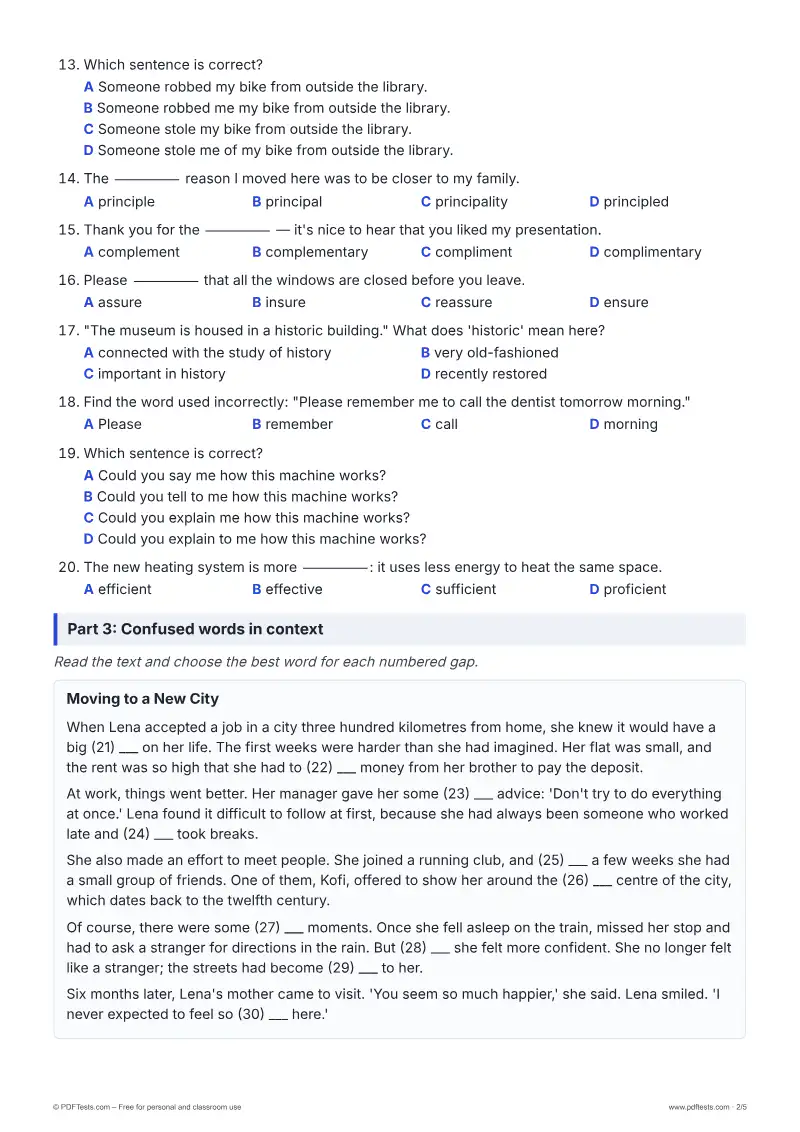
  3. Which sentence is correct?

  4. The _____ reason I moved here was to be closer to my family.

  5. Thank you for the _____ — it's nice to hear that you liked my presentation.

  6. Please _____ that all the windows are closed before you leave.

  7. "The museum is housed in a historic building." What does 'historic' mean here?

  8. Find the word used incorrectly: "Please remember me to call the dentist tomorrow morning."

  9. Which sentence is correct?

  10. The new heating system is more _____: it uses less energy to heat the same space.

Part 3: Confused words in context

Read the text and choose the best word for each numbered gap.

Moving to a New City

When Lena accepted a job in a city three hundred kilometres from home, she knew it would have a big (21) ___ on her life. The first weeks were harder than she had imagined. Her flat was small, and the rent was so high that she had to (22) ___ money from her brother to pay the deposit.

At work, things went better. Her manager gave her some (23) ___ advice: 'Don't try to do everything at once.' Lena found it difficult to follow at first, because she had always been someone who worked late and (24) ___ took breaks.

She also made an effort to meet people. She joined a running club, and (25) ___ a few weeks she had a small group of friends. One of them, Kofi, offered to show her around the (26) ___ centre of the city, which dates back to the twelfth century.

Of course, there were some (27) ___ moments. Once she fell asleep on the train, missed her stop and had to ask a stranger for directions in the rain. But (28) ___ she felt more confident. She no longer felt like a stranger; the streets had become (29) ___ to her.

Six months later, Lena's mother came to visit. 'You seem so much happier,' she said. Lena smiled. 'I never expected to feel so (30) ___ here.'

  1. (21) She knew it would have a big _____ on her life.

  2. (22) She had to _____ money from her brother to pay the deposit.

  3. (23) Her manager gave her some _____ advice.

  4. (24) She had always been someone who worked late and _____ took breaks.

  5. (25) She joined a running club, and _____ a few weeks she had a small group of friends.

  6. (26) Kofi offered to show her around the _____ centre of the city.

  7. (27) Of course, there were some _____ moments.

  8. (28) But _____ she felt more confident.

  9. (29) The streets had become _____ to her.

  10. (30) 'I never expected to feel so _____ here.'

Was this page helpful?

Report a mistake

Spotted a wrong answer, a typo or an unclear explanation? Tell us and we will fix it.

Practise with a worksheet: Commonly Confused Words – Worksheet 1

Preview

About this test

This B2 vocabulary test checks how well you can tell apart English words that learners often mix up, such as affect and effect, lend and borrow, economic and economical, and historic and historical. It covers meaning, collocations, word choice in context and word families. It suits upper-intermediate learners and teachers preparing students for B2 exams.

Topics covered

Commonly confused wordsWord choice in contextCollocationsWord familiesFalse friendsVerb patterns

How to use this test

  1. Download the PDF and print it, or take the test online below.
  2. Answer every question without a dictionary or time pressure.
  3. Check your answers and note the topics you need to review.

Notes for teachers

Use this test as a diagnostic before a vocabulary unit or as a review after one. Each answer key explanation names the distinction being tested, so the explanations are useful for feedback. Part 1 covers high-frequency pairs (lend/borrow, lie/lay, loose/lose), Part 2 covers B2 adjective pairs and verb patterns (economical, sensitive, explain to someone), and Part 3 tests the words in a connected text. For follow-up, ask students to write their own example sentences for the pairs they got wrong, or to keep a personal list of confused words.