PDFTests Originals

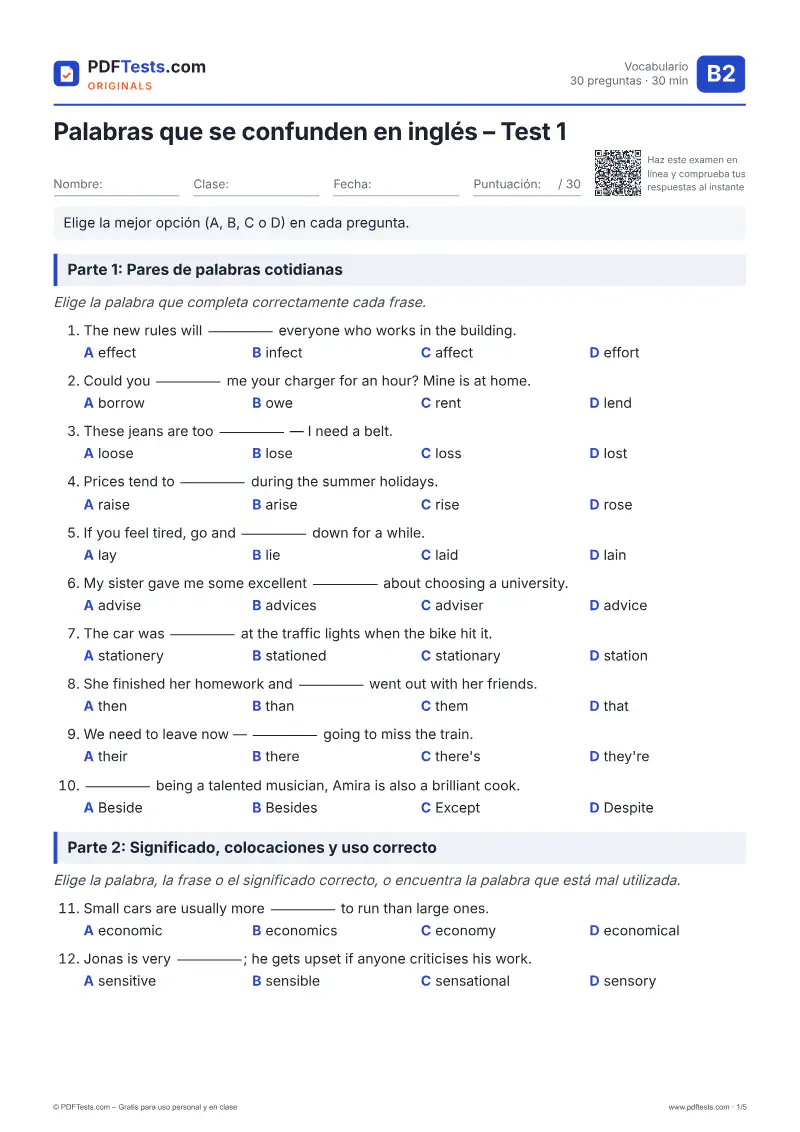
Palabras que se confunden en inglés – Test 1

B2 Intermedio alto VocabularioInglés

Este test de vocabulario de nivel B2 comprueba si sabes distinguir palabras inglesas que los estudiantes suelen confundir, como affect y effect, lend y borrow, economic y economical, o historic y historical. Trabaja el significado, las colocaciones, la elección de la palabra adecuada según el contexto y las familias de palabras. Está pensado para alumnos de nivel intermedio alto y para profesores que preparan a sus estudiantes para exámenes B2.
Preguntas
30
Tiempo
30 min
PDF
5 páginas
Soluciones
Incluidas
  • 100 % gratis
  • Sin registro
  • PDF A4 listo para imprimir
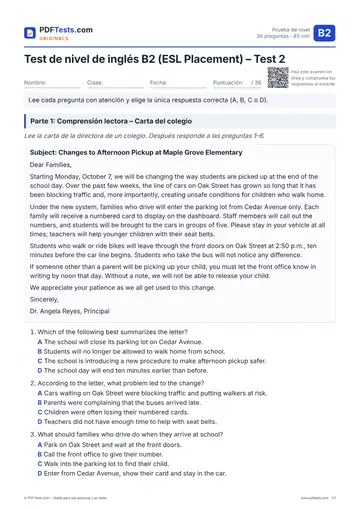
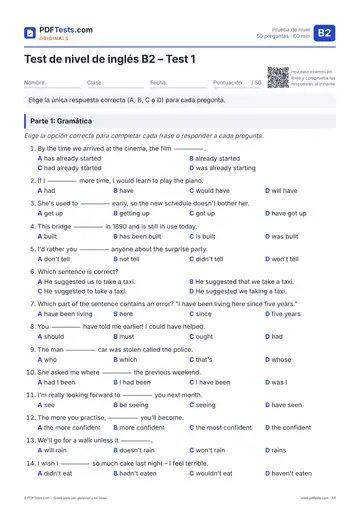
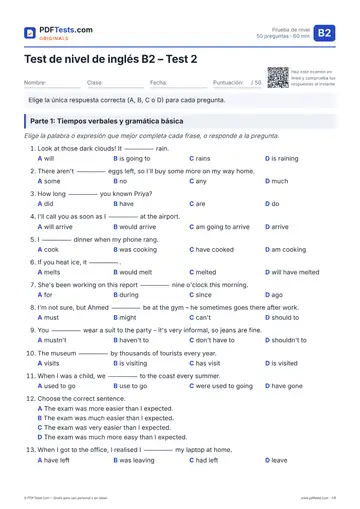
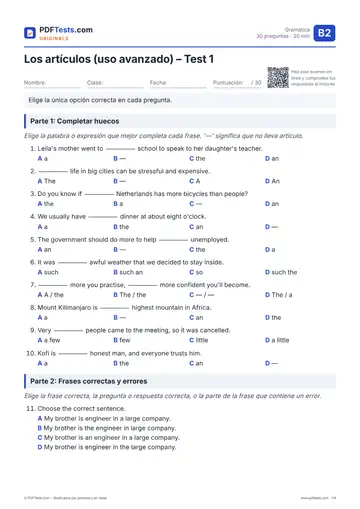
Vista previa de la página 1: Palabras que se confunden en inglés – Test 1 Abrir PDF

Haz el examen en línea

Elige la mejor opción (A, B, C o D) en cada pregunta. Elige tus respuestas y pulsa «Comprobar respuestas».

Parte 1: Pares de palabras cotidianas

Elige la palabra que completa correctamente cada frase.

  1. The new rules will _____ everyone who works in the building.

  2. Could you _____ me your charger for an hour? Mine is at home.

  3. These jeans are too _____ — I need a belt.

  4. Prices tend to _____ during the summer holidays.

  5. If you feel tired, go and _____ down for a while.

  6. My sister gave me some excellent _____ about choosing a university.

  7. The car was _____ at the traffic lights when the bike hit it.

  8. She finished her homework and _____ went out with her friends.

  9. We need to leave now — _____ going to miss the train.

  10. _____ being a talented musician, Amira is also a brilliant cook.

Parte 2: Significado, colocaciones y uso correcto

Elige la palabra, la frase o el significado correcto, o encuentra la palabra que está mal utilizada.

  1. Small cars are usually more _____ to run than large ones.

  2. Jonas is very _____; he gets upset if anyone criticises his work.

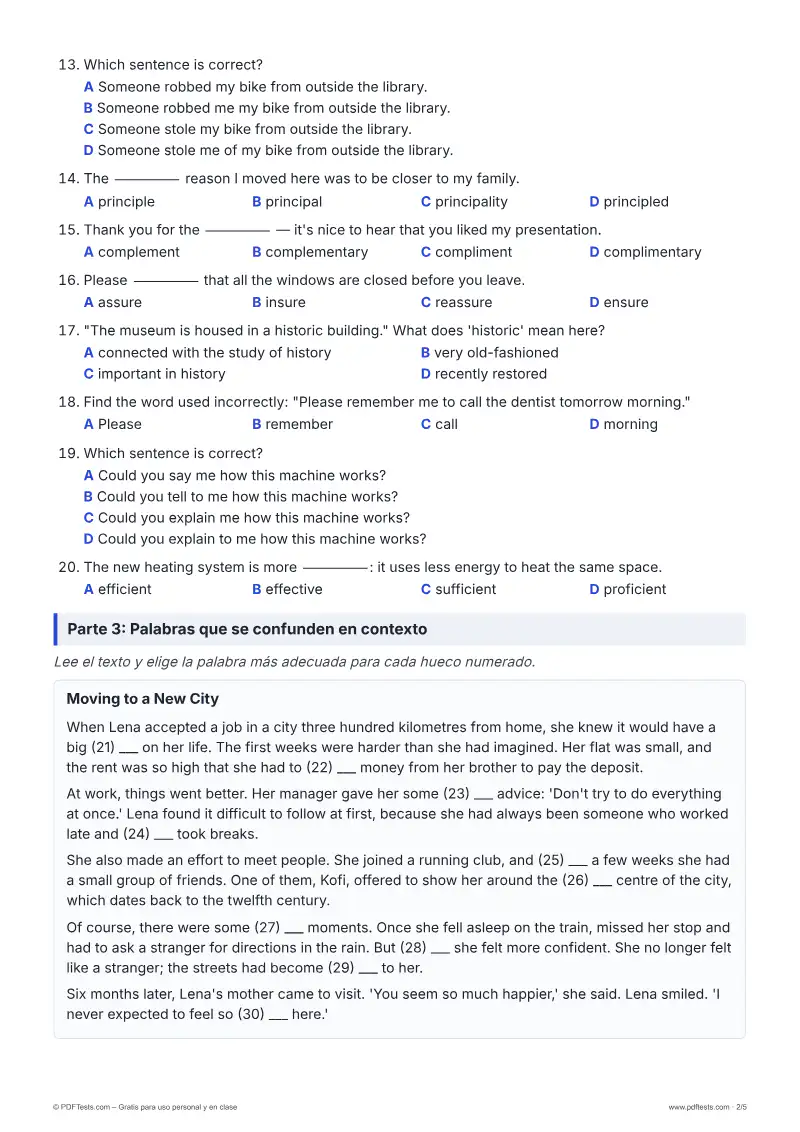
  3. Which sentence is correct?

  4. The _____ reason I moved here was to be closer to my family.

  5. Thank you for the _____ — it's nice to hear that you liked my presentation.

  6. Please _____ that all the windows are closed before you leave.

  7. "The museum is housed in a historic building." What does 'historic' mean here?

  8. Find the word used incorrectly: "Please remember me to call the dentist tomorrow morning."

  9. Which sentence is correct?

  10. The new heating system is more _____: it uses less energy to heat the same space.

Parte 3: Palabras que se confunden en contexto

Lee el texto y elige la palabra más adecuada para cada hueco numerado.

Moving to a New City

When Lena accepted a job in a city three hundred kilometres from home, she knew it would have a big (21) ___ on her life. The first weeks were harder than she had imagined. Her flat was small, and the rent was so high that she had to (22) ___ money from her brother to pay the deposit.

At work, things went better. Her manager gave her some (23) ___ advice: 'Don't try to do everything at once.' Lena found it difficult to follow at first, because she had always been someone who worked late and (24) ___ took breaks.

She also made an effort to meet people. She joined a running club, and (25) ___ a few weeks she had a small group of friends. One of them, Kofi, offered to show her around the (26) ___ centre of the city, which dates back to the twelfth century.

Of course, there were some (27) ___ moments. Once she fell asleep on the train, missed her stop and had to ask a stranger for directions in the rain. But (28) ___ she felt more confident. She no longer felt like a stranger; the streets had become (29) ___ to her.

Six months later, Lena's mother came to visit. 'You seem so much happier,' she said. Lena smiled. 'I never expected to feel so (30) ___ here.'

  1. (21) She knew it would have a big _____ on her life.

  2. (22) She had to _____ money from her brother to pay the deposit.

  3. (23) Her manager gave her some _____ advice.

  4. (24) She had always been someone who worked late and _____ took breaks.

  5. (25) She joined a running club, and _____ a few weeks she had a small group of friends.

  6. (26) Kofi offered to show her around the _____ centre of the city.

  7. (27) Of course, there were some _____ moments.

  8. (28) But _____ she felt more confident.

  9. (29) The streets had become _____ to her.

  10. (30) 'I never expected to feel so _____ here.'

¿Te ha resultado útil esta página?

Informar de un error

¿Has visto una respuesta incorrecta, una errata o una explicación poco clara? Avísanos y lo corregiremos.

Practica con una ficha: Palabras que se confunden con frecuencia – Ficha 1

Vista previa

Sobre este examen

Este test de vocabulario de nivel B2 comprueba si sabes distinguir palabras inglesas que los estudiantes suelen confundir, como affect y effect, lend y borrow, economic y economical, o historic y historical. Trabaja el significado, las colocaciones, la elección de la palabra adecuada según el contexto y las familias de palabras. Está pensado para alumnos de nivel intermedio alto y para profesores que preparan a sus estudiantes para exámenes B2.

Temas

Palabras que se confundenElección de la palabra según el contextoColocaciones (collocations)Familias de palabrasFalsos amigosPatrones verbales

Cómo usar este examen

  1. Descarga el PDF e imprímelo, o haz el examen en línea más abajo.
  2. Responde todas las preguntas sin diccionario y sin prisas.
  3. Comprueba tus respuestas y apunta los temas que debes repasar.

Notas para el profesor

Puede usar este test como prueba diagnóstica antes de una unidad de vocabulario o como repaso al terminarla. Cada explicación de las soluciones indica la distinción que se evalúa, por lo que resulta muy útil para dar feedback. La Parte 1 trata pares muy frecuentes (lend/borrow, lie/lay, loose/lose), la Parte 2 se centra en pares de adjetivos de nivel B2 y patrones verbales (economical, sensitive, explain to someone) y la Parte 3 evalúa estas palabras en un texto continuo. Como actividad de seguimiento, pida a los alumnos que escriban sus propias frases de ejemplo con los pares en los que se hayan equivocado o que elaboren una lista personal de palabras que suelen confundir.