PDFTests Originals

Imperfect Subjunctive – Test 1

B2 Upper-intermediate GrammarSpanish

This B2 grammar test checks how well you form and use the Spanish imperfect subjunctive (pretérito imperfecto de subjuntivo). It covers regular and irregular forms, the past-tense triggers that require it, hypothetical si-clauses, como si, ojalá, and common learner errors. It suits upper-intermediate learners, exam candidates and teachers who need a ready-made revision or assessment sheet.
Questions
30
Time
30 min
PDF
5 pages
Answer key
Included
  • 100% free
  • No sign-up or email
  • Print-ready A4 PDF
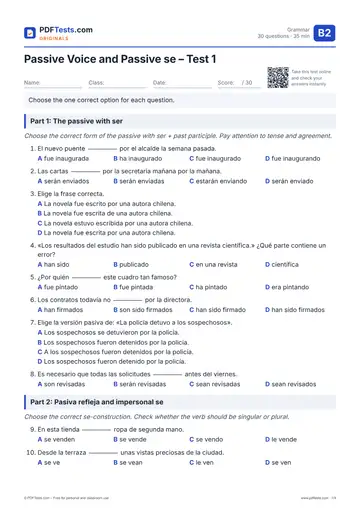
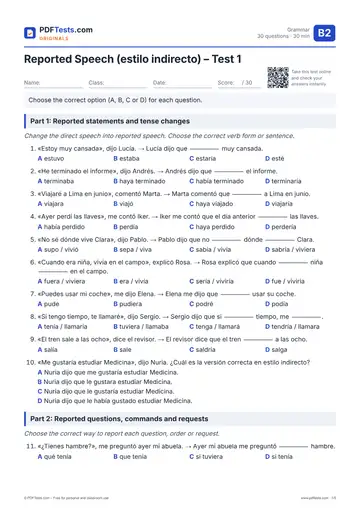
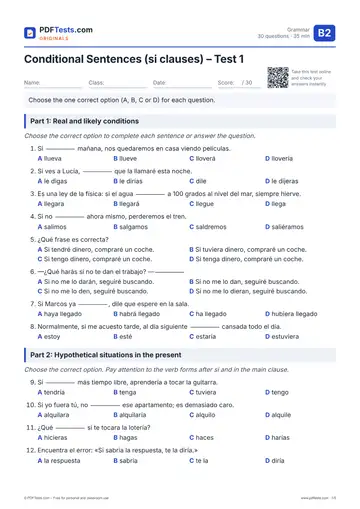
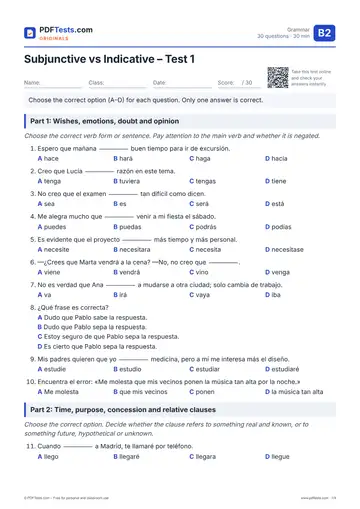
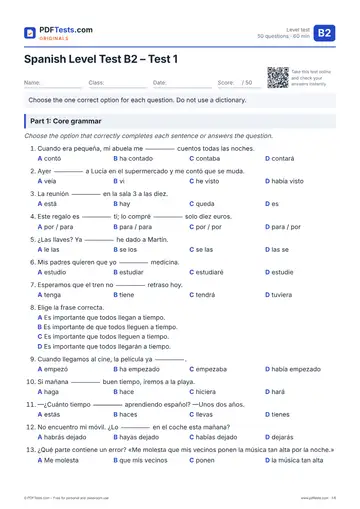
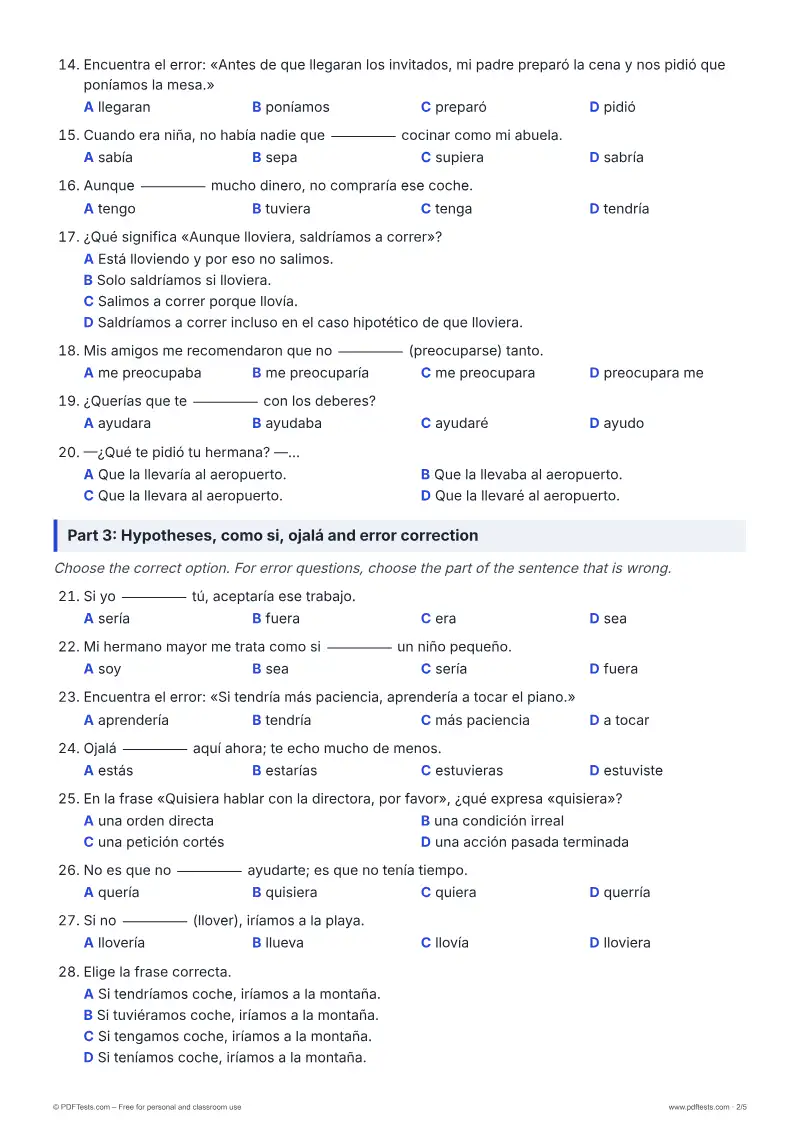
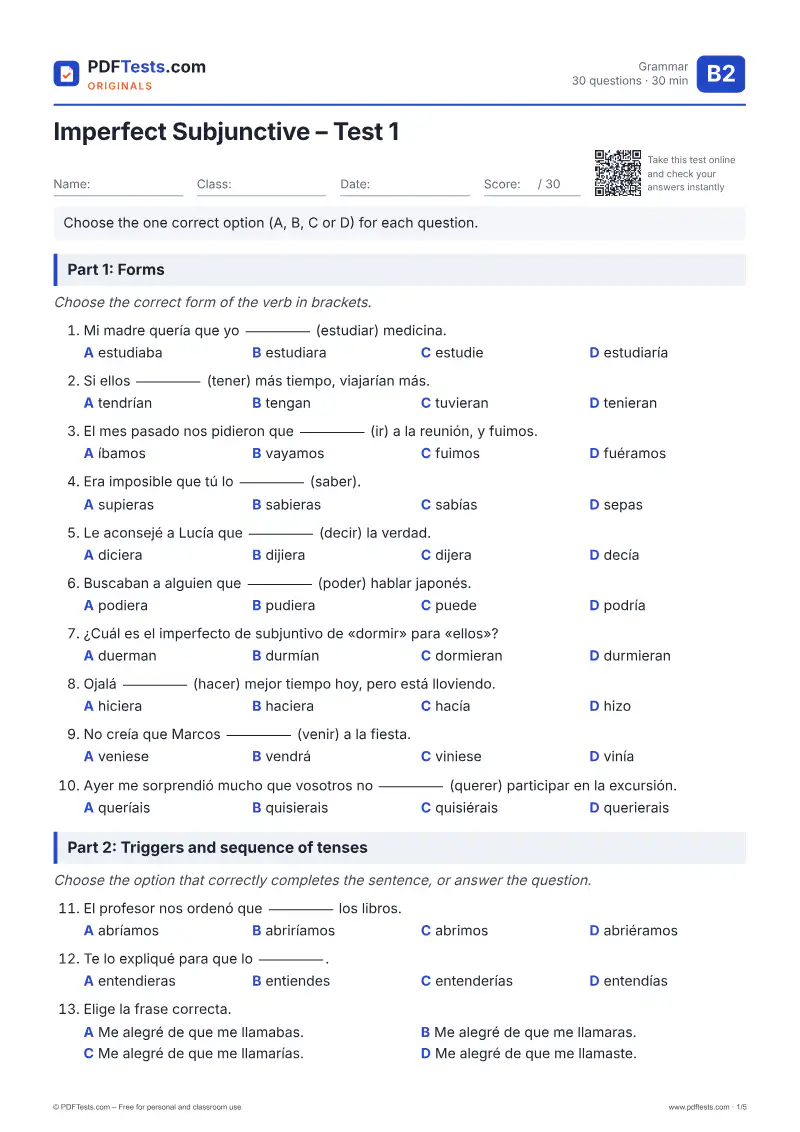
Preview of page 1 of Imperfect Subjunctive – Test 1 Open PDF

Take the test online

Choose the one correct option (A, B, C or D) for each question. Choose your answers, then press “Check my answers”.

Part 1: Forms

Choose the correct form of the verb in brackets.

  1. Mi madre quería que yo _____ (estudiar) medicina.

  2. Si ellos _____ (tener) más tiempo, viajarían más.

  3. El mes pasado nos pidieron que _____ (ir) a la reunión, y fuimos.

  4. Era imposible que tú lo _____ (saber).

  5. Le aconsejé a Lucía que _____ (decir) la verdad.

  6. Buscaban a alguien que _____ (poder) hablar japonés.

  7. ¿Cuál es el imperfecto de subjuntivo de «dormir» para «ellos»?

  8. Ojalá _____ (hacer) mejor tiempo hoy, pero está lloviendo.

  9. No creía que Marcos _____ (venir) a la fiesta.

  10. Ayer me sorprendió mucho que vosotros no _____ (querer) participar en la excursión.

Part 2: Triggers and sequence of tenses

Choose the option that correctly completes the sentence, or answer the question.

  1. El profesor nos ordenó que _____ los libros.

  2. Te lo expliqué para que lo _____.

  3. Elige la frase correcta.

  4. Encuentra el error: «Antes de que llegaran los invitados, mi padre preparó la cena y nos pidió que poníamos la mesa.»

  5. Cuando era niña, no había nadie que _____ cocinar como mi abuela.

  6. Aunque _____ mucho dinero, no compraría ese coche.

  7. ¿Qué significa «Aunque lloviera, saldríamos a correr»?

  8. Mis amigos me recomendaron que no _____ (preocuparse) tanto.

  9. ¿Querías que te _____ con los deberes?

  10. —¿Qué te pidió tu hermana? —…

Part 3: Hypotheses, como si, ojalá and error correction

Choose the correct option. For error questions, choose the part of the sentence that is wrong.

  1. Si yo _____ tú, aceptaría ese trabajo.

  2. Mi hermano mayor me trata como si _____ un niño pequeño.

  3. Encuentra el error: «Si tendría más paciencia, aprendería a tocar el piano.»

  4. Ojalá _____ aquí ahora; te echo mucho de menos.

  5. En la frase «Quisiera hablar con la directora, por favor», ¿qué expresa «quisiera»?

  6. No es que no _____ ayudarte; es que no tenía tiempo.

  7. Si no _____ (llover), iríamos a la playa.

  8. Elige la frase correcta.

  9. ¿Qué harías si _____ el pasaporte en el extranjero?

  10. Encuentra el error: «Me parecía extraño que nadie me dijera nada y que todos se comportaran como si no pasaba nada.»

Preview

About this test

This B2 grammar test checks how well you form and use the Spanish imperfect subjunctive (pretérito imperfecto de subjuntivo). It covers regular and irregular forms, the past-tense triggers that require it, hypothetical si-clauses, como si, ojalá, and common learner errors. It suits upper-intermediate learners, exam candidates and teachers who need a ready-made revision or assessment sheet.

Topics covered

Imperfect subjunctive formsIrregular stemsSequence of tensesWishes, requests and emotionsSi-clauses (second conditional)Como si and ojaláError correction

How to use this test

  1. Download the PDF and print it, or take the test online below.
  2. Answer every question without a dictionary or time pressure.
  3. Check your answers and note the topics you need to review.

Notes for teachers

Use Part 1 to diagnose form problems (irregular preterite stems, stem-changing verbs, accent errors such as *quisiérais*), then move on to use and meaning in Parts 2 and 3. The test targets typical B2 errors: indicative or conditional after triggers like pedir, querer or para que; *si tendría* instead of si tuviera; and indicative after como si. As a follow-up, ask students to rewrite present-tense sentences in the past, such as 'Quiere que vengas' becoming 'Quería que vinieras', or to write their own hypothetical si-sentences.