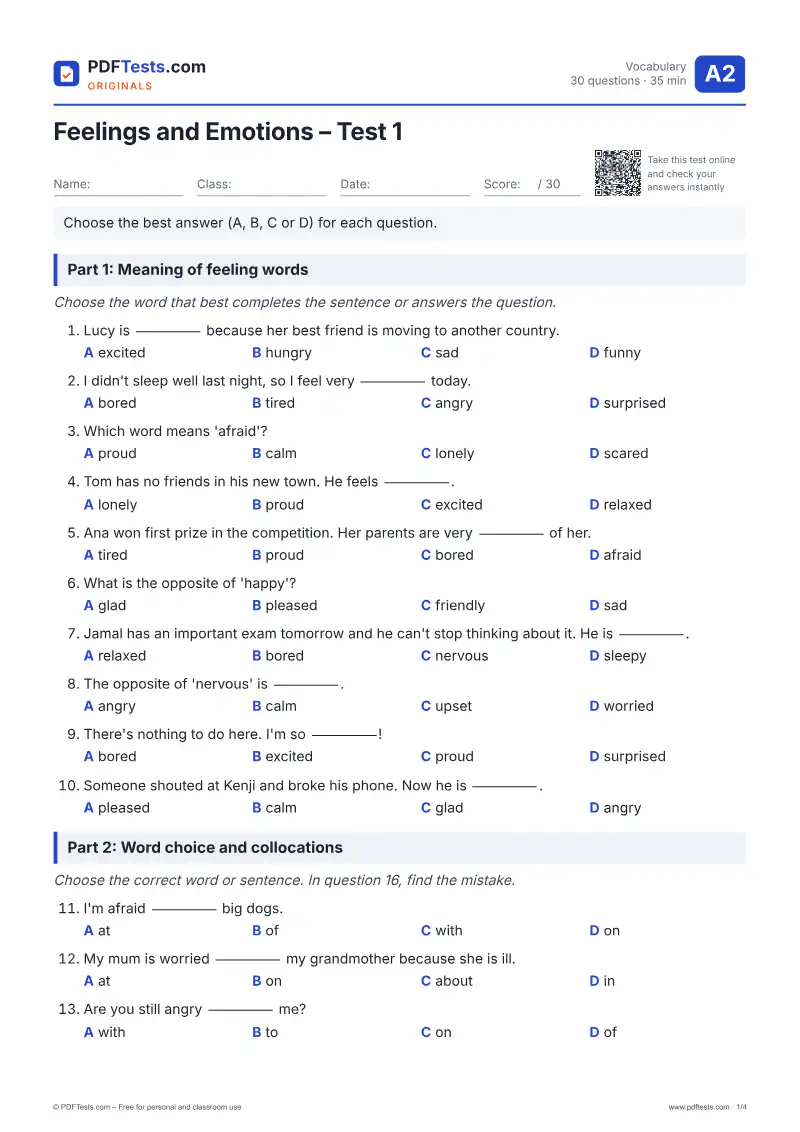
This A2 vocabulary test checks how well learners know common words for feelings and emotions. It covers word meaning, prepositions and verbs that go with feeling words, -ed and -ing adjectives, word families and a short reading text. It suits elementary learners, both teenagers and adults, for classwork, homework or self-study.
Choose the best answer (A, B, C or D) for each question. Choose your answers, then press “Check my answers”.
0%
Your result
[["Keep practising","This topic needs more practice. Start with the guide, then try a worksheet."],["Good start","You know the basics. Read the guide and practise the parts you missed."],["Very good!","Just a few slips. Review your mistakes, then try the next test."],["Excellent!","You have mastered this topic. Ready for the next challenge?"]]
This A2 vocabulary test checks how well learners know common words for feelings and emotions. It covers word meaning, prepositions and verbs that go with feeling words, -ed and -ing adjectives, word families and a short reading text. It suits elementary learners, both teenagers and adults, for classwork, homework or self-study.
Topics covered
Adjectives for feelingsOppositesPrepositions after adjectives-ed and -ing adjectivesFeel and makeWord familiesReading for meaning in context
How to use this test
Download the PDF and print it, or take the test online below.
Answer every question without a dictionary or time pressure.
Check your answers and note the topics you need to review.
Notes for teachers
Use Part 1 as a warm-up or quick check of core feeling words, then move on to the collocation and reading sections. The test targets typical A2 errors such as confusing bored/boring and surprised/surprising, using the wrong preposition after afraid, worried and angry, and mixing up feel and make. As a follow-up, ask learners to write five sentences about times they felt nervous, proud, bored, surprised or homesick.
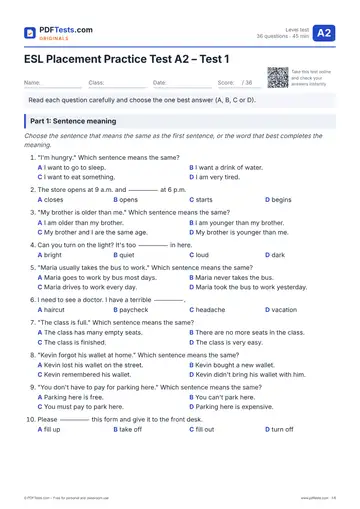 A2
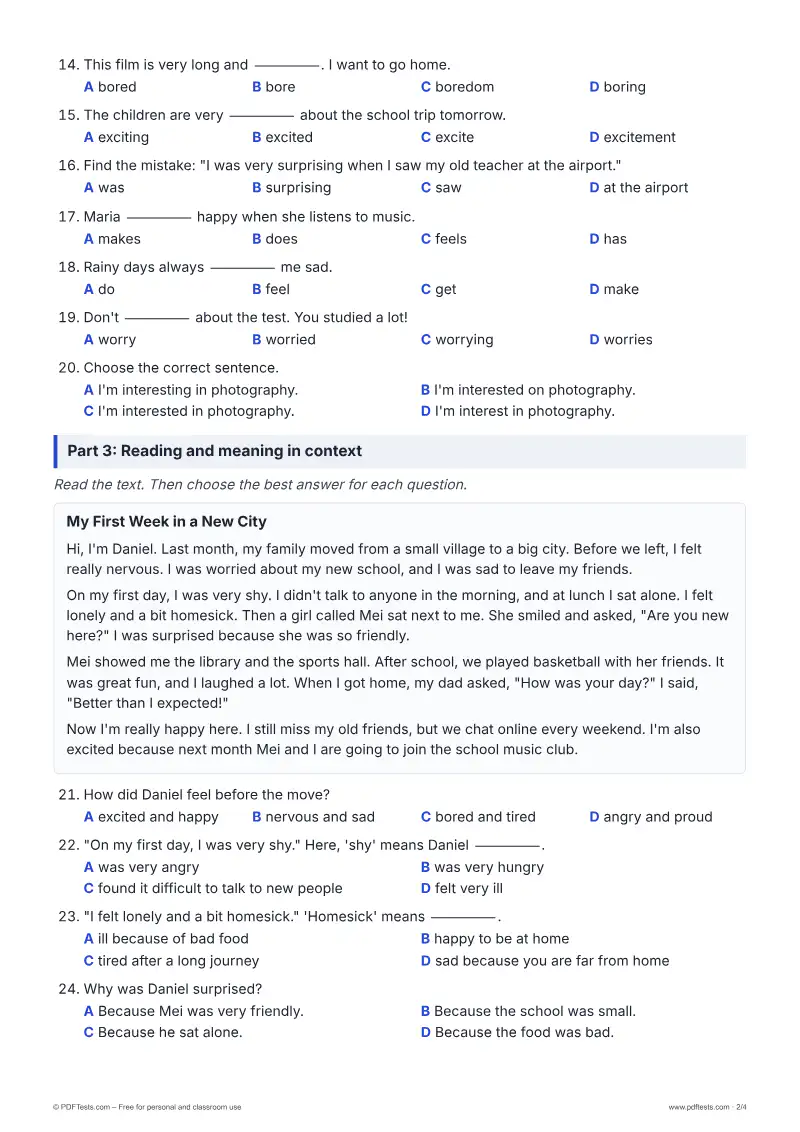
 Open PDF
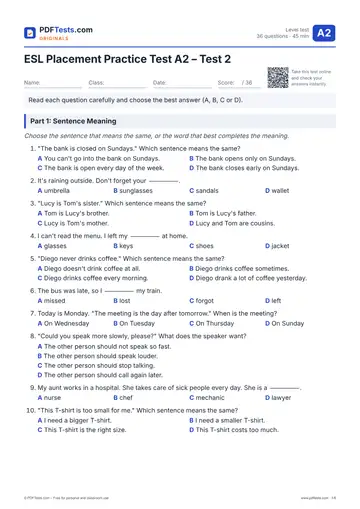 A2
 A2
 A2
 A2
 A2
 A2
 A2