PDFTests Originals

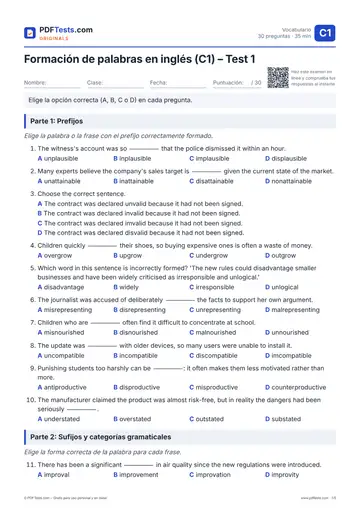
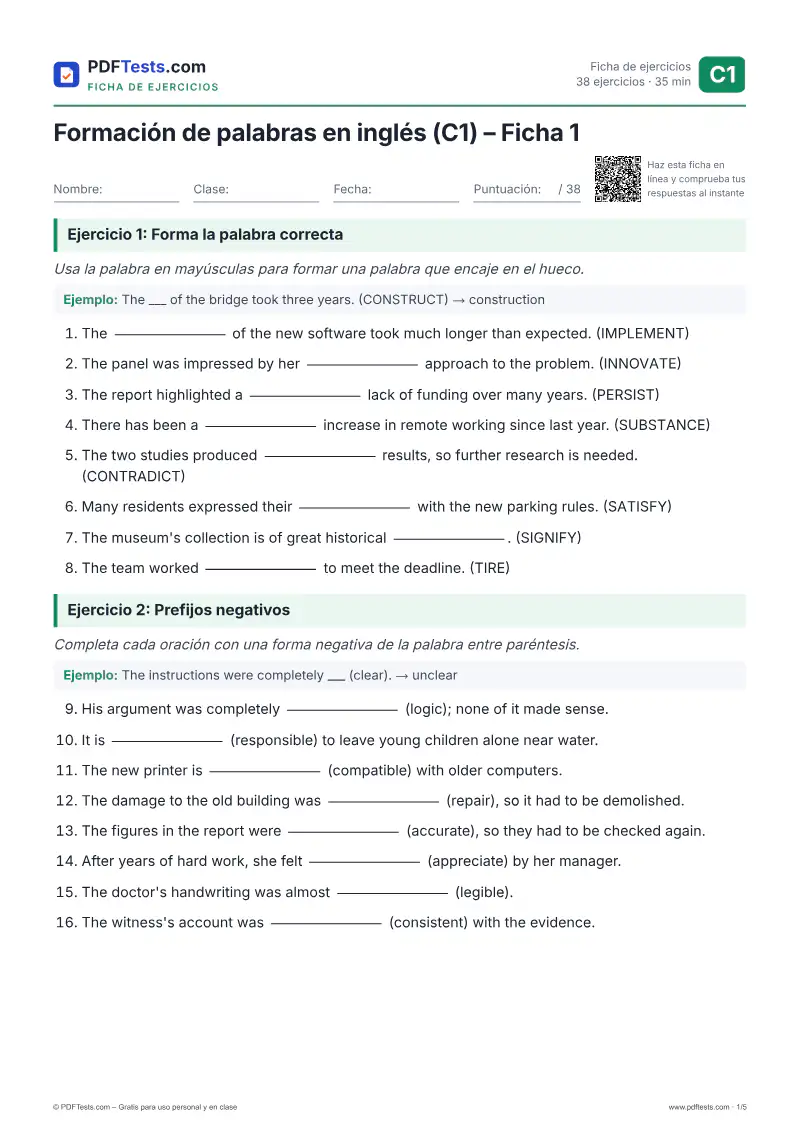
Formación de palabras en inglés (C1) – Ficha 1

C1 Avanzado FichaInglés

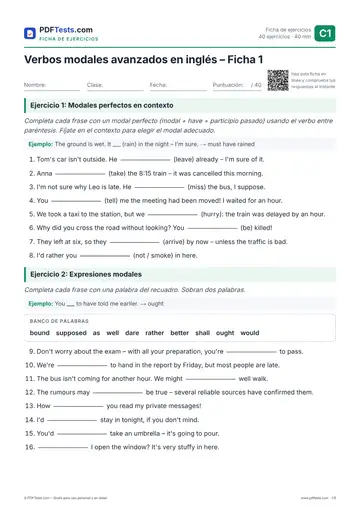
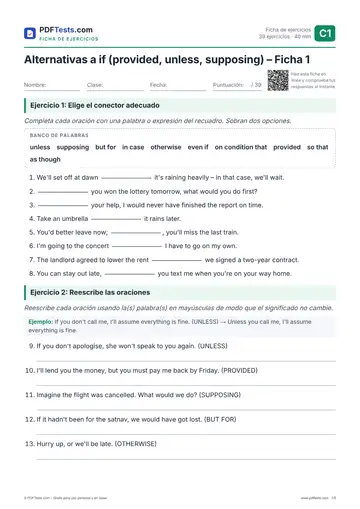
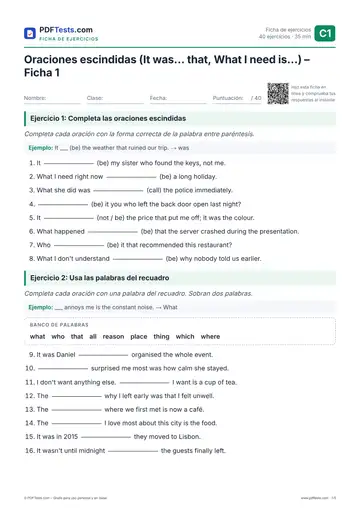
Esta ficha de nivel C1 practica la formación de palabras en contexto: sufijos para formar sustantivos, adjetivos y adverbios, prefijos negativos, afijos que forman verbos y palabras con prefijos como over-, out- y mis-. Es ideal para alumnos avanzados que preparan exámenes como el C1 Advanced y para cualquiera que quiera un vocabulario más preciso y natural.
ejercicios
38
Tiempo
35 min
PDF
5 páginas
Soluciones
Incluidas
  • 100 % gratis
  • Sin registro
  • PDF A4 listo para imprimir
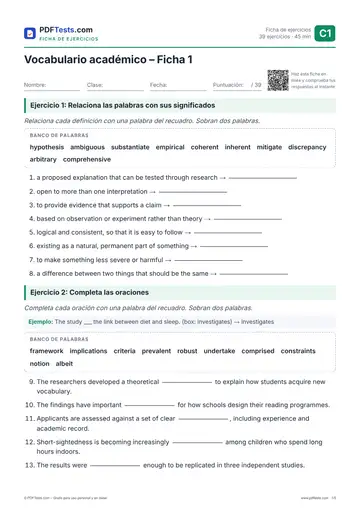
Vista previa de la página 1: Formación de palabras en inglés (C1) – Ficha 1 Abrir PDF

Haz la ficha en línea

Escribe tus respuestas y pulsa «Comprobar respuestas». Se aceptan otras respuestas correctas.

Ejercicio 1: Forma la palabra correcta

Usa la palabra en mayúsculas para formar una palabra que encaje en el hueco.

Ejemplo: The ___ of the bridge took three years. (CONSTRUCT) → construction

  1. The of the new software took much longer than expected. (IMPLEMENT)

  2. The panel was impressed by her approach to the problem. (INNOVATE)

  3. The report highlighted a lack of funding over many years. (PERSIST)

  4. There has been a increase in remote working since last year. (SUBSTANCE)

  5. The two studies produced results, so further research is needed. (CONTRADICT)

  6. Many residents expressed their with the new parking rules. (SATISFY)

  7. The museum's collection is of great historical . (SIGNIFY)

  8. The team worked to meet the deadline. (TIRE)

Ejercicio 2: Prefijos negativos

Completa cada oración con una forma negativa de la palabra entre paréntesis.

Ejemplo: The instructions were completely ___ (clear). → unclear

  1. His argument was completely (logic); none of it made sense.

  2. It is (responsible) to leave young children alone near water.

  3. The new printer is (compatible) with older computers.

  4. The damage to the old building was (repair), so it had to be demolished.

  5. The figures in the report were (accurate), so they had to be checked again.

  6. After years of hard work, she felt (appreciate) by her manager.

  7. The doctor's handwriting was almost (legible).

  8. The witness's account was (consistent) with the evidence.

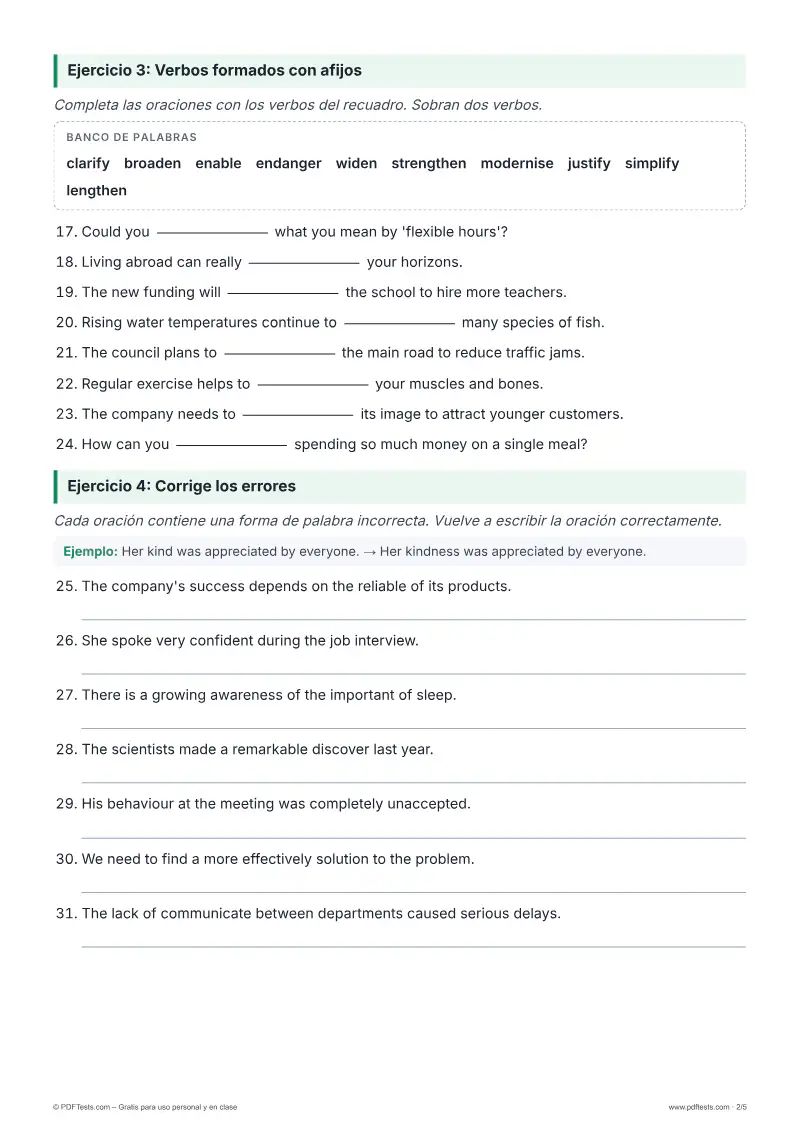
Ejercicio 3: Verbos formados con afijos

Completa las oraciones con los verbos del recuadro. Sobran dos verbos.

Banco de palabras clarifybroadenenableendangerwidenstrengthenmodernisejustifysimplifylengthen

  1. Could you what you mean by 'flexible hours'?

  2. Living abroad can really your horizons.

  3. The new funding will the school to hire more teachers.

  4. Rising water temperatures continue to many species of fish.

  5. The council plans to the main road to reduce traffic jams.

  6. Regular exercise helps to your muscles and bones.

  7. The company needs to its image to attract younger customers.

  8. How can you spending so much money on a single meal?

Ejercicio 4: Corrige los errores

Cada oración contiene una forma de palabra incorrecta. Vuelve a escribir la oración correctamente.

Ejemplo: Her kind was appreciated by everyone. → Her kindness was appreciated by everyone.

  1. The company's success depends on the reliable of its products.

  2. She spoke very confident during the job interview.

  3. There is a growing awareness of the important of sleep.

  4. The scientists made a remarkable discover last year.

  5. His behaviour at the meeting was completely unaccepted.

  6. We need to find a more effectively solution to the problem.

  7. The lack of communicate between departments caused serious delays.

Ejercicio 5: Relaciona las palabras con sus significados

Relaciona cada definición con una palabra del recuadro. Sobra una palabra.

Banco de palabras outnumberoverestimatemisunderstandingreconsiderunderpaidself-sufficientirreversibleunderestimate

  1. to be greater in number than another group

  2. to think something is bigger, better or more important than it really is

  3. a failure to interpret something correctly

  4. to think again about a decision or opinion

  5. receiving too little money for the work you do

  6. able to provide everything you need without help from others

  7. impossible to change back to a previous state

¿Te ha resultado útil esta página?

Informar de un error

¿Has visto una respuesta incorrecta, una errata o una explicación poco clara? Avísanos y lo corregiremos.

Vista previa

Sobre este examen

Ficha de inglés C1 en PDF sobre formación de palabras: sufijos, prefijos negativos y afijos verbales, con soluciones para autocorregirse.

Temas

Formación de palabrasSufijosPrefijos negativosAfijos que forman verbosCorrección de erroresVocabulario C1

Notas para el profesor

Empiece con el ejercicio 1 como actividad de calentamiento y pida a los alumnos que digan qué categoría gramatical necesita cada hueco antes de escribir la palabra. Los errores más habituales son los cambios ortográficos (substance → substantial, repair → irreparable), la elección del prefijo negativo equivocado (unlogical en lugar de illogical) y el uso de un adjetivo donde hace falta un adverbio. Como actividad de ampliación, pida a los alumnos que elijan cinco palabras de la ficha y escriban un párrafo breve sobre un tema de su elección en el que las utilicen.

Todos los exámenes de Inglés C1 →