PDFTests Originals

Present Perfect (pretérito perfecto) – Worksheet 1

B1 Intermediate WorksheetSpanish

This worksheet practises the Spanish present perfect (pretérito perfecto compuesto): the forms of haber, regular and irregular past participles, and typical time expressions such as hoy, esta semana, ya, todavía no and nunca. It is designed for B1 learners who want to use the tense accurately in statements, negatives and questions.
items
36
Time
35 min
PDF
5 pages
Answer key
Included
  • 100% free
  • No sign-up or email
  • Print-ready A4 PDF
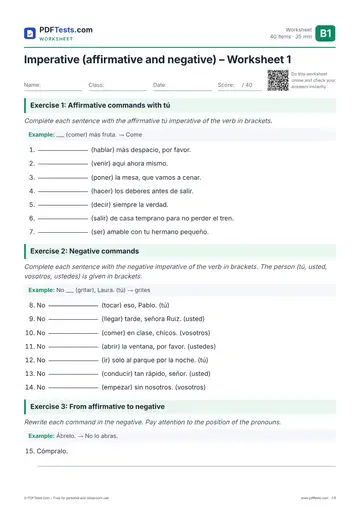
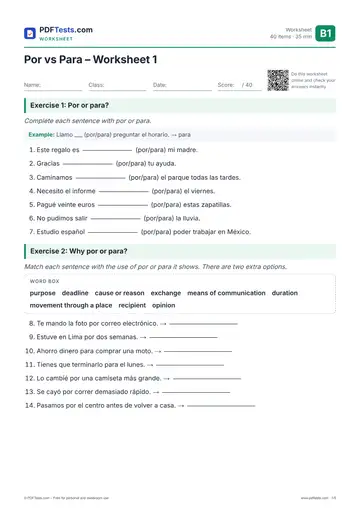
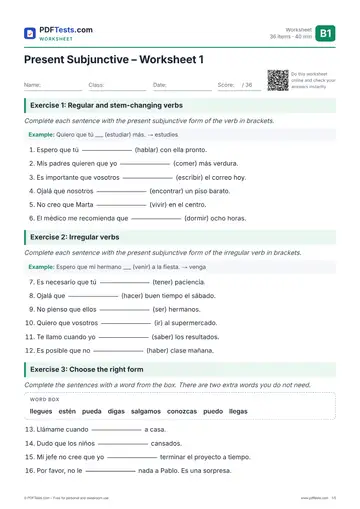
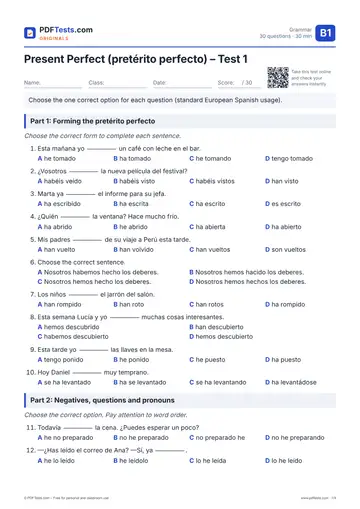
Preview of page 1 of Present Perfect (pretérito perfecto) – Worksheet 1 Open PDF
New to this topic? Read the guide first: Spanish Present Perfect (Pretérito Perfecto): Form, Uses and Common Mistakes

Do the worksheet online

Type your answers, then press “Check my answers”. Alternative correct answers are accepted.

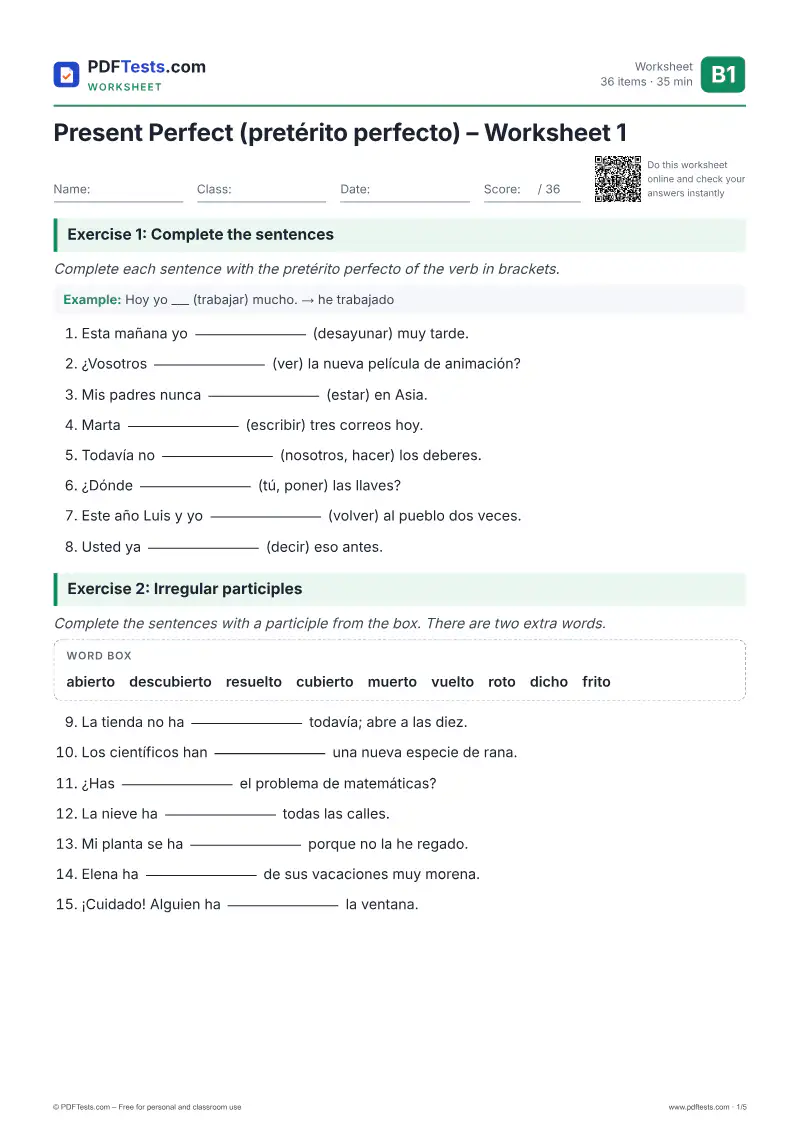
Exercise 1: Complete the sentences

Complete each sentence with the pretérito perfecto of the verb in brackets.

Example: Hoy yo ___ (trabajar) mucho. → he trabajado

  1. Esta mañana yo (desayunar) muy tarde.

  2. ¿Vosotros (ver) la nueva película de animación?

  3. Mis padres nunca (estar) en Asia.

  4. Marta (escribir) tres correos hoy.

  5. Todavía no (nosotros, hacer) los deberes.

  6. ¿Dónde (tú, poner) las llaves?

  7. Este año Luis y yo (volver) al pueblo dos veces.

  8. Usted ya (decir) eso antes.

Exercise 2: Irregular participles

Complete the sentences with a participle from the box. There are two extra words.

Word box abiertodescubiertoresueltocubiertomuertovueltorotodichofrito

  1. La tienda no ha todavía; abre a las diez.

  2. Los científicos han una nueva especie de rana.

  3. ¿Has el problema de matemáticas?

  4. La nieve ha todas las calles.

  5. Mi planta se ha porque no la he regado.

  6. Elena ha de sus vacaciones muy morena.

  7. ¡Cuidado! Alguien ha la ventana.

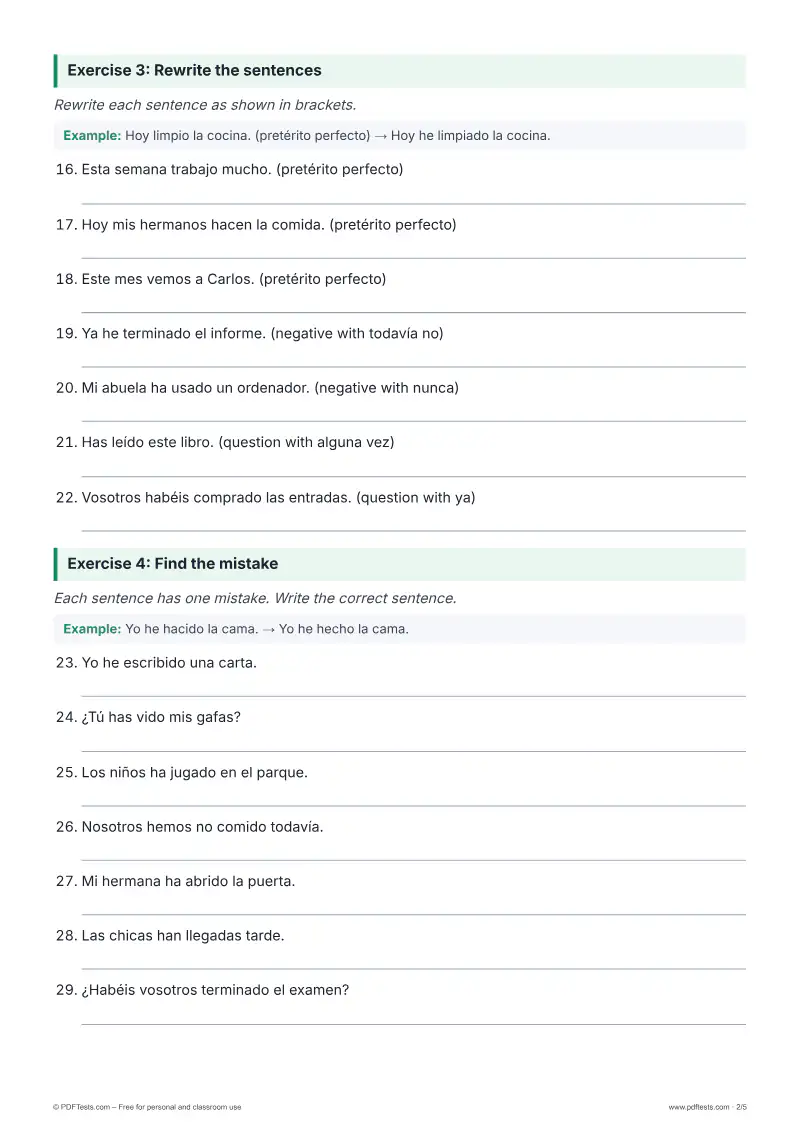
Exercise 3: Rewrite the sentences

Rewrite each sentence as shown in brackets.

Example: Hoy limpio la cocina. (pretérito perfecto) → Hoy he limpiado la cocina.

  1. Esta semana trabajo mucho. (pretérito perfecto)

  2. Hoy mis hermanos hacen la comida. (pretérito perfecto)

  3. Este mes vemos a Carlos. (pretérito perfecto)

  4. Ya he terminado el informe. (negative with todavía no)

  5. Mi abuela ha usado un ordenador. (negative with nunca)

  6. Has leído este libro. (question with alguna vez)

  7. Vosotros habéis comprado las entradas. (question with ya)

Exercise 4: Find the mistake

Each sentence has one mistake. Write the correct sentence.

Example: Yo he hacido la cama. → Yo he hecho la cama.

  1. Yo he escribido una carta.

  2. ¿Tú has vido mis gafas?

  3. Los niños ha jugado en el parque.

  4. Nosotros hemos no comido todavía.

  5. Mi hermana ha abrido la puerta.

  6. Las chicas han llegadas tarde.

  7. ¿Habéis vosotros terminado el examen?

  8. Esta mañana he levantado a las siete.

Exercise 5: Put the words in order

Put the words in the correct order to make sentences. Add capital letters and punctuation.

Example: hoy / he / no / salido → Hoy no he salido.

  1. nunca / he / en / avión / viajado

  2. ya / habéis / la / película / visto (question)

  3. todavía / no / han / mis / llegado / amigos

  4. se / ha / Pablo / duchado / ya

  5. alguna vez / has / paella / comido (question)

  6. este fin de semana / mucho / hemos / descansado

Was this page helpful?

Report a mistake

Spotted a wrong answer, a typo or an unclear explanation? Tell us and we will fix it.

Preview

About this test

Printable B1 Spanish worksheet on the pretérito perfecto: haber + participle, irregular participles, negatives, questions and word order. Answers included.

Topics covered

Pretérito perfectoHaber + past participleIrregular participlesNegatives and questionsYa, todavía, nunca, alguna vezReflexive verbs in the perfect

Notes for teachers

Start by eliciting the forms of haber and a list of irregular participles (abierto, escrito, hecho, puesto, visto, vuelto, roto, dicho) before learners begin. Common mistakes include making the participle agree with the subject (han llegadas), putting no or a pronoun between haber and the participle, and regularising irregular participles (escribido, abrido). As a follow-up, ask learners to write five sentences about what they have and haven't done this week, then interview a partner using ¿Alguna vez has...?

All Spanish B1 tests →