PDFTests Originals

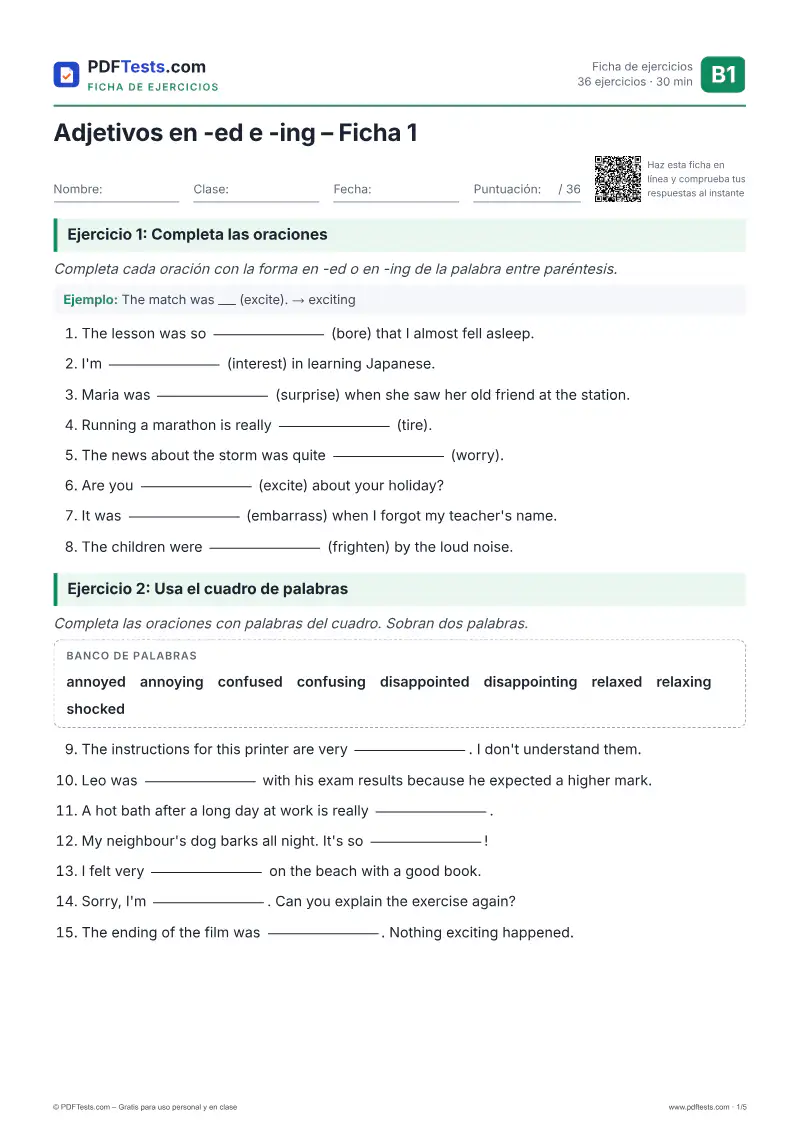
Adjetivos en -ed e -ing – Ficha 1

B1 Intermedio FichaInglés

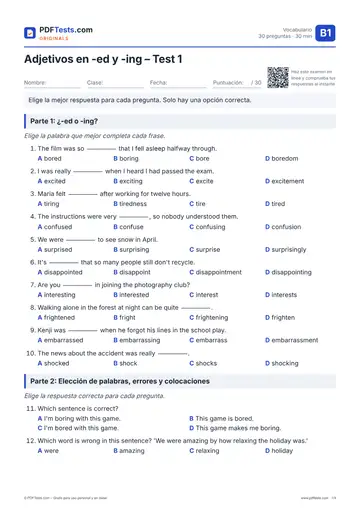
Esta ficha de nivel B1 ayuda al alumnado a distinguir entre los adjetivos en -ed, que describen cómo se sienten las personas, y los adjetivos en -ing, que describen la cosa o situación que provoca ese sentimiento. Se practican pares frecuentes como bored/boring, tired/tiring y confused/confusing, junto con colocaciones útiles como interested in y frightened of. Es adecuada tanto para trabajar en clase como para estudiar por cuenta propia.
ejercicios
36
Tiempo
30 min
PDF
5 páginas
Soluciones
Incluidas
  • 100 % gratis
  • Sin registro
  • PDF A4 listo para imprimir
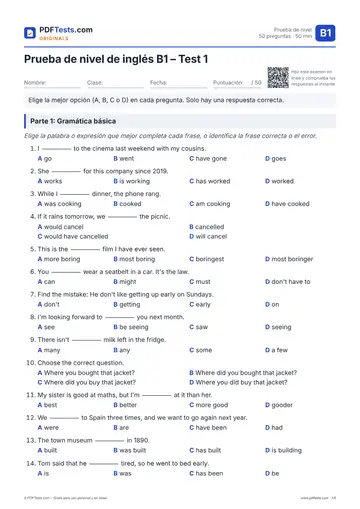
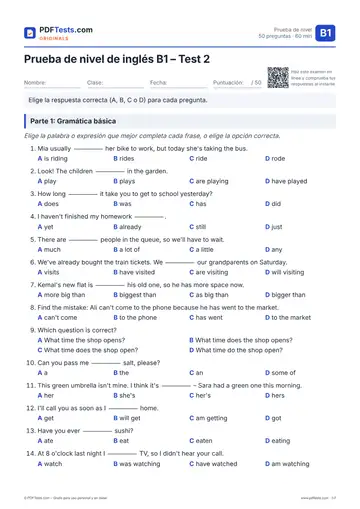
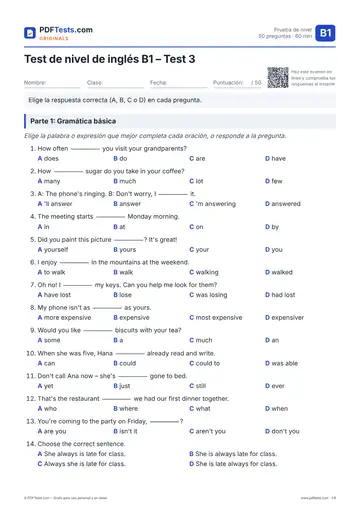
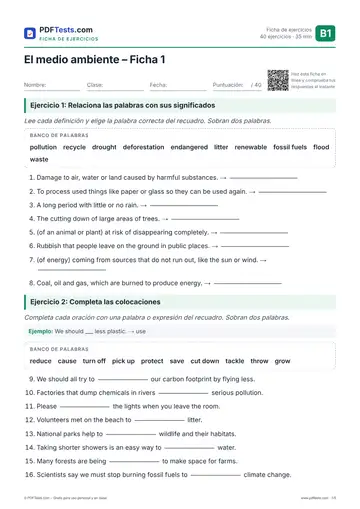
Vista previa de la página 1: Adjetivos en -ed e -ing – Ficha 1 Abrir PDF

Haz la ficha en línea

Escribe tus respuestas y pulsa «Comprobar respuestas». Se aceptan otras respuestas correctas.

Ejercicio 1: Completa las oraciones

Completa cada oración con la forma en -ed o en -ing de la palabra entre paréntesis.

Ejemplo: The match was ___ (excite). → exciting

  1. The lesson was so (bore) that I almost fell asleep.

  2. I'm (interest) in learning Japanese.

  3. Maria was (surprise) when she saw her old friend at the station.

  4. Running a marathon is really (tire).

  5. The news about the storm was quite (worry).

  6. Are you (excite) about your holiday?

  7. It was (embarrass) when I forgot my teacher's name.

  8. The children were (frighten) by the loud noise.

Ejercicio 2: Usa el cuadro de palabras

Completa las oraciones con palabras del cuadro. Sobran dos palabras.

Banco de palabras annoyedannoyingconfusedconfusingdisappointeddisappointingrelaxedrelaxingshocked

  1. The instructions for this printer are very . I don't understand them.

  2. Leo was with his exam results because he expected a higher mark.

  3. A hot bath after a long day at work is really .

  4. My neighbour's dog barks all night. It's so !

  5. I felt very on the beach with a good book.

  6. Sorry, I'm . Can you explain the exercise again?

  7. The ending of the film was . Nothing exciting happened.

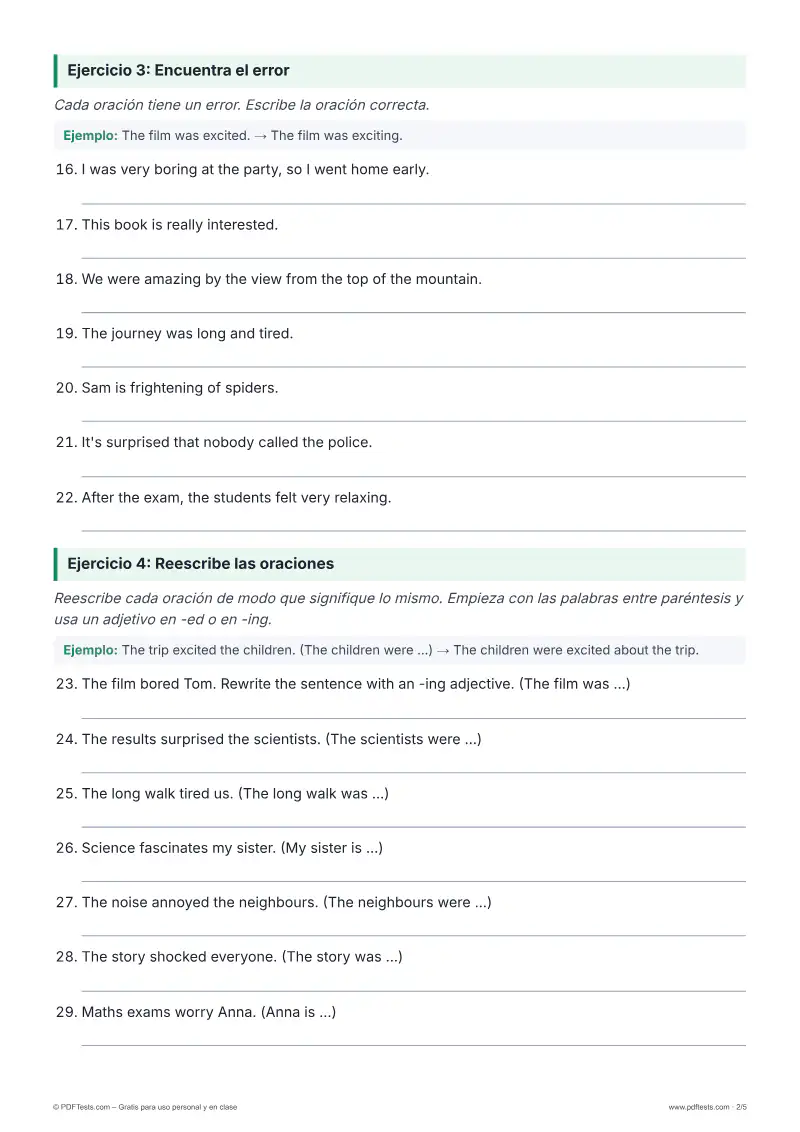
Ejercicio 3: Encuentra el error

Cada oración tiene un error. Escribe la oración correcta.

Ejemplo: The film was excited. → The film was exciting.

  1. I was very boring at the party, so I went home early.

  2. This book is really interested.

  3. We were amazing by the view from the top of the mountain.

  4. The journey was long and tired.

  5. Sam is frightening of spiders.

  6. It's surprised that nobody called the police.

  7. After the exam, the students felt very relaxing.

Ejercicio 4: Reescribe las oraciones

Reescribe cada oración de modo que signifique lo mismo. Empieza con las palabras entre paréntesis y usa un adjetivo en -ed o en -ing.

Ejemplo: The trip excited the children. (The children were ...) → The children were excited about the trip.

  1. The film bored Tom. Rewrite the sentence with an -ing adjective. (The film was ...)

  2. The results surprised the scientists. (The scientists were ...)

  3. The long walk tired us. (The long walk was ...)

  4. Science fascinates my sister. (My sister is ...)

  5. The noise annoyed the neighbours. (The neighbours were ...)

  6. The story shocked everyone. (The story was ...)

  7. Maths exams worry Anna. (Anna is ...)

Ejercicio 5: ¿Cómo se sienten?

Lee cada situación y elige el adjetivo más adecuado del cuadro. Sobra un adjetivo.

Banco de palabras exhaustedembarrassedterrifiedthrilledamazeddisappointedsatisfiedconfused

  1. Kim has worked for fourteen hours without a break. She feels ...

  2. Dan fell over in front of the whole class and everyone laughed. He feels ...

  3. A huge, angry dog is running towards Ella. She feels ...

  4. Jack has just heard that he got his dream job. He is very happy and excited. He feels ...

  5. Mia watches a magician make a car disappear. She can't believe her eyes. She feels ...

  6. Omar's football team lost the final 0–1. He feels ...

  7. Lucy finished a difficult project and she is happy with the result. She feels ...

¿Te ha resultado útil esta página?

Informar de un error

¿Has visto una respuesta incorrecta, una errata o una explicación poco clara? Avísanos y lo corregiremos.

Vista previa

Sobre este examen

Ficha de inglés B1 en PDF sobre adjetivos en -ed e -ing (bored/boring): rellenar huecos, corrección de errores y más. Ejercicios para imprimir.

Temas

Adjetivos en -ed (sentimientos)Adjetivos en -ing (causas)Colocaciones adjetivo + preposiciónFormación de palabras a partir de verbosCorrección de errores

Notas para el profesor

Empiece haciendo que los alumnos deduzcan la regla con un ejemplo rápido: 'The film was boring, so I was bored.' Es habitual que digan 'I am boring' cuando quieren decir 'I am bored', así que conviene señalar que esto cambia el significado por completo. El ejercicio 4 también practica preposiciones como bored with, worried about y fascinated by. Como actividad de ampliación, pida a los alumnos que escriban cinco oraciones sobre una experiencia reciente usando un adjetivo en -ed y otro en -ing en cada oración.

Todos los exámenes de Inglés B1 →