PDFTests Originals

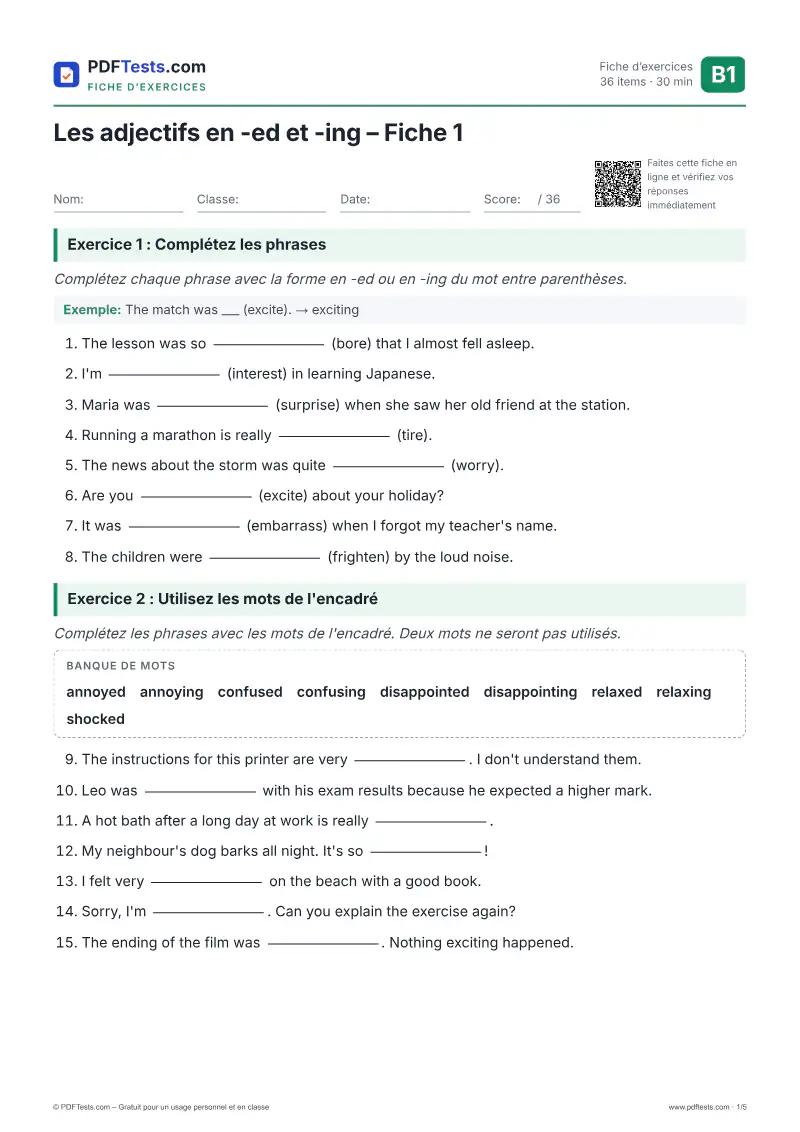
Les adjectifs en -ed et -ing – Fiche 1

B1 Intermédiaire FicheAnglais

Cette fiche de niveau B1 aide les apprenants à distinguer les adjectifs en -ed, qui décrivent ce que ressent une personne, des adjectifs en -ing, qui décrivent la chose ou la situation à l'origine de ce sentiment. Les élèves s'entraînent sur des paires courantes comme bored/boring, tired/tiring et confused/confusing, ainsi que sur des associations utiles comme interested in et frightened of. Elle convient aussi bien au travail en classe qu'à l'apprentissage en autonomie.
items
36
Durée
30 min
PDF
5 pages
Corrigé
Inclus
  • 100 % gratuit
  • Sans inscription
  • PDF A4 prêt à imprimer
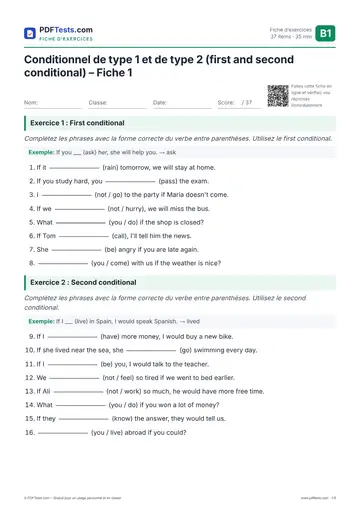
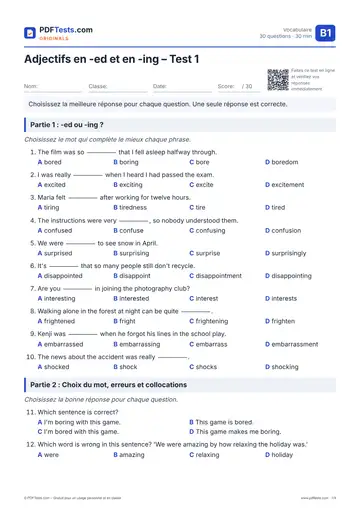
Aperçu de la page 1 : Les adjectifs en -ed et -ing – Fiche 1 Ouvrir le PDF

Faire la fiche en ligne

Tapez vos réponses puis cliquez sur « Vérifier mes réponses ». Les autres réponses correctes sont acceptées.

Exercice 1 : Complétez les phrases

Complétez chaque phrase avec la forme en -ed ou en -ing du mot entre parenthèses.

Exemple: The match was ___ (excite). → exciting

  1. The lesson was so (bore) that I almost fell asleep.

  2. I'm (interest) in learning Japanese.

  3. Maria was (surprise) when she saw her old friend at the station.

  4. Running a marathon is really (tire).

  5. The news about the storm was quite (worry).

  6. Are you (excite) about your holiday?

  7. It was (embarrass) when I forgot my teacher's name.

  8. The children were (frighten) by the loud noise.

Exercice 2 : Utilisez les mots de l'encadré

Complétez les phrases avec les mots de l'encadré. Deux mots ne seront pas utilisés.

Banque de mots annoyedannoyingconfusedconfusingdisappointeddisappointingrelaxedrelaxingshocked

  1. The instructions for this printer are very . I don't understand them.

  2. Leo was with his exam results because he expected a higher mark.

  3. A hot bath after a long day at work is really .

  4. My neighbour's dog barks all night. It's so !

  5. I felt very on the beach with a good book.

  6. Sorry, I'm . Can you explain the exercise again?

  7. The ending of the film was . Nothing exciting happened.

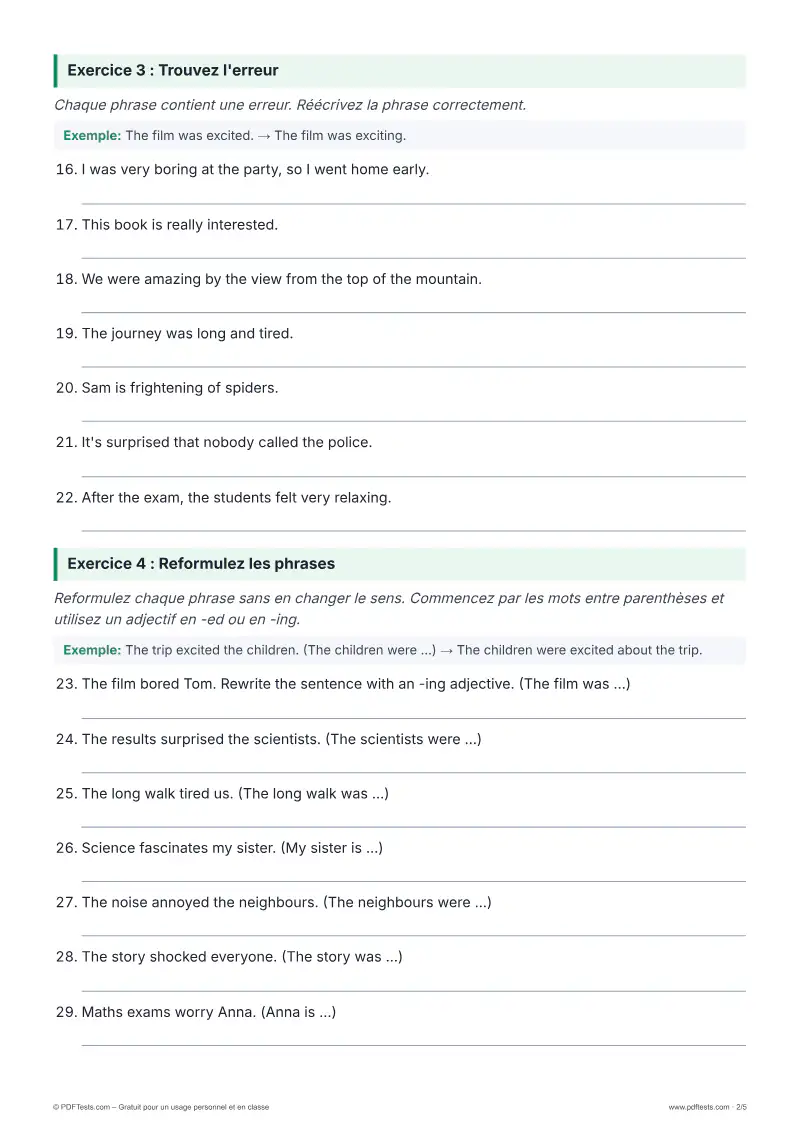
Exercice 3 : Trouvez l'erreur

Chaque phrase contient une erreur. Réécrivez la phrase correctement.

Exemple: The film was excited. → The film was exciting.

  1. I was very boring at the party, so I went home early.

  2. This book is really interested.

  3. We were amazing by the view from the top of the mountain.

  4. The journey was long and tired.

  5. Sam is frightening of spiders.

  6. It's surprised that nobody called the police.

  7. After the exam, the students felt very relaxing.

Exercice 4 : Reformulez les phrases

Reformulez chaque phrase sans en changer le sens. Commencez par les mots entre parenthèses et utilisez un adjectif en -ed ou en -ing.

Exemple: The trip excited the children. (The children were ...) → The children were excited about the trip.

  1. The film bored Tom. Rewrite the sentence with an -ing adjective. (The film was ...)

  2. The results surprised the scientists. (The scientists were ...)

  3. The long walk tired us. (The long walk was ...)

  4. Science fascinates my sister. (My sister is ...)

  5. The noise annoyed the neighbours. (The neighbours were ...)

  6. The story shocked everyone. (The story was ...)

  7. Maths exams worry Anna. (Anna is ...)

Exercice 5 : Que ressentent-ils ?

Lisez chaque situation et choisissez l'adjectif le plus approprié dans l'encadré. Un adjectif ne sera pas utilisé.

Banque de mots exhaustedembarrassedterrifiedthrilledamazeddisappointedsatisfiedconfused

  1. Kim has worked for fourteen hours without a break. She feels ...

  2. Dan fell over in front of the whole class and everyone laughed. He feels ...

  3. A huge, angry dog is running towards Ella. She feels ...

  4. Jack has just heard that he got his dream job. He is very happy and excited. He feels ...

  5. Mia watches a magician make a car disappear. She can't believe her eyes. She feels ...

  6. Omar's football team lost the final 0–1. He feels ...

  7. Lucy finished a difficult project and she is happy with the result. She feels ...

Cette page vous a-t-elle été utile ?

Signaler une erreur

Une mauvaise réponse, une faute de frappe ou une explication peu claire ? Dites-le-nous, nous corrigerons.

Aperçu

À propos de ce test

Fiche d'anglais B1 en PDF à imprimer : adjectifs en -ed et -ing (bored/boring, interested/interesting), textes à trous, correction d'erreurs et plus.

Thèmes abordés

adjectifs en -ed (sentiments)adjectifs en -ing (causes)adjectifs suivis d'une prépositionformation des mots à partir de verbescorrection d'erreurs

Notes pour l’enseignant

Commencez par faire découvrir la règle aux élèves à l'aide d'un exemple rapide : « The film was boring, so I was bored. » Les élèves disent souvent « I am boring » alors qu'ils veulent dire « I am bored » ; soulignez que cela change complètement le sens. L'exercice 4 permet aussi de travailler les prépositions, comme bored with, worried about et fascinated by. En prolongement, demandez aux élèves d'écrire cinq phrases sur une expérience récente en utilisant dans chaque phrase un adjectif en -ed et un adjectif en -ing.

Tous les tests Anglais B1 →