PDFTests Originals

Medios de comunicación y noticias – Ficha 1

B1 Intermedio FichaInglés

Esta ficha trabaja el vocabulario clave de los medios de comunicación y las noticias en el nivel B1, con palabras para hablar de personas, programas y noticias en internet. El alumnado practica el significado, colocaciones frecuentes como 'on the radio' y 'breaking news', y la formación de palabras como reporter, reliable e informative. Es adecuada para adolescentes y adultos, en clase o en casa.
ejercicios
37
Tiempo
35 min
PDF
5 páginas
Soluciones
Incluidas
  • 100 % gratis
  • Sin registro
  • PDF A4 listo para imprimir
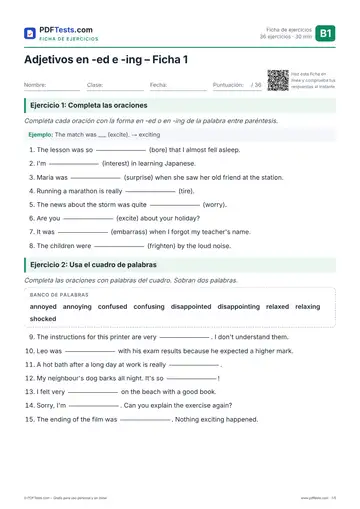
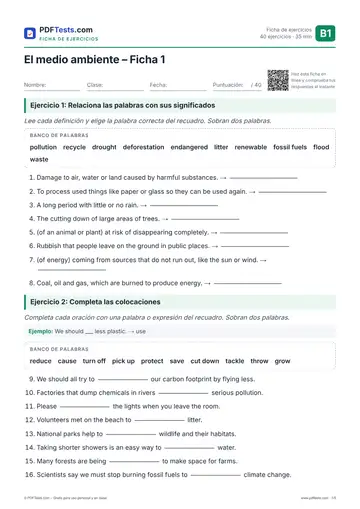
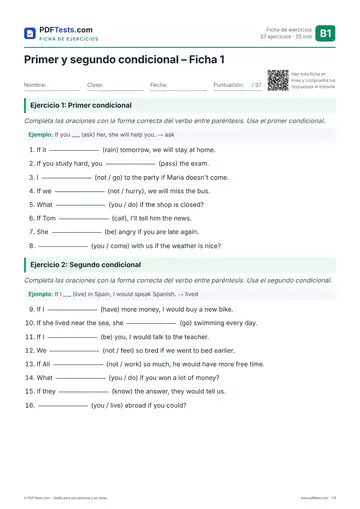
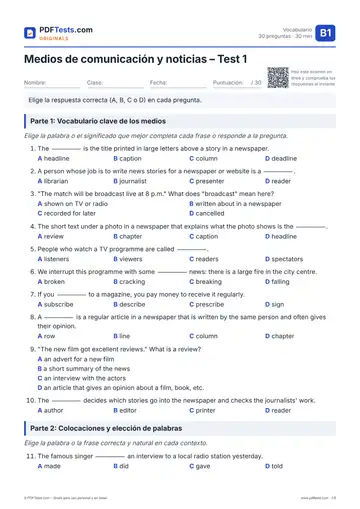
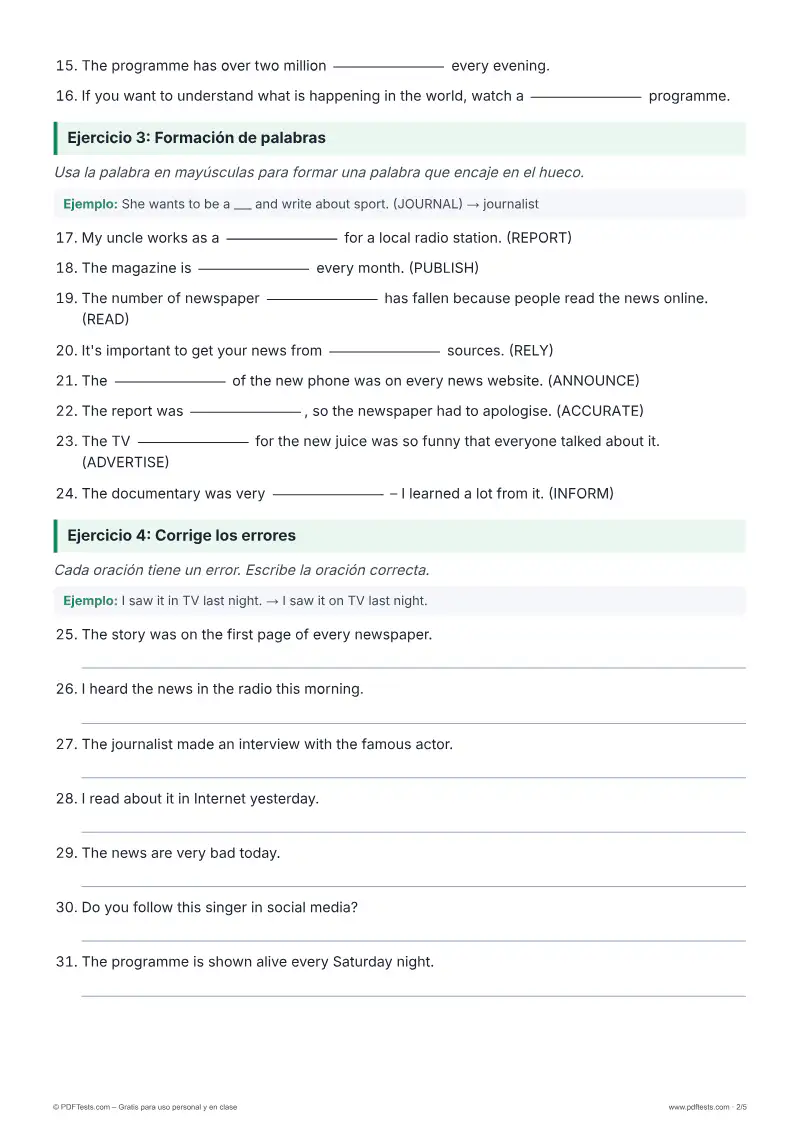
Vista previa de la página 1: Medios de comunicación y noticias – Ficha 1 Abrir PDF

Haz la ficha en línea

Escribe tus respuestas y pulsa «Comprobar respuestas». Se aceptan otras respuestas correctas.

Ejercicio 1: Relaciona las definiciones

Relaciona cada definición con una palabra o expresión del recuadro. Sobra una palabra.

Ejemplo: A short film or picture that tries to sell a product. → advert

Banco de palabras headlinejournalisteditorpresenterdocumentarypodcastsubscriberfront pageadvert

  1. The title of a newspaper story, printed in large letters.

  2. A person who writes news stories for a newspaper, a website or TV.

  3. The person who decides what goes into a newspaper or magazine.

  4. A person who introduces a TV or radio programme.

  5. A film or TV programme that gives facts about a real subject.

  6. A recorded audio programme that you can download and listen to.

  7. A person who pays to receive a magazine or an online service regularly.

  8. The first page of a newspaper, with the most important stories.

Ejercicio 2: Completa las oraciones

Completa cada oración con una palabra o expresión del recuadro. Sobran dos palabras.

Ejemplo: My favourite sports ___ shows football all day. → channel

Banco de palabras breaking newssocial mediaarticleinterviewfake newsbroadcastviewerscurrent affairschannelreview

  1. The TV station stopped the film to show about the earthquake.

  2. Many young people get their news from instead of newspapers.

  3. I read an interesting about young people and sleep in yesterday's paper.

  4. The singer gave a long to a radio station after her concert.

  5. Be careful: a lot of is shared online, so always check where a story comes from.

  6. The final match will be live on national TV.

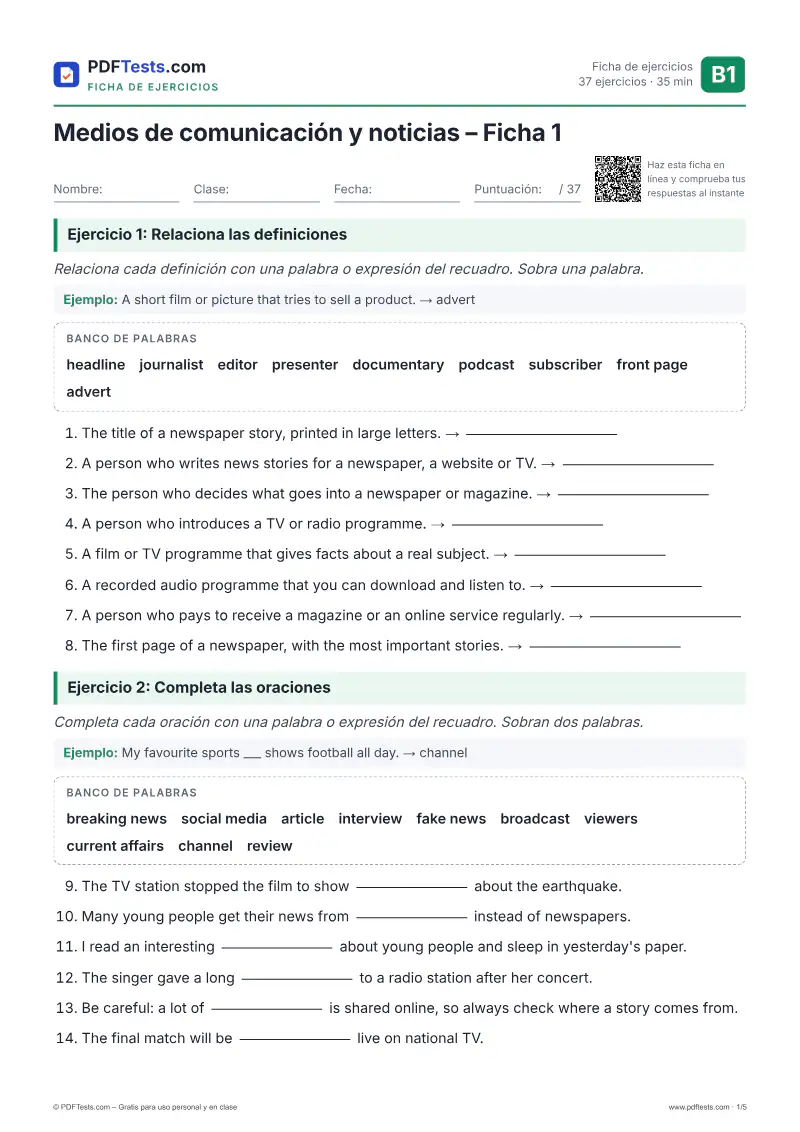
  7. The programme has over two million every evening.

  8. If you want to understand what is happening in the world, watch a programme.

Ejercicio 3: Formación de palabras

Usa la palabra en mayúsculas para formar una palabra que encaje en el hueco.

Ejemplo: She wants to be a ___ and write about sport. (JOURNAL) → journalist

  1. My uncle works as a for a local radio station. (REPORT)

  2. The magazine is every month. (PUBLISH)

  3. The number of newspaper has fallen because people read the news online. (READ)

  4. It's important to get your news from sources. (RELY)

  5. The of the new phone was on every news website. (ANNOUNCE)

  6. The report was , so the newspaper had to apologise. (ACCURATE)

  7. The TV for the new juice was so funny that everyone talked about it. (ADVERTISE)

  8. The documentary was very – I learned a lot from it. (INFORM)

Ejercicio 4: Corrige los errores

Cada oración tiene un error. Escribe la oración correcta.

Ejemplo: I saw it in TV last night. → I saw it on TV last night.

  1. The story was on the first page of every newspaper.

  2. I heard the news in the radio this morning.

  3. The journalist made an interview with the famous actor.

  4. I read about it in Internet yesterday.

  5. The news are very bad today.

  6. Do you follow this singer in social media?

  7. The programme is shown alive every Saturday night.

Ejercicio 5: Ordena las palabras

Ordena las palabras para formar oraciones correctas.

Ejemplo: news / watch / the / I / every evening → I watch the news every evening.

  1. people / news / online / most / their / get

  2. the / headline / did / see / you / this morning

  3. always / the / check / you / should / source

  4. was / the / live / broadcast / interview

  5. to / a / subscribed / I've / podcast / science

  6. she / for / works / a / magazine / as / an / editor

¿Te ha resultado útil esta página?

Informar de un error

¿Has visto una respuesta incorrecta, una errata o una explicación poco clara? Avísanos y lo corregiremos.

Vista previa

Sobre este examen

Ficha de inglés B1 en PDF sobre vocabulario de medios y noticias: titulares, periodistas, colocaciones y formación de palabras. Imprimible con soluciones.

Temas

Vocabulario de los medios de comunicaciónNoticias y periodismoColocacionesFormación de palabrasNoticias en internet y redes sociales

Notas para el profesor

Empiece con el ejercicio de relacionar para comprobar el significado y pase después a las tareas de colocaciones y formación de palabras. Entre los errores más frecuentes están decir 'in the radio' o 'in Internet' en lugar de 'on', y usar el verbo en plural después de 'news' ('the news are'). Como actividad de ampliación, pida a las parejas que escriban tres titulares sobre el instituto o sobre acontecimientos locales y que los presenten como un breve informativo.

Todos los exámenes de Inglés B1 →