PDFTests Originals

Médias et actualités – Fiche 1

B1 Intermédiaire FicheAnglais

Cette fiche permet de travailler le vocabulaire essentiel des médias et de l'actualité au niveau B1 : les métiers, les émissions et l'information en ligne. Les élèves travaillent le sens des mots, des collocations courantes comme « on the radio » et « breaking news », ainsi que la formation des mots, par exemple reporter, reliable et informative. Elle convient aux adolescents comme aux adultes, en classe ou à la maison.
items
37
Durée
35 min
PDF
5 pages
Corrigé
Inclus
  • 100 % gratuit
  • Sans inscription
  • PDF A4 prêt à imprimer
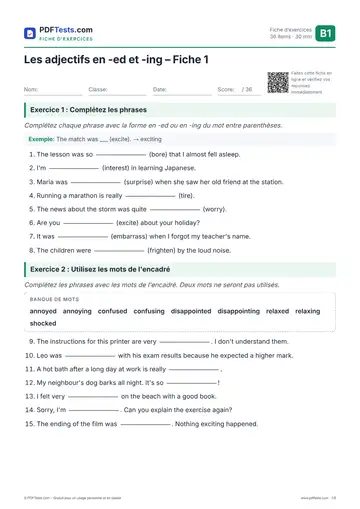
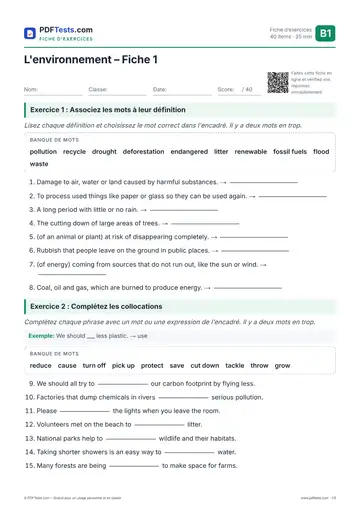
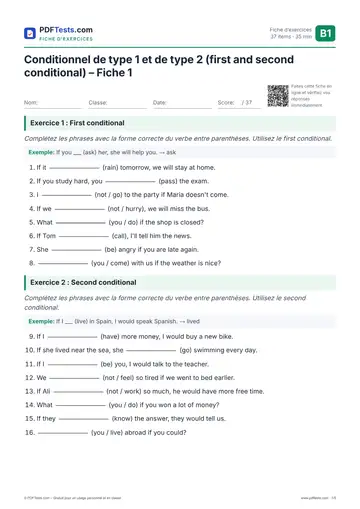
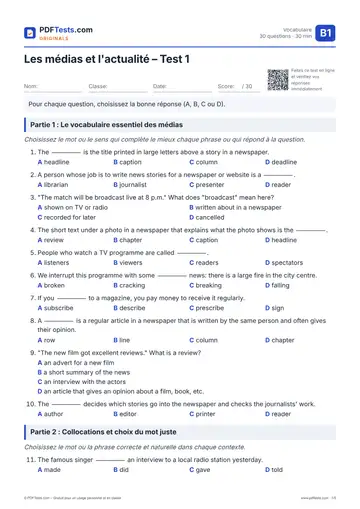
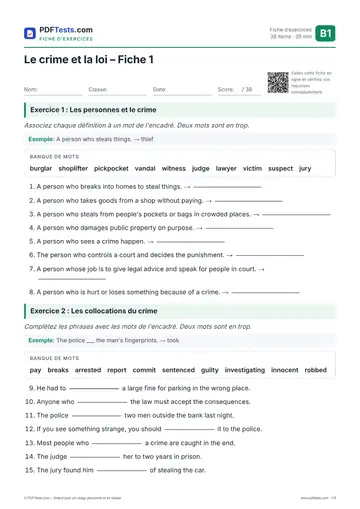
Aperçu de la page 1 : Médias et actualités – Fiche 1 Ouvrir le PDF

Faire la fiche en ligne

Tapez vos réponses puis cliquez sur « Vérifier mes réponses ». Les autres réponses correctes sont acceptées.

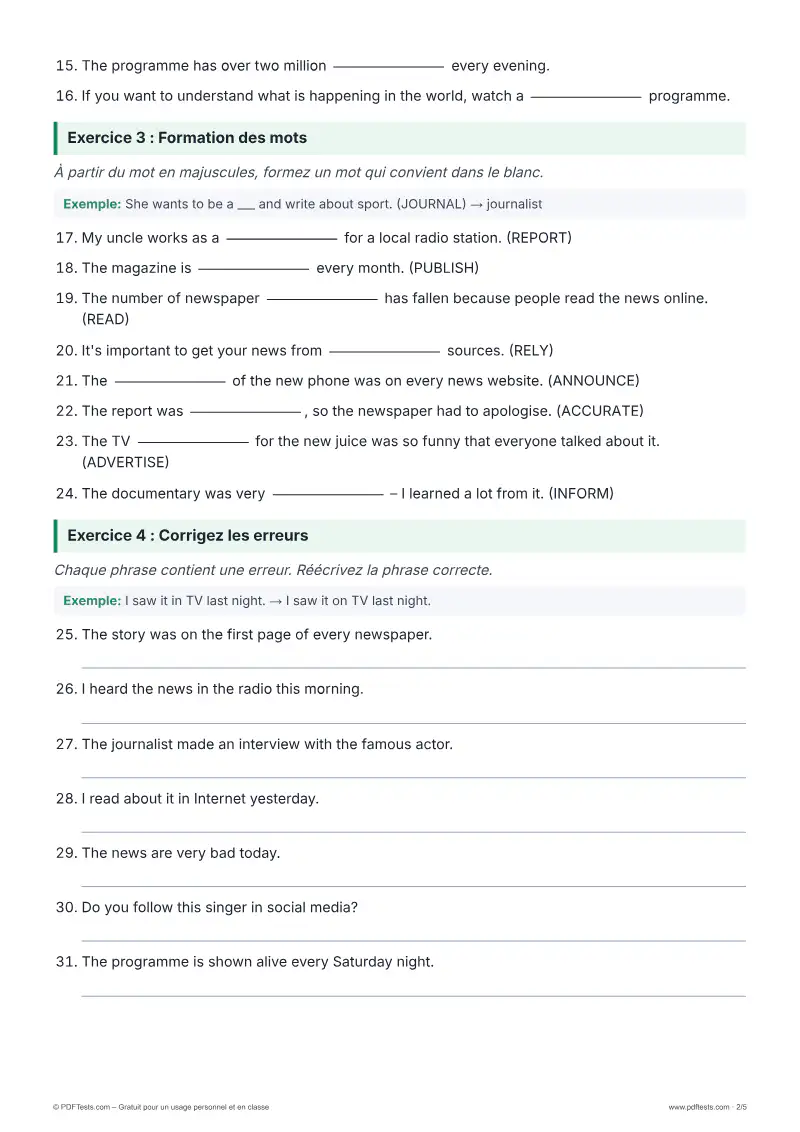
Exercice 1 : Associez les définitions

Associez chaque définition à un mot ou une expression de l'encadré. Un mot est en trop.

Exemple: A short film or picture that tries to sell a product. → advert

Banque de mots headlinejournalisteditorpresenterdocumentarypodcastsubscriberfront pageadvert

  1. The title of a newspaper story, printed in large letters.

  2. A person who writes news stories for a newspaper, a website or TV.

  3. The person who decides what goes into a newspaper or magazine.

  4. A person who introduces a TV or radio programme.

  5. A film or TV programme that gives facts about a real subject.

  6. A recorded audio programme that you can download and listen to.

  7. A person who pays to receive a magazine or an online service regularly.

  8. The first page of a newspaper, with the most important stories.

Exercice 2 : Complétez les phrases

Complétez chaque phrase avec un mot ou une expression de l'encadré. Deux mots sont en trop.

Exemple: My favourite sports ___ shows football all day. → channel

Banque de mots breaking newssocial mediaarticleinterviewfake newsbroadcastviewerscurrent affairschannelreview

  1. The TV station stopped the film to show about the earthquake.

  2. Many young people get their news from instead of newspapers.

  3. I read an interesting about young people and sleep in yesterday's paper.

  4. The singer gave a long to a radio station after her concert.

  5. Be careful: a lot of is shared online, so always check where a story comes from.

  6. The final match will be live on national TV.

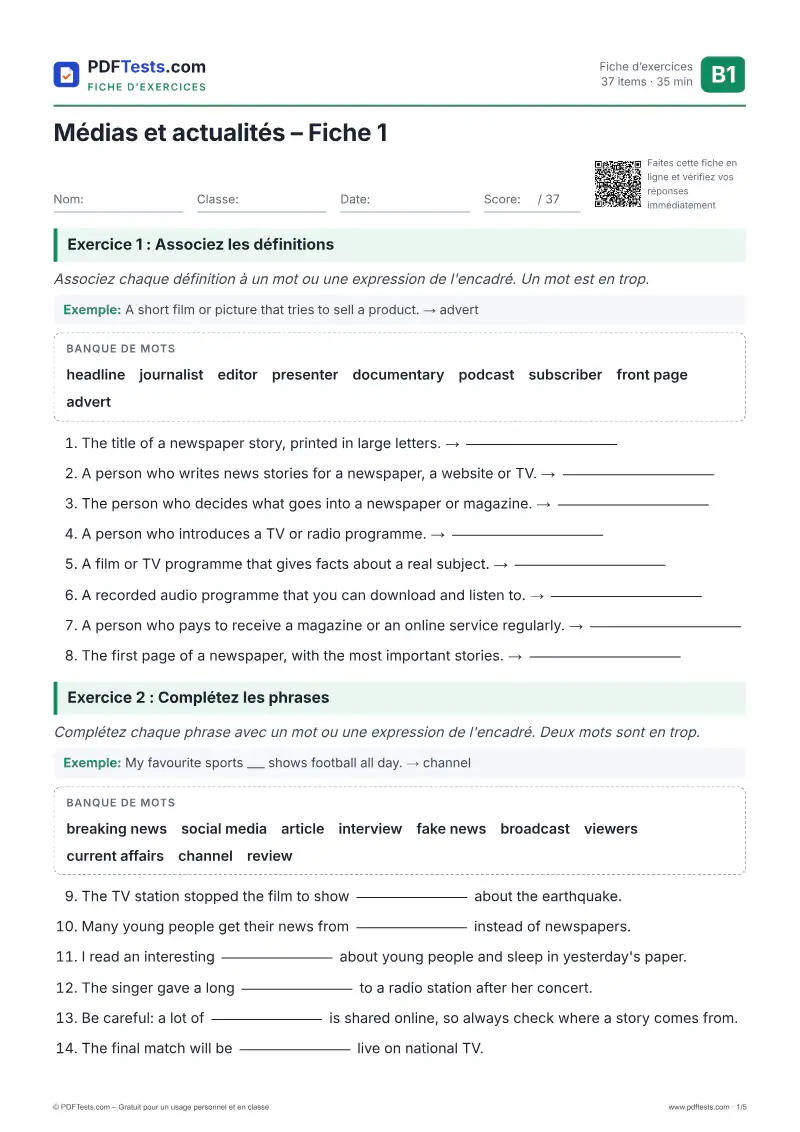
  7. The programme has over two million every evening.

  8. If you want to understand what is happening in the world, watch a programme.

Exercice 3 : Formation des mots

À partir du mot en majuscules, formez un mot qui convient dans le blanc.

Exemple: She wants to be a ___ and write about sport. (JOURNAL) → journalist

  1. My uncle works as a for a local radio station. (REPORT)

  2. The magazine is every month. (PUBLISH)

  3. The number of newspaper has fallen because people read the news online. (READ)

  4. It's important to get your news from sources. (RELY)

  5. The of the new phone was on every news website. (ANNOUNCE)

  6. The report was , so the newspaper had to apologise. (ACCURATE)

  7. The TV for the new juice was so funny that everyone talked about it. (ADVERTISE)

  8. The documentary was very – I learned a lot from it. (INFORM)

Exercice 4 : Corrigez les erreurs

Chaque phrase contient une erreur. Réécrivez la phrase correcte.

Exemple: I saw it in TV last night. → I saw it on TV last night.

  1. The story was on the first page of every newspaper.

  2. I heard the news in the radio this morning.

  3. The journalist made an interview with the famous actor.

  4. I read about it in Internet yesterday.

  5. The news are very bad today.

  6. Do you follow this singer in social media?

  7. The programme is shown alive every Saturday night.

Exercice 5 : Remettez les mots dans l'ordre

Remettez les mots dans le bon ordre pour former des phrases.

Exemple: news / watch / the / I / every evening → I watch the news every evening.

  1. people / news / online / most / their / get

  2. the / headline / did / see / you / this morning

  3. always / the / check / you / should / source

  4. was / the / live / broadcast / interview

  5. to / a / subscribed / I've / podcast / science

  6. she / for / works / a / magazine / as / an / editor

Cette page vous a-t-elle été utile ?

Signaler une erreur

Une mauvaise réponse, une faute de frappe ou une explication peu claire ? Dites-le-nous, nous corrigerons.

Aperçu

À propos de ce test

Fiche d'anglais B1 en PDF sur le vocabulaire des médias : gros titres, journalistes, collocations et formation des mots. À imprimer, avec corrigé.

Thèmes abordés

Vocabulaire des médiasActualité et journalismeCollocationsFormation des motsInformation en ligne et réseaux sociaux

Notes pour l’enseignant

Commencez par l'exercice d'association pour vérifier la compréhension du vocabulaire, puis passez aux exercices sur les collocations et la formation des mots. Erreurs fréquentes : « in the radio » ou « in Internet » au lieu de « on », et l'emploi d'un verbe au pluriel après « news » (« the news are »). En prolongement, demandez aux élèves, par deux, de rédiger trois gros titres sur la vie de l'établissement ou l'actualité locale, puis de les présenter sous forme de court journal télévisé.

Tous les tests Anglais B1 →