PDFTests Originals

Phrasal verbs avancés – Fiche 1

C1 Avancé FicheAnglais

Cette fiche de niveau C1 permet de s'entraîner aux phrasal verbs avancés comme iron out, play down, phase out et live up to dans des contextes authentiques. Les apprenants associent chaque verbe à son sens, choisissent le verbe adapté, emploient le temps correct, forment des noms comme breakthrough et setback, et corrigent des erreurs fréquentes. Elle convient aux apprenants de niveau intermédiaire supérieur et avancé qui préparent un examen ou souhaitent améliorer leur communication professionnelle.
items
39
Durée
40 min
PDF
5 pages
Corrigé
Inclus
  • 100 % gratuit
  • Sans inscription
  • PDF A4 prêt à imprimer
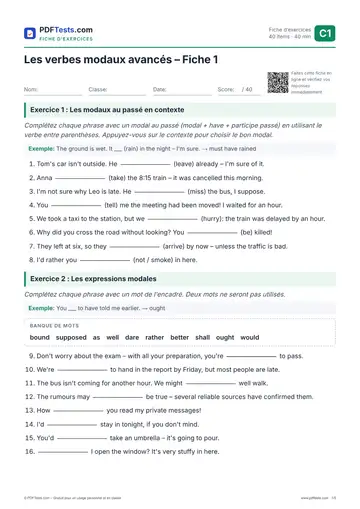
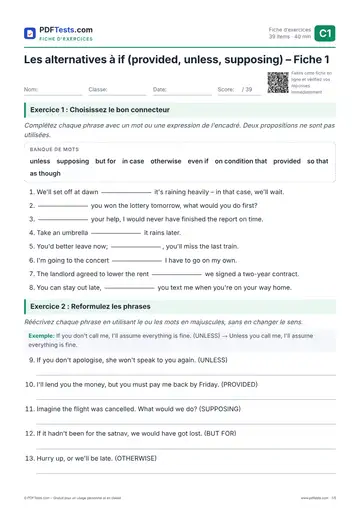
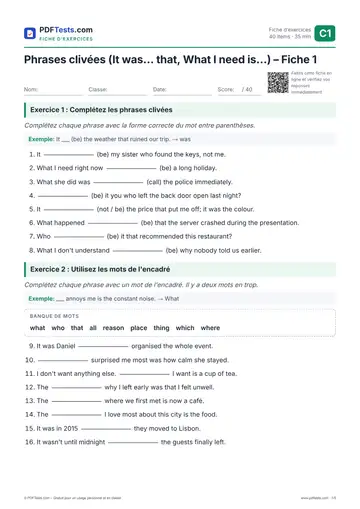
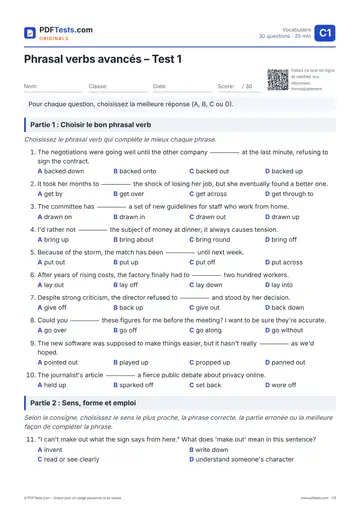
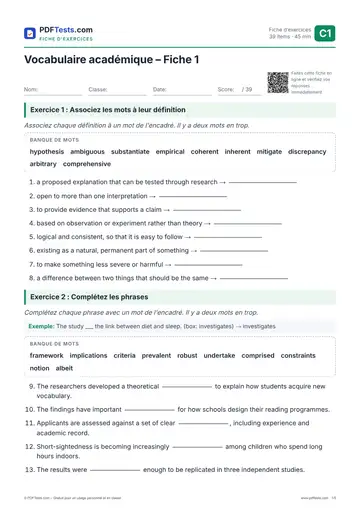
Aperçu de la page 1 : Phrasal verbs avancés – Fiche 1 Ouvrir le PDF

Faire la fiche en ligne

Tapez vos réponses puis cliquez sur « Vérifier mes réponses ». Les autres réponses correctes sont acceptées.

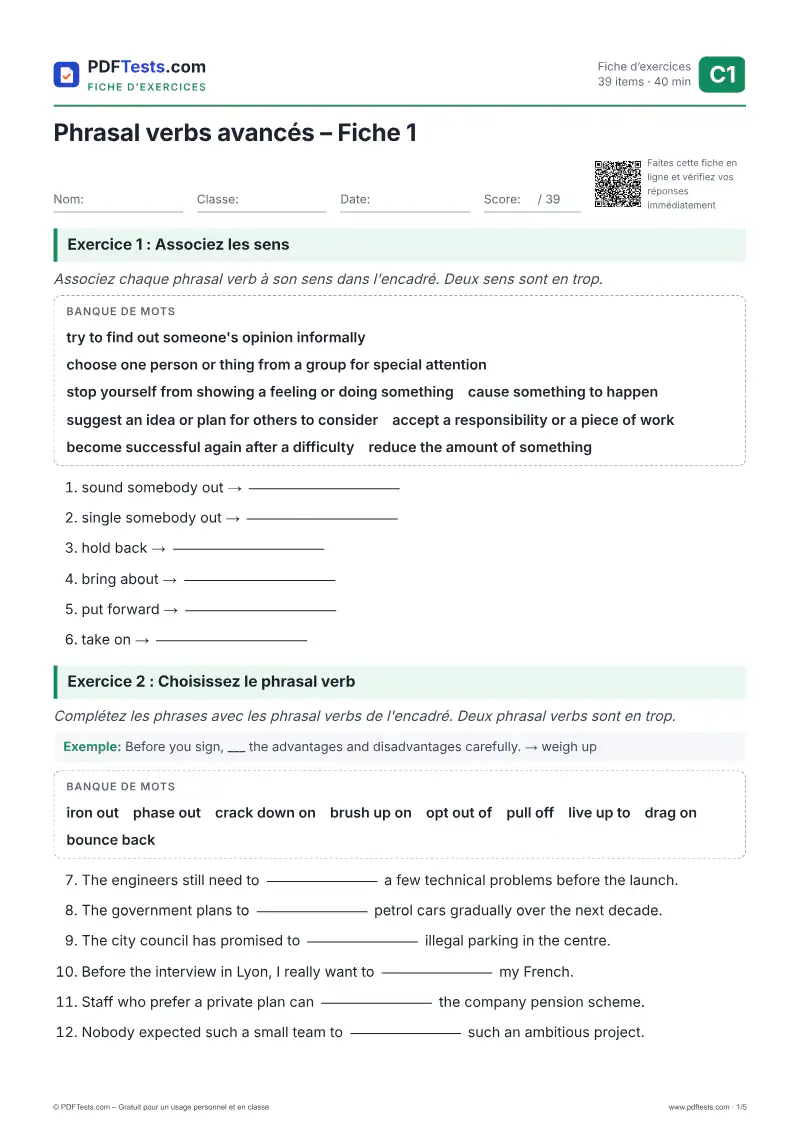
Exercice 1 : Associez les sens

Associez chaque phrasal verb à son sens dans l'encadré. Deux sens sont en trop.

Banque de mots try to find out someone's opinion informallychoose one person or thing from a group for special attentionstop yourself from showing a feeling or doing somethingcause something to happensuggest an idea or plan for others to consideraccept a responsibility or a piece of workbecome successful again after a difficultyreduce the amount of something

  1. sound somebody out

  2. single somebody out

  3. hold back

  4. bring about

  5. put forward

  6. take on

Exercice 2 : Choisissez le phrasal verb

Complétez les phrases avec les phrasal verbs de l'encadré. Deux phrasal verbs sont en trop.

Exemple: Before you sign, ___ the advantages and disadvantages carefully. → weigh up

Banque de mots iron outphase outcrack down onbrush up onopt out ofpull offlive up todrag onbounce back

  1. The engineers still need to a few technical problems before the launch.

  2. The government plans to petrol cars gradually over the next decade.

  3. The city council has promised to illegal parking in the centre.

  4. Before the interview in Lyon, I really want to my French.

  5. Staff who prefer a private plan can the company pension scheme.

  6. Nobody expected such a small team to such an ambitious project.

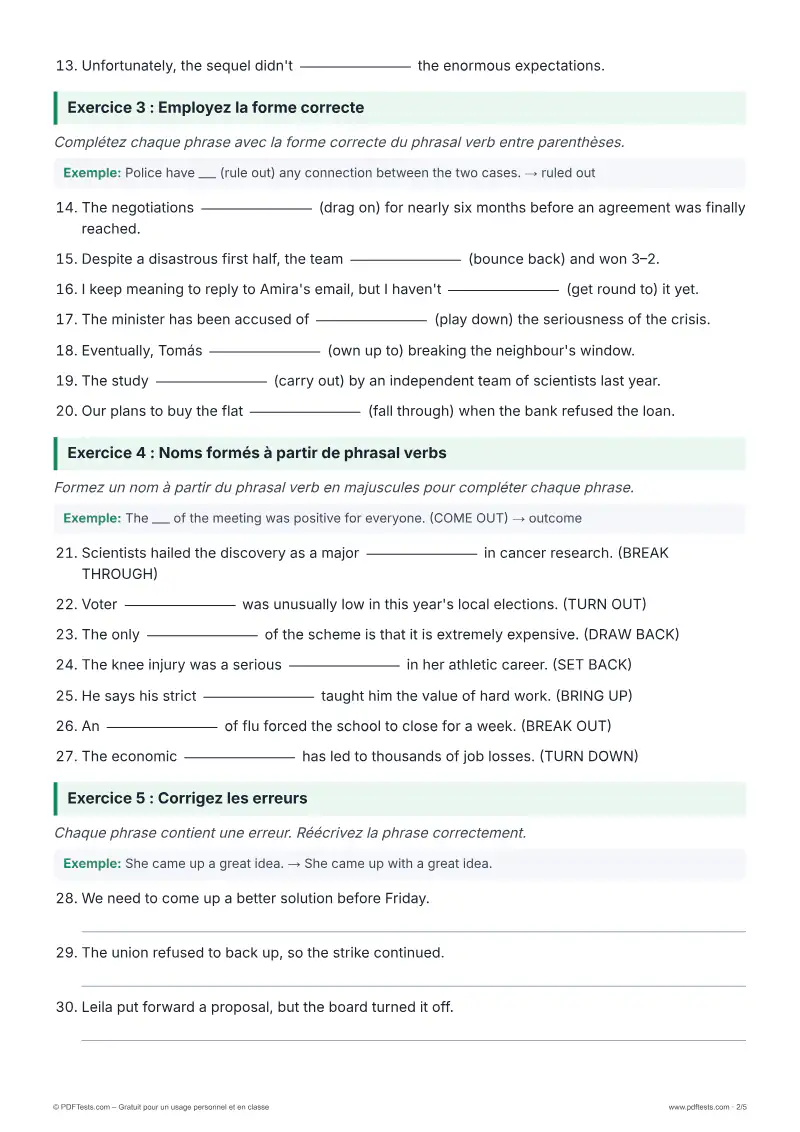
  7. Unfortunately, the sequel didn't the enormous expectations.

Exercice 3 : Employez la forme correcte

Complétez chaque phrase avec la forme correcte du phrasal verb entre parenthèses.

Exemple: Police have ___ (rule out) any connection between the two cases. → ruled out

  1. The negotiations (drag on) for nearly six months before an agreement was finally reached.

  2. Despite a disastrous first half, the team (bounce back) and won 3–2.

  3. I keep meaning to reply to Amira's email, but I haven't (get round to) it yet.

  4. The minister has been accused of (play down) the seriousness of the crisis.

  5. Eventually, Tomás (own up to) breaking the neighbour's window.

  6. The study (carry out) by an independent team of scientists last year.

  7. Our plans to buy the flat (fall through) when the bank refused the loan.

Exercice 4 : Noms formés à partir de phrasal verbs

Formez un nom à partir du phrasal verb en majuscules pour compléter chaque phrase.

Exemple: The ___ of the meeting was positive for everyone. (COME OUT) → outcome

  1. Scientists hailed the discovery as a major in cancer research. (BREAK THROUGH)

  2. Voter was unusually low in this year's local elections. (TURN OUT)

  3. The only of the scheme is that it is extremely expensive. (DRAW BACK)

  4. The knee injury was a serious in her athletic career. (SET BACK)

  5. He says his strict taught him the value of hard work. (BRING UP)

  6. An of flu forced the school to close for a week. (BREAK OUT)

  7. The economic has led to thousands of job losses. (TURN DOWN)

Exercice 5 : Corrigez les erreurs

Chaque phrase contient une erreur. Réécrivez la phrase correctement.

Exemple: She came up a great idea. → She came up with a great idea.

  1. We need to come up a better solution before Friday.

  2. The union refused to back up, so the strike continued.

  3. Leila put forward a proposal, but the board turned it off.

  4. I came across with an old photo while I was tidying the attic.

  5. The company took up twenty new employees last month.

  6. The project ran against a number of unexpected obstacles.

Exercice 6 : Réécrivez les phrases

Réécrivez chaque phrase en utilisant le phrasal verb entre parenthèses, sans en changer le sens.

Exemple: They postponed the meeting. (put off) → They put off the meeting.

  1. The match was cancelled because of the storm. (call off)

  2. We can't exclude the possibility of further delays. (rule out)

  3. I really admire and respect my older sister. (look up to)

  4. Hana invented a brilliant excuse for being late. (make up)

  5. The factory is going to stop producing its oldest model in stages. (phase out)

  6. I tolerated his rude behaviour for far too long. (put up with)

Cette page vous a-t-elle été utile ?

Signaler une erreur

Une mauvaise réponse, une faute de frappe ou une explication peu claire ? Dites-le-nous, nous corrigerons.

Aperçu

À propos de ce test

Fiche d'anglais C1 en PDF sur les phrasal verbs avancés : sens, collocations, formes verbales, noms dérivés, correction d'erreurs et transformations, avec corrigé.

Thèmes abordés

Phrasal verbsSens en contexteCollocationsNoms formés à partir de phrasal verbsCorrection d'erreursTransformation de phrases

Notes pour l’enseignant

Commencez par l'exercice d'association pour activer le sens des verbes, puis faites travailler les apprenants en binôme sur les exercices guidés avant une correction collective. Erreurs fréquentes : l'oubli de la deuxième particule dans les verbes à trois éléments (come up with, run up against), le choix d'une mauvaise particule (back up au lieu de back down) et l'oubli de modifier la forme du verbe après une préposition (accused of playing down). En prolongement, demandez aux apprenants de rédiger un court article de presse ou un e-mail en utilisant au moins six des phrasal verbs et des noms dérivés de la fiche.

Tous les tests Anglais C1 →