PDFTests Originals

Adjective Endings – Worksheet 1

B1 Intermediate WorksheetGerman

This worksheet practises German adjective endings in all four cases: after the definite article, after ein/kein/possessives, and with no article. It is for B1 learners who know the basic case system and want to use adjective endings correctly in statements, negatives and questions.
items
37
Time
30 min
PDF
5 pages
Answer key
Included
  • 100% free
  • No sign-up or email
  • Print-ready A4 PDF
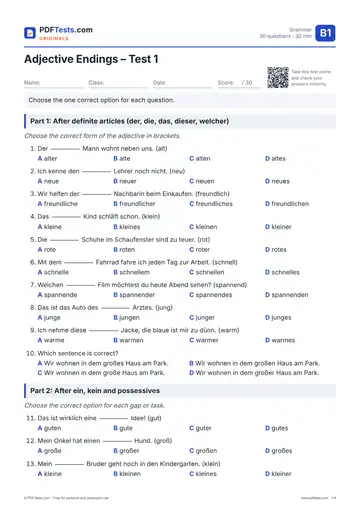
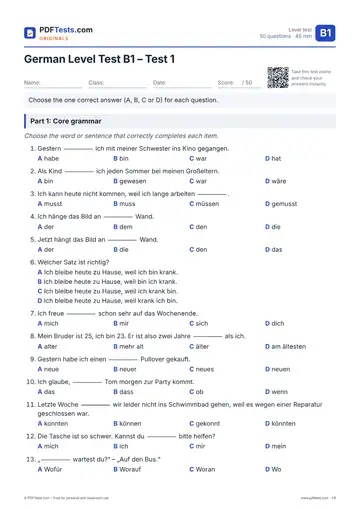
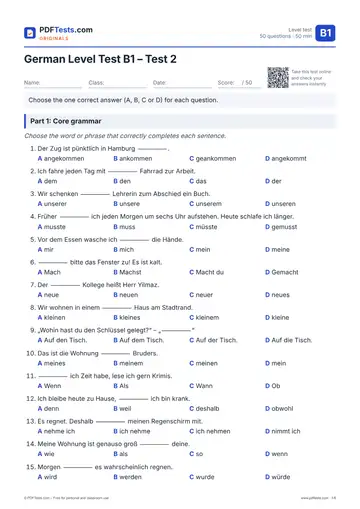
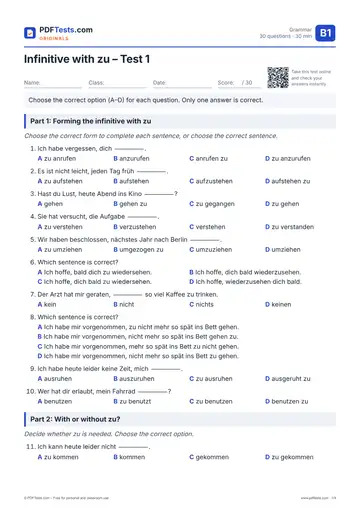
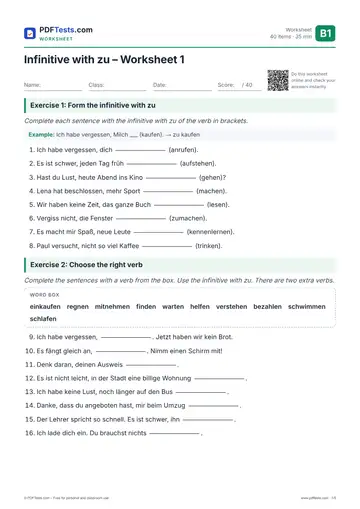
Preview of page 1 of Adjective Endings – Worksheet 1 Open PDF
New to this topic? Read the guide first: German Adjective Endings: Weak, Mixed and Strong Declension

Do the worksheet online

Type your answers, then press “Check my answers”. Alternative correct answers are accepted.

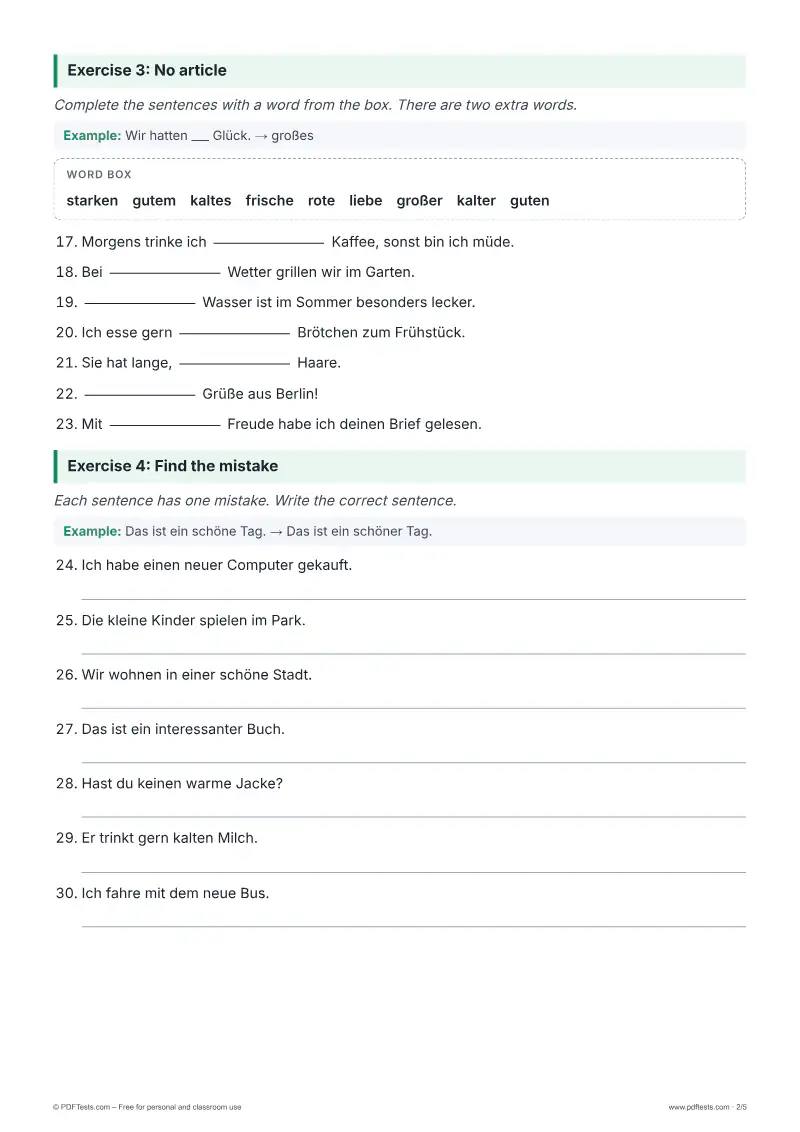
Exercise 1: After der, die, das

Complete the sentences with the correct form of the adjective in brackets.

Example: Ich mag den ___ (rot) Pullover. → roten

  1. Der (alt) Mann wohnt neben uns.

  2. Kennst du die (neu) Lehrerin?

  3. Ich helfe dem (klein) Kind.

  4. Wir wohnen in dem (gelb) Haus.

  5. Das ist das Auto des (jung) Arztes.

  6. Die (frisch) Brötchen schmecken super.

  7. Hast du den (spannend) Film gesehen?

  8. Das (blau) Hemd gefällt mir.

Exercise 2: After ein, kein and possessives

Complete the sentences with the correct form of the adjective in brackets.

Example: Das ist ein ___ (alt) Foto. → altes

  1. Mein Bruder hat ein (schnell) Fahrrad.

  2. Das ist keine (gut) Idee.

  3. Wir suchen eine (günstig) Wohnung.

  4. Sie wohnt mit ihrem (nett) Freund zusammen.

  5. Ist das dein (neu) Handy?

  6. Er trägt einen (schwarz) Mantel.

  7. Ich habe keine (warm) Schuhe.

  8. Hast du einen (gut) Tipp für mich?

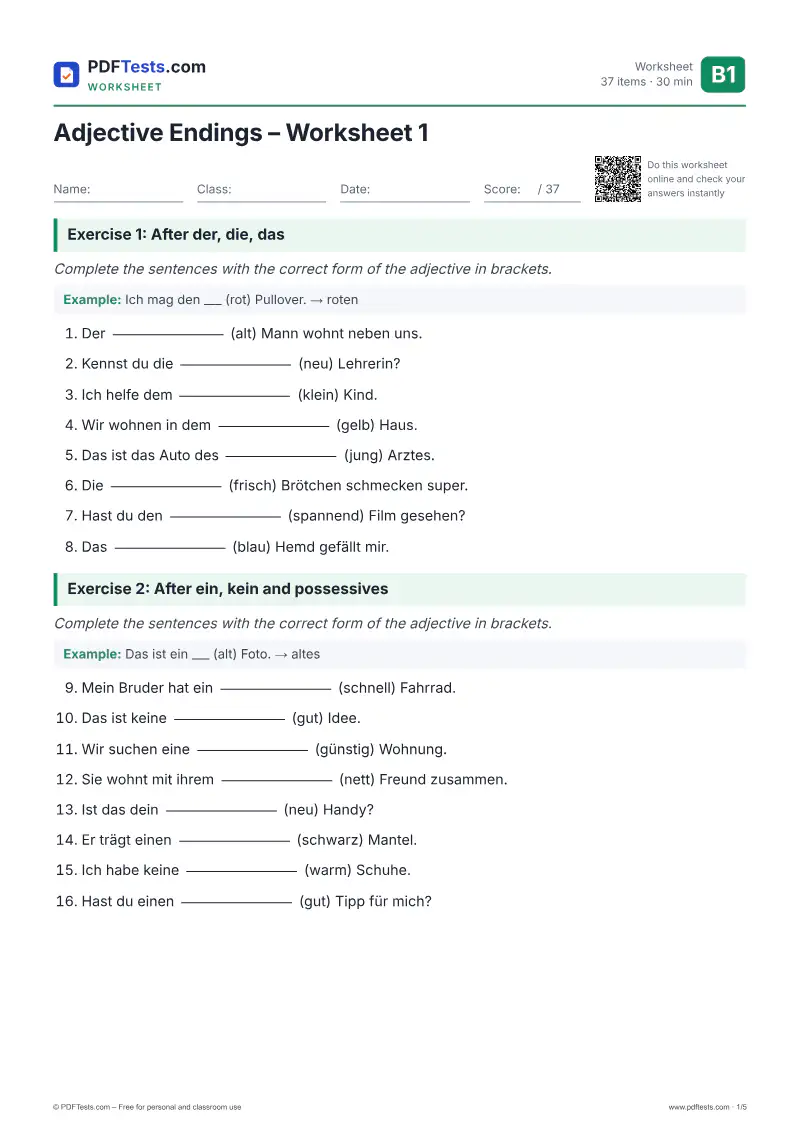
Exercise 3: No article

Complete the sentences with a word from the box. There are two extra words.

Example: Wir hatten ___ Glück. → großes

Word box starkengutemkaltesfrischeroteliebegroßerkalterguten

  1. Morgens trinke ich Kaffee, sonst bin ich müde.

  2. Bei Wetter grillen wir im Garten.

  3. Wasser ist im Sommer besonders lecker.

  4. Ich esse gern Brötchen zum Frühstück.

  5. Sie hat lange, Haare.

  6. Grüße aus Berlin!

  7. Mit Freude habe ich deinen Brief gelesen.

Exercise 4: Find the mistake

Each sentence has one mistake. Write the correct sentence.

Example: Das ist ein schöne Tag. → Das ist ein schöner Tag.

  1. Ich habe einen neuer Computer gekauft.

  2. Die kleine Kinder spielen im Park.

  3. Wir wohnen in einer schöne Stadt.

  4. Das ist ein interessanter Buch.

  5. Hast du keinen warme Jacke?

  6. Er trinkt gern kalten Milch.

  7. Ich fahre mit dem neue Bus.

Exercise 5: Combine the sentences

Combine the two sentences into one. Put the adjective before the noun.

Example: Der Rock ist kurz. Ich kaufe den Rock. → Ich kaufe den kurzen Rock.

  1. Das Hotel ist teuer. Wir übernachten in dem Hotel.

  2. Die Tasche ist schwer. Kannst du die Tasche tragen?

  3. Der Kuchen ist lecker. Ich esse den Kuchen.

  4. Das Wetter ist schlecht. Wir bleiben wegen des Wetters zu Hause.

  5. Die Nachbarn sind freundlich. Ich spreche mit den Nachbarn.

  6. Meine Wohnung ist groß. Ich mag meine Wohnung.

  7. Der Film war langweilig. Warum hast du den Film gesehen?

Was this page helpful?

Report a mistake

Spotted a wrong answer, a typo or an unclear explanation? Tell us and we will fix it.

Preview

About this test

B1 German worksheet on adjective endings after der, ein, kein, mein and with no article, with answers and explanations. Free to print.

Topics covered

Adjective endingsWeak declension (der/die/das)Mixed declension (ein/kein/mein)Strong declension (no article)Cases: nominative, accusative, dative, genitive

Notes for teachers

Start with Exercise 1 to review the 'der-word' pattern (only -e or -en), then compare it with the ein-words, where the adjective shows gender when the article cannot (ein neuer Mann, ein neues Auto). Typical mistakes are -e instead of -en in the dative and plural, forgetting -er/-es after ein, and keeping the e in teuer and dunkel (teuren, dunklen). As a follow-up, ask pairs to describe objects in the classroom or a photo using at least five adjective + noun phrases in different cases.

All German B1 tests →