PDFTests Originals

Vacaciones y problemas de viaje – Test 1

B1 Intermedio VocabularioInglés

Este test de vocabulario de nivel B1 trabaja las palabras y expresiones necesarias para hablar de vacaciones y problemas de viaje, desde vuelos retrasados y equipaje perdido hasta reclamaciones en el hotel y reembolsos. Practica el significado de las palabras, las colocaciones más habituales (collocations), las familias de palabras y el vocabulario en contexto mediante un texto breve. Es ideal para alumnos de nivel intermedio que preparan un examen B1 o que van a viajar.
Preguntas
30
Tiempo
30 min
PDF
5 páginas
Soluciones
Incluidas
  • 100 % gratis
  • Sin registro
  • PDF A4 listo para imprimir
Vista previa de la página 1: Vacaciones y problemas de viaje – Test 1 Abrir PDF

Haz el examen en línea

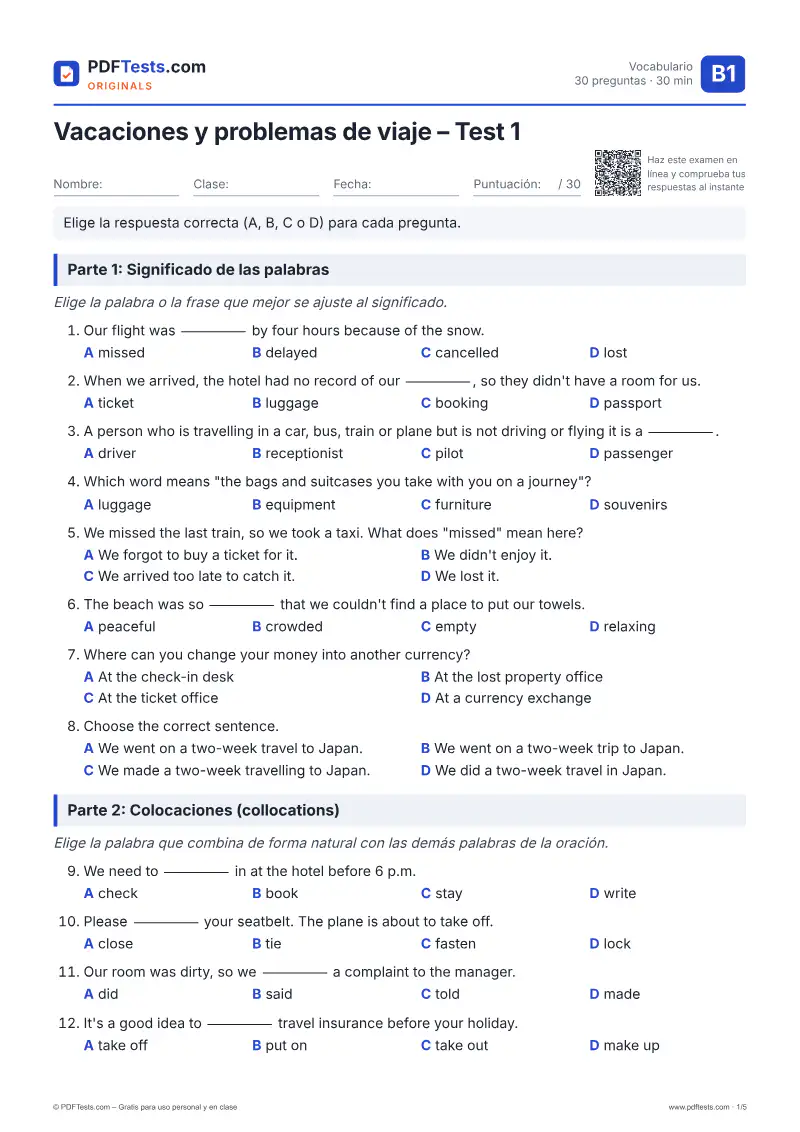
Elige la respuesta correcta (A, B, C o D) para cada pregunta. Elige tus respuestas y pulsa «Comprobar respuestas».

Parte 1: Significado de las palabras

Elige la palabra o la frase que mejor se ajuste al significado.

  1. Our flight was _____ by four hours because of the snow.

  2. When we arrived, the hotel had no record of our _____, so they didn't have a room for us.

  3. A person who is travelling in a car, bus, train or plane but is not driving or flying it is a _____.

  4. Which word means "the bags and suitcases you take with you on a journey"?

  5. We missed the last train, so we took a taxi. What does "missed" mean here?

  6. The beach was so _____ that we couldn't find a place to put our towels.

  7. Where can you change your money into another currency?

  8. Choose the correct sentence.

Parte 2: Colocaciones (collocations)

Elige la palabra que combina de forma natural con las demás palabras de la oración.

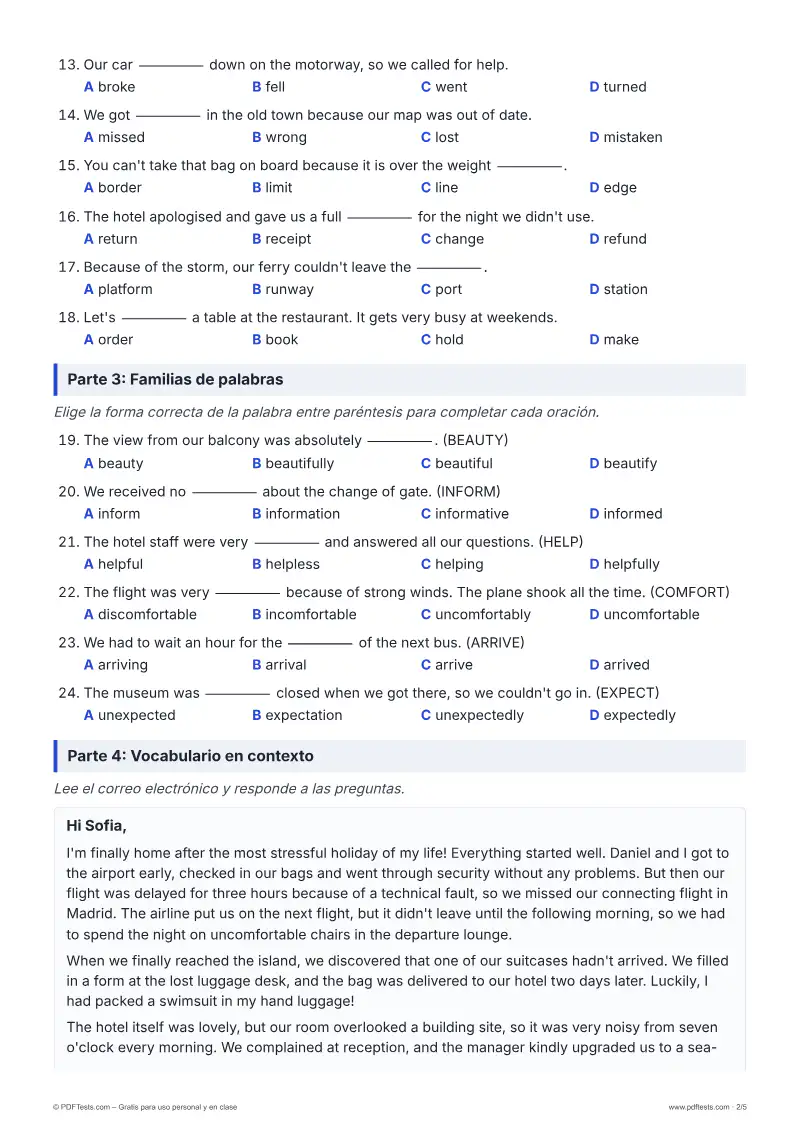
  1. We need to _____ in at the hotel before 6 p.m.

  2. Please _____ your seatbelt. The plane is about to take off.

  3. Our room was dirty, so we _____ a complaint to the manager.

  4. It's a good idea to _____ travel insurance before your holiday.

  5. Our car _____ down on the motorway, so we called for help.

  6. We got _____ in the old town because our map was out of date.

  7. You can't take that bag on board because it is over the weight _____.

  8. The hotel apologised and gave us a full _____ for the night we didn't use.

  9. Because of the storm, our ferry couldn't leave the _____.

  10. Let's _____ a table at the restaurant. It gets very busy at weekends.

Parte 3: Familias de palabras

Elige la forma correcta de la palabra entre paréntesis para completar cada oración.

  1. The view from our balcony was absolutely _____. (BEAUTY)

  2. We received no _____ about the change of gate. (INFORM)

  3. The hotel staff were very _____ and answered all our questions. (HELP)

  4. The flight was very _____ because of strong winds. The plane shook all the time. (COMFORT)

  5. We had to wait an hour for the _____ of the next bus. (ARRIVE)

  6. The museum was _____ closed when we got there, so we couldn't go in. (EXPECT)

Parte 4: Vocabulario en contexto

Lee el correo electrónico y responde a las preguntas.

Hi Sofia,

I'm finally home after the most stressful holiday of my life! Everything started well. Daniel and I got to the airport early, checked in our bags and went through security without any problems. But then our flight was delayed for three hours because of a technical fault, so we missed our connecting flight in Madrid. The airline put us on the next flight, but it didn't leave until the following morning, so we had to spend the night on uncomfortable chairs in the departure lounge.

When we finally reached the island, we discovered that one of our suitcases hadn't arrived. We filled in a form at the lost luggage desk, and the bag was delivered to our hotel two days later. Luckily, I had packed a swimsuit in my hand luggage!

The hotel itself was lovely, but our room overlooked a building site, so it was very noisy from seven o'clock every morning. We complained at reception, and the manager kindly upgraded us to a sea-view room at no extra cost.

In the end, we had a great week. Next time, though, I'm going to choose a direct flight!

Love,

Amira

  1. Why did Amira and Daniel miss their connecting flight?

  2. In the phrase "a technical fault", the word "fault" means:

  3. Where did Amira and Daniel sleep on the first night?

  4. What is "hand luggage"?

  5. The room "overlooked a building site". This means:

  6. When the manager "upgraded" them, he:

¿Te ha resultado útil esta página?

Informar de un error

¿Has visto una respuesta incorrecta, una errata o una explicación poco clara? Avísanos y lo corregiremos.

Practica con una ficha: Vacaciones y problemas de viaje – Ficha 1

Vista previa

Sobre este examen

Este test de vocabulario de nivel B1 trabaja las palabras y expresiones necesarias para hablar de vacaciones y problemas de viaje, desde vuelos retrasados y equipaje perdido hasta reclamaciones en el hotel y reembolsos. Practica el significado de las palabras, las colocaciones más habituales (collocations), las familias de palabras y el vocabulario en contexto mediante un texto breve. Es ideal para alumnos de nivel intermedio que preparan un examen B1 o que van a viajar.

Temas

Problemas de viajeAeropuertos y vuelosHoteles y reservasColocaciones sobre viajesFamilias de palabrasVocabulario en contexto

Cómo usar este examen

  1. Descarga el PDF e imprímelo, o haz el examen en línea más abajo.
  2. Responde todas las preguntas sin diccionario y sin prisas.
  3. Comprueba tus respuestas y apunta los temas que debes repasar.

Notas para el profesor

Utilice el test como repaso después de una unidad sobre viajes o como prueba diagnóstica antes de empezarla. Se centra en errores típicos del nivel B1, como 'a travel' en lugar de 'a trip', 'do a complaint' en lugar de 'make a complaint', y la confusión entre formas de una misma familia de palabras (arrive/arrival, comfortable/uncomfortable). Como actividad de seguimiento, pida a los alumnos que escriban un correo electrónico sobre unas vacaciones que salieron mal, usando al menos diez palabras del test.