PDFTests Originals

Ser and Estar (advanced uses) – Worksheet 1

C1 Advanced WorksheetSpanish

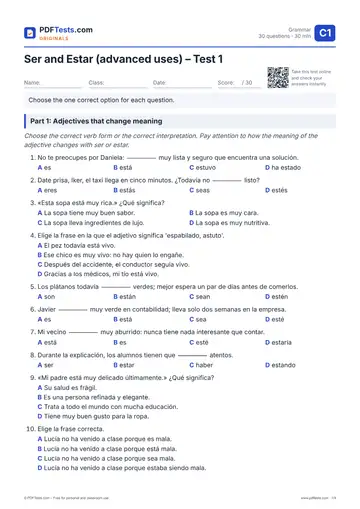
This C1 worksheet practises the advanced uses of ser and estar. It covers adjectives that change meaning, the passive with ser versus the result with estar, and the location of events. It also includes prices, set expressions such as estar para and estar de, negatives and questions. It suits advanced learners who know the basic rules but still hesitate in less obvious contexts.
items
39
Time
40 min
PDF
5 pages
Answer key
Included
  • 100% free
  • No sign-up or email
  • Print-ready A4 PDF
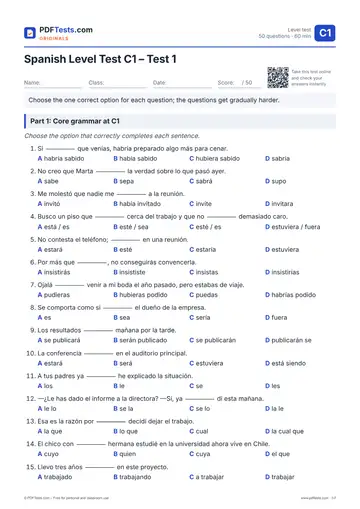
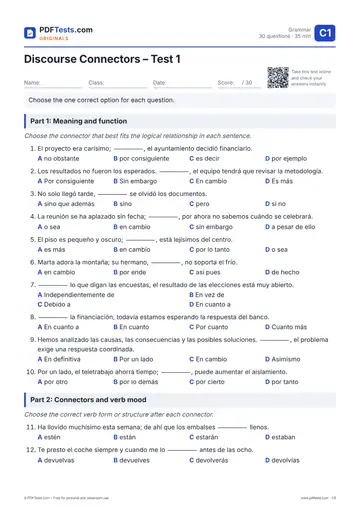
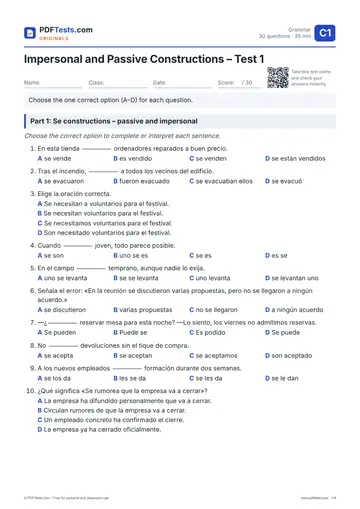
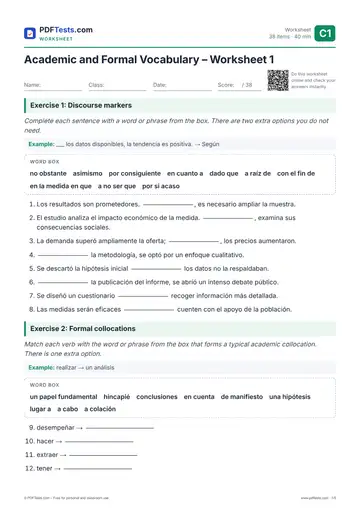
Preview of page 1 of Ser and Estar (advanced uses) – Worksheet 1 Open PDF
New to this topic? Read the guide first: Ser and Estar (Advanced Uses): Meaning Shifts, Passives and Fixed Expressions

Do the worksheet online

Type your answers, then press “Check my answers”. Alternative correct answers are accepted.

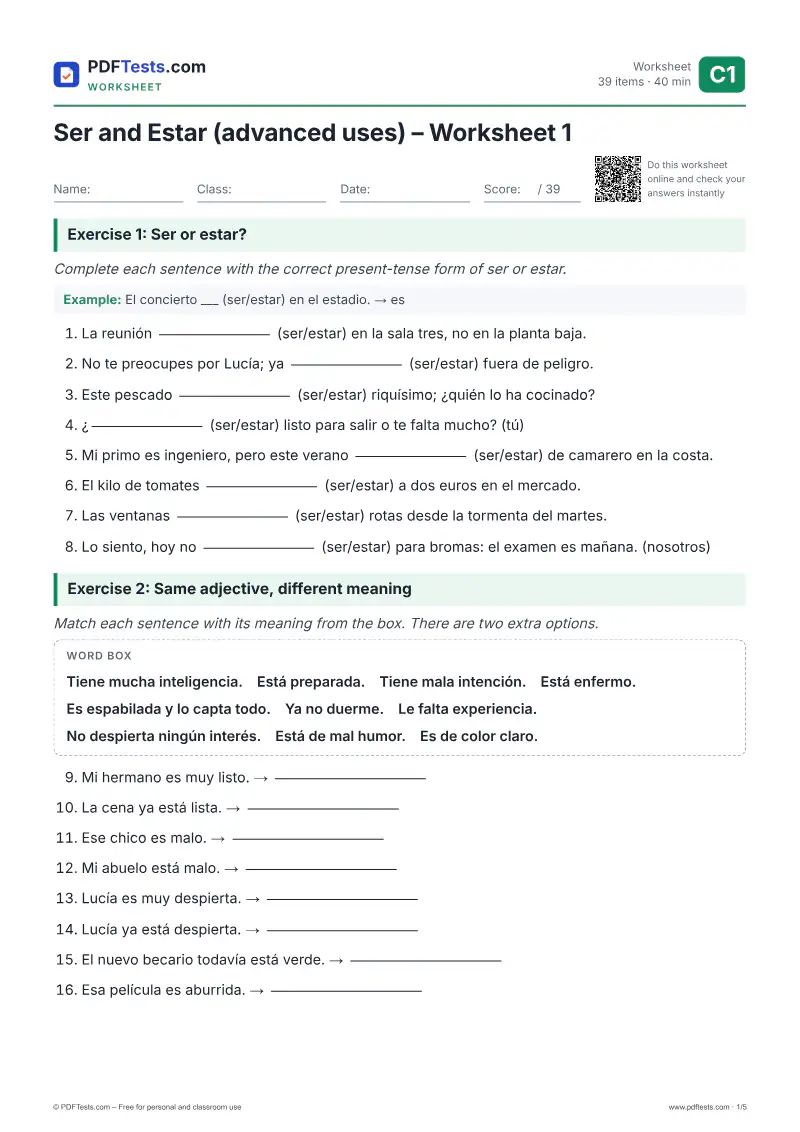
Exercise 1: Ser or estar?

Complete each sentence with the correct present-tense form of ser or estar.

Example: El concierto ___ (ser/estar) en el estadio. → es

  1. La reunión (ser/estar) en la sala tres, no en la planta baja.

  2. No te preocupes por Lucía; ya (ser/estar) fuera de peligro.

  3. Este pescado (ser/estar) riquísimo; ¿quién lo ha cocinado?

  4. ¿ (ser/estar) listo para salir o te falta mucho? (tú)

  5. Mi primo es ingeniero, pero este verano (ser/estar) de camarero en la costa.

  6. El kilo de tomates (ser/estar) a dos euros en el mercado.

  7. Las ventanas (ser/estar) rotas desde la tormenta del martes.

  8. Lo siento, hoy no (ser/estar) para bromas: el examen es mañana. (nosotros)

Exercise 2: Same adjective, different meaning

Match each sentence with its meaning from the box. There are two extra options.

Word box Tiene mucha inteligencia.Está preparada.Tiene mala intención.Está enfermo.Es espabilada y lo capta todo.Ya no duerme.Le falta experiencia.No despierta ningún interés.Está de mal humor.Es de color claro.

  1. Mi hermano es muy listo.

  2. La cena ya está lista.

  3. Ese chico es malo.

  4. Mi abuelo está malo.

  5. Lucía es muy despierta.

  6. Lucía ya está despierta.

  7. El nuevo becario todavía está verde.

  8. Esa película es aburrida.

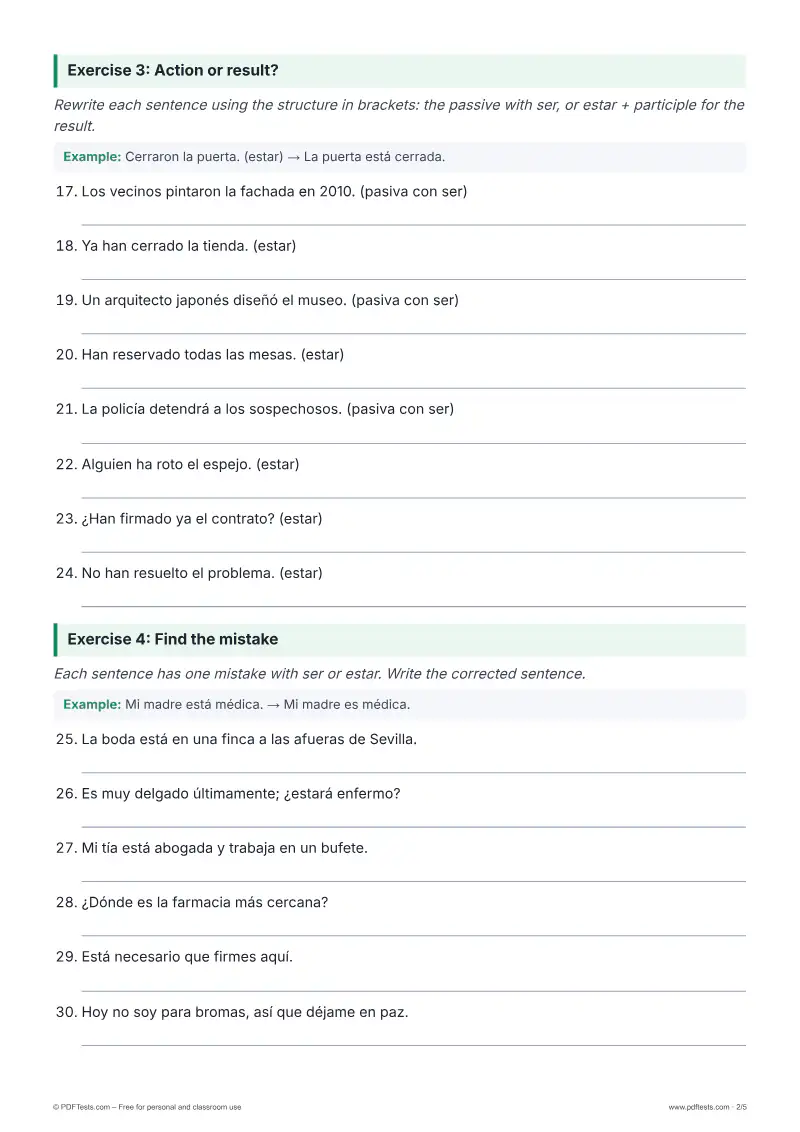
Exercise 3: Action or result?

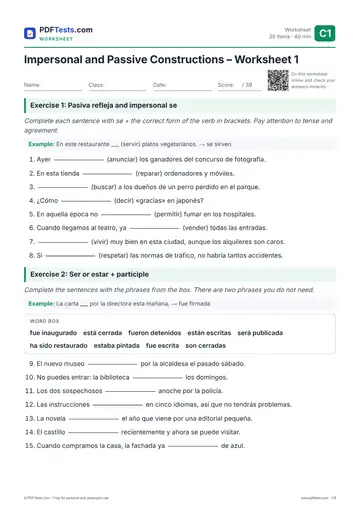
Rewrite each sentence using the structure in brackets: the passive with ser, or estar + participle for the result.

Example: Cerraron la puerta. (estar) → La puerta está cerrada.

  1. Los vecinos pintaron la fachada en 2010. (pasiva con ser)

  2. Ya han cerrado la tienda. (estar)

  3. Un arquitecto japonés diseñó el museo. (pasiva con ser)

  4. Han reservado todas las mesas. (estar)

  5. La policía detendrá a los sospechosos. (pasiva con ser)

  6. Alguien ha roto el espejo. (estar)

  7. ¿Han firmado ya el contrato? (estar)

  8. No han resuelto el problema. (estar)

Exercise 4: Find the mistake

Each sentence has one mistake with ser or estar. Write the corrected sentence.

Example: Mi madre está médica. → Mi madre es médica.

  1. La boda está en una finca a las afueras de Sevilla.

  2. Es muy delgado últimamente; ¿estará enfermo?

  3. Mi tía está abogada y trabaja en un bufete.

  4. ¿Dónde es la farmacia más cercana?

  5. Está necesario que firmes aquí.

  6. Hoy no soy para bromas, así que déjame en paz.

  7. El anillo está de oro blanco.

  8. La conferencia fue cancelada porque el ponente era enfermo.

Exercise 5: Put the words in order

Put the words in the correct order to make sentences and questions.

Example: está / no / casa / en / Ana → Ana no está en casa.

  1. no / para / estoy / tonterías / ahora

  2. ¿ / es / dónde / concierto / el / ?

  3. está / de / Marcos / vacaciones / no

  4. ¿ / de / estos / qué / son / muebles / ?

  5. la / está / a / punto / película / de / empezar

  6. ¿ / estás / segura / de / que / viene / ?

  7. lo / es / importante / no / rendirse

Was this page helpful?

Report a mistake

Spotted a wrong answer, a typo or an unclear explanation? Tell us and we will fix it.

Preview

About this test

C1 Spanish worksheet on advanced ser and estar: meaning-changing adjectives, passive vs result, events, prices, estar para/de, questions and negatives.

Topics covered

Ser vs estarAdjectives that change meaningPassive with ser vs result with estarLocation of eventsSet expressions with estarQuestions and negatives

Notes for teachers

Start with Exercise 2 as a discussion: ask learners to paraphrase each sentence before they match it. Typical mistakes are using estar for where an event takes place and ser for a temporary job (estar de camarero). Learners also confuse the passive (fue cerrada) with the resulting state (está cerrada). As a follow-up, ask pairs to write mini-dialogues with pairs such as es listo / está listo and ser malo / estar malo.

All Spanish C1 tests →