PDFTests Originals

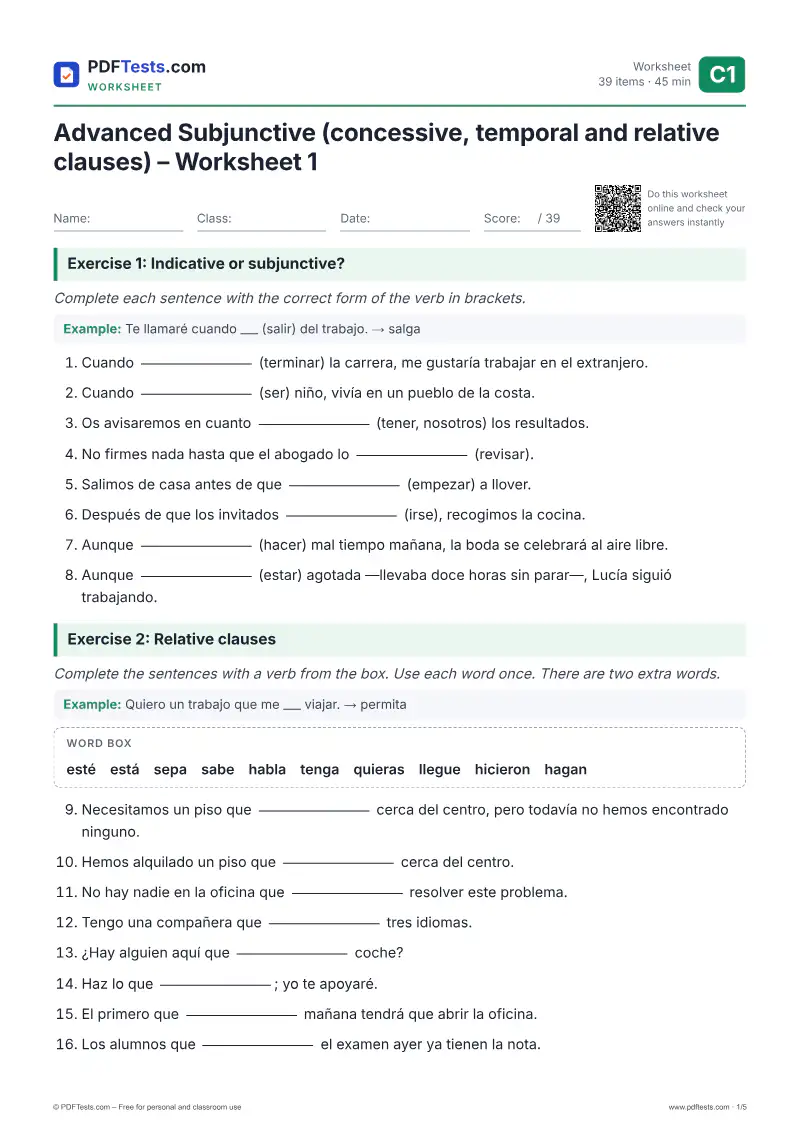
Advanced Subjunctive (concessive, temporal and relative clauses) – Worksheet 1

C1 Advanced WorksheetSpanish

This worksheet practises the subjunctive after temporal conjunctions (cuando, en cuanto, hasta que, antes de que), concessive structures (aunque, por muy… que, digan lo que digan) and relative clauses with unknown or non-existent antecedents. It is for C1 learners of Spanish who already know the subjunctive forms and want to master mood choice in complex sentences, including negatives and questions.
items
39
Time
45 min
PDF
5 pages
Answer key
Included
  • 100% free
  • No sign-up or email
  • Print-ready A4 PDF
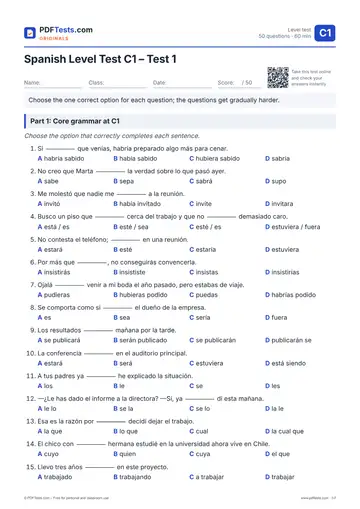
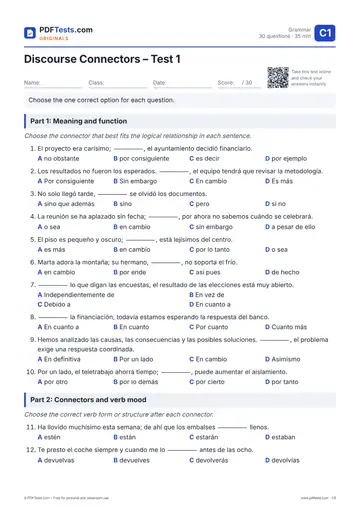
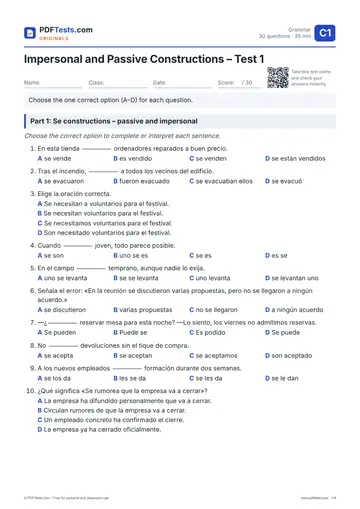
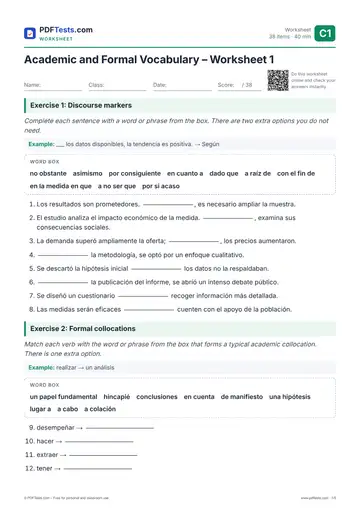
Preview of page 1 of Advanced Subjunctive (concessive, temporal and relative clauses) – Worksheet 1 Open PDF
New to this topic? Read the guide first: Advanced Spanish Subjunctive: Concessive, Temporal and Relative Clauses

Do the worksheet online

Type your answers, then press “Check my answers”. Alternative correct answers are accepted.

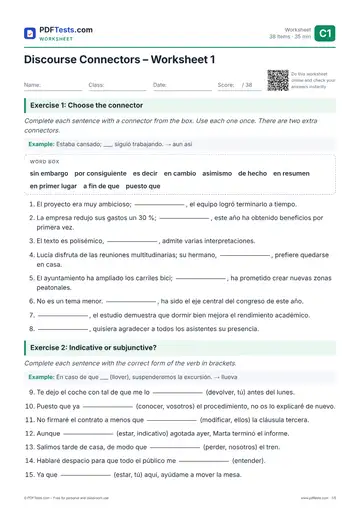
Exercise 1: Indicative or subjunctive?

Complete each sentence with the correct form of the verb in brackets.

Example: Te llamaré cuando ___ (salir) del trabajo. → salga

  1. Cuando (terminar) la carrera, me gustaría trabajar en el extranjero.

  2. Cuando (ser) niño, vivía en un pueblo de la costa.

  3. Os avisaremos en cuanto (tener, nosotros) los resultados.

  4. No firmes nada hasta que el abogado lo (revisar).

  5. Salimos de casa antes de que (empezar) a llover.

  6. Después de que los invitados (irse), recogimos la cocina.

  7. Aunque (hacer) mal tiempo mañana, la boda se celebrará al aire libre.

  8. Aunque (estar) agotada —llevaba doce horas sin parar—, Lucía siguió trabajando.

Exercise 2: Relative clauses

Complete the sentences with a verb from the box. Use each word once. There are two extra words.

Example: Quiero un trabajo que me ___ viajar. → permita

Word box estéestásepasabehablatengaquieraslleguehicieronhagan

  1. Necesitamos un piso que cerca del centro, pero todavía no hemos encontrado ninguno.

  2. Hemos alquilado un piso que cerca del centro.

  3. No hay nadie en la oficina que resolver este problema.

  4. Tengo una compañera que tres idiomas.

  5. ¿Hay alguien aquí que coche?

  6. Haz lo que ; yo te apoyaré.

  7. El primero que mañana tendrá que abrir la oficina.

  8. Los alumnos que el examen ayer ya tienen la nota.

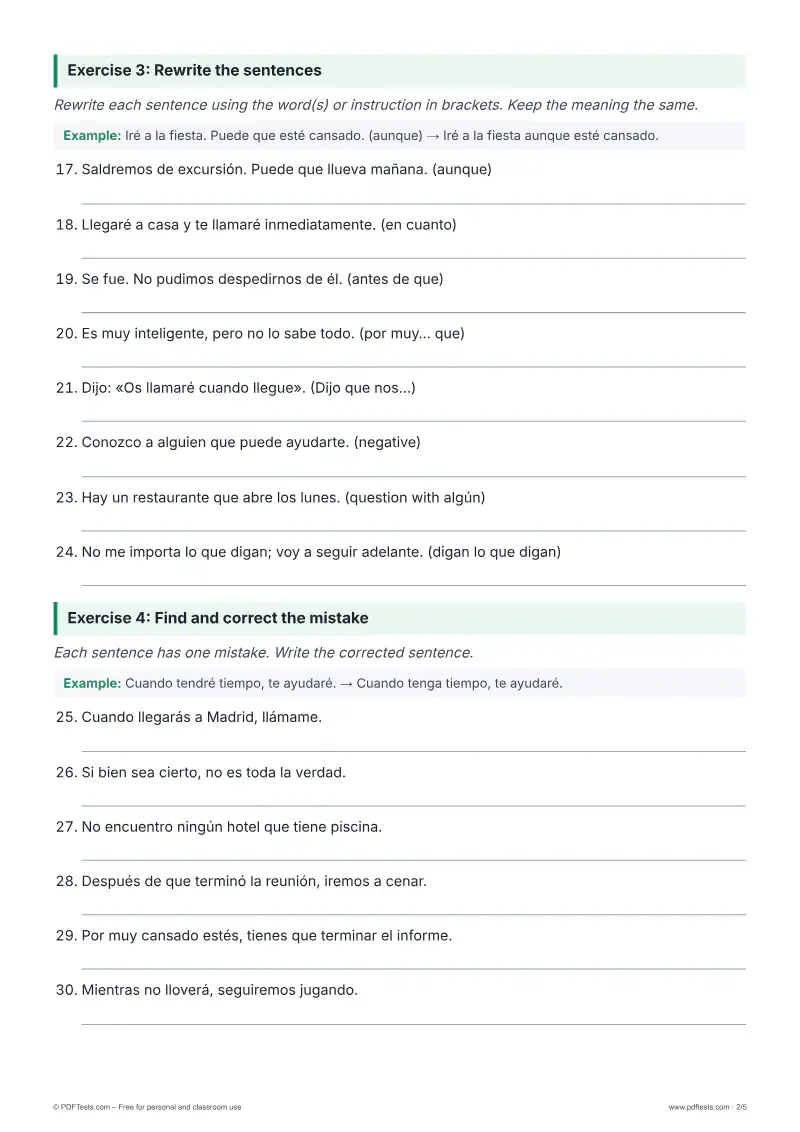
Exercise 3: Rewrite the sentences

Rewrite each sentence using the word(s) or instruction in brackets. Keep the meaning the same.

Example: Iré a la fiesta. Puede que esté cansado. (aunque) → Iré a la fiesta aunque esté cansado.

  1. Saldremos de excursión. Puede que llueva mañana. (aunque)

  2. Llegaré a casa y te llamaré inmediatamente. (en cuanto)

  3. Se fue. No pudimos despedirnos de él. (antes de que)

  4. Es muy inteligente, pero no lo sabe todo. (por muy… que)

  5. Dijo: «Os llamaré cuando llegue». (Dijo que nos…)

  6. Conozco a alguien que puede ayudarte. (negative)

  7. Hay un restaurante que abre los lunes. (question with algún)

  8. No me importa lo que digan; voy a seguir adelante. (digan lo que digan)

Exercise 4: Find and correct the mistake

Each sentence has one mistake. Write the corrected sentence.

Example: Cuando tendré tiempo, te ayudaré. → Cuando tenga tiempo, te ayudaré.

  1. Cuando llegarás a Madrid, llámame.

  2. Si bien sea cierto, no es toda la verdad.

  3. No encuentro ningún hotel que tiene piscina.

  4. Después de que terminó la reunión, iremos a cenar.

  5. Por muy cansado estés, tienes que terminar el informe.

  6. Mientras no lloverá, seguiremos jugando.

  7. Cada vez que vaya a la playa, me quemo.

  8. Quien sabe la respuesta, que levante la mano.

Exercise 5: Put the words in order

Put the words in the correct order to make sentences.

Example: lo / entenderás / cuando / seas / mayor → Lo entenderás cuando seas mayor.

  1. por muy / que / caro / sea / lo / compraré

  2. no / me / iré / hasta que / te / disculpes

  3. conoces / a alguien / que / pueda / traducir / esto / ¿ / ?

  4. en cuanto / sepa / algo / te / lo / diré

  5. no / lo / haré / aunque / me lo / pidas / de rodillas

  6. a pesar de que / nadie / creyera / en ella / lo / consiguió

  7. pase / lo que / pase / estaré / a tu lado

Was this page helpful?

Report a mistake

Spotted a wrong answer, a typo or an unclear explanation? Tell us and we will fix it.

Preview

About this test

C1 Spanish worksheet on the subjunctive in concessive, temporal and relative clauses, with answers. Printable practice for class or self-study.

Topics covered

Subjunctive in temporal clausesConcessive clausesRelative clauses: indicative vs subjunctiveReduplicative structures (digan lo que digan)Sequence of tenses

Notes for teachers

Start with the gap exercise to review the key idea: future or unrealised events take the subjunctive, while habitual or past facts take the indicative. Common mistakes include using the future after cuando (*cuando llegarás), the subjunctive after si bien, and leaving out que in por muy… que. Learners also tend to use the indicative after negative antecedents (*no hay nadie que sabe). As a follow-up, ask pairs to write a short 'wish list' for an ideal flatmate or job using relative clauses with the subjunctive.

All Spanish C1 tests →