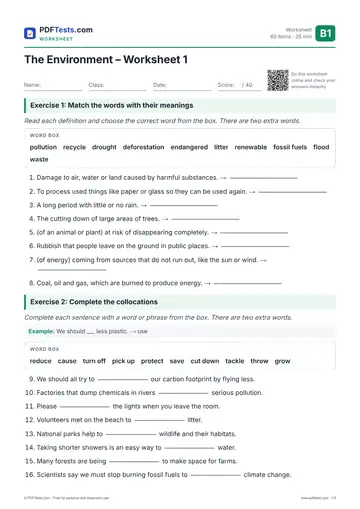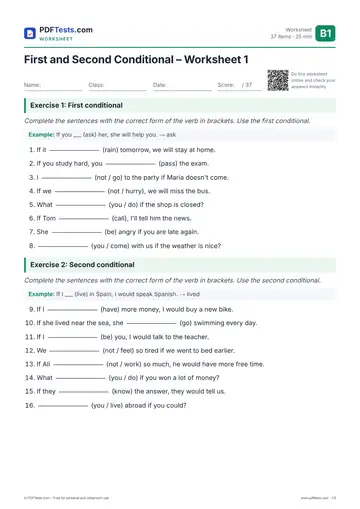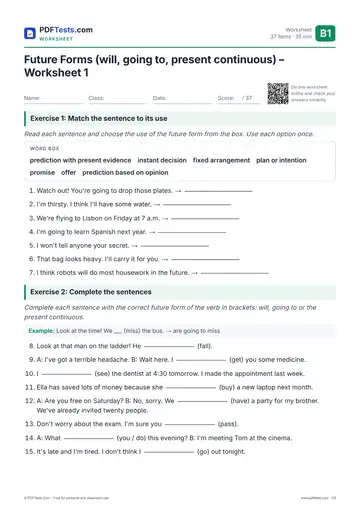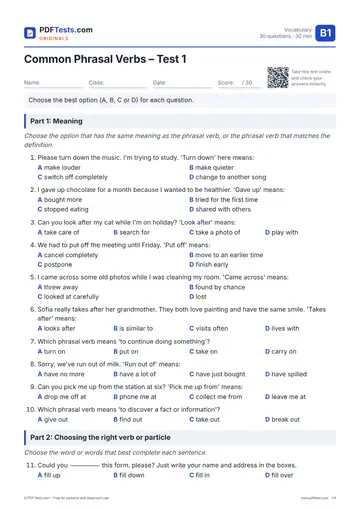
PDFTests Originals

Common Phrasal Verbs – Worksheet 1

B1 Intermediate WorksheetEnglish

This worksheet practises common everyday phrasal verbs such as give up, look after, find out and run out of. Learners match meanings, choose the right particle, use the correct tense, form nouns like breakdown and workout, and correct typical mistakes. It is designed for B1 learners in class or at home.
items
39
Time
35 min
PDF
5 pages
Answer key
Included
  • 100% free
  • No sign-up or email
  • Print-ready A4 PDF
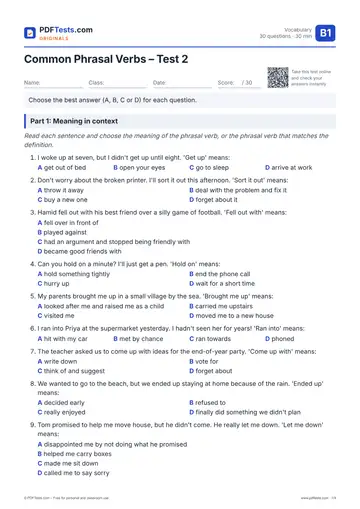
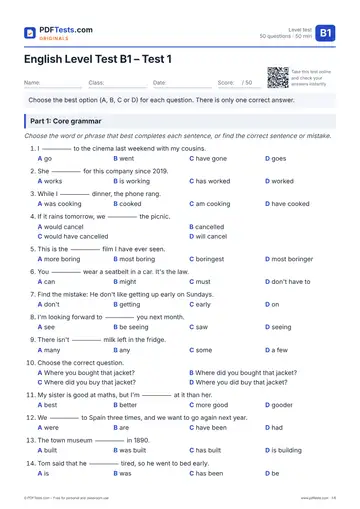
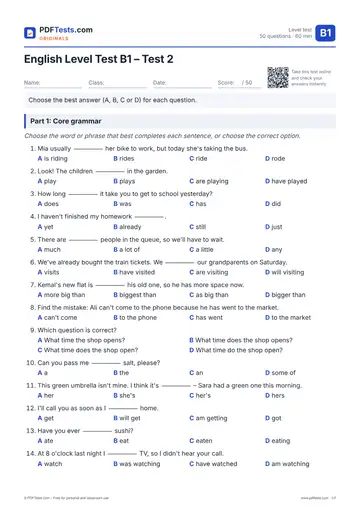
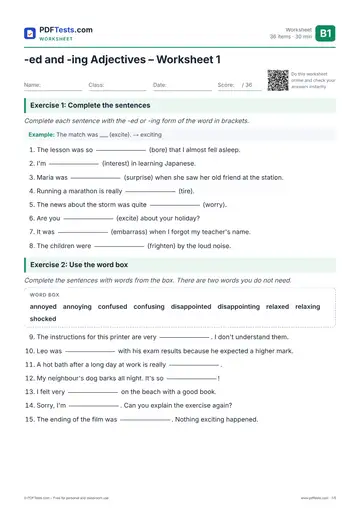
Preview of page 1 of Common Phrasal Verbs – Worksheet 1 Open PDF

Do the worksheet online

Type your answers, then press “Check my answers”. Alternative correct answers are accepted.

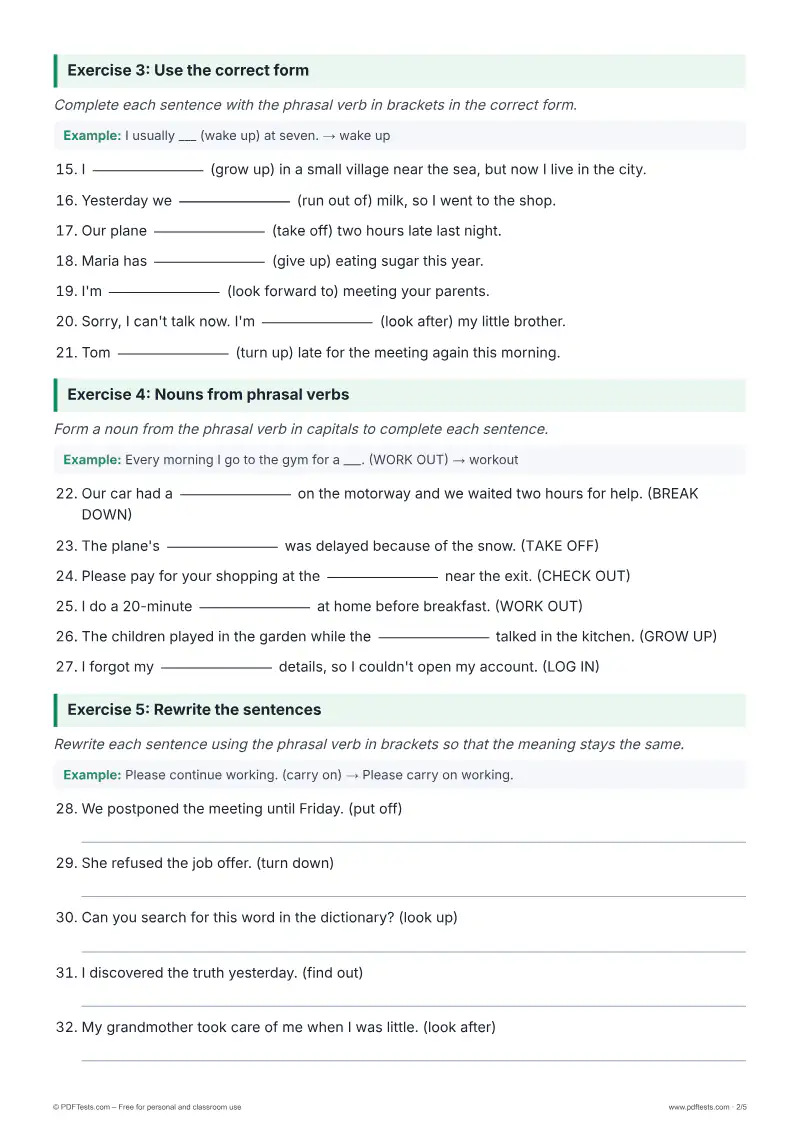
Exercise 1: Match the meanings

Match each phrasal verb with its meaning from the box. There are two extra meanings.

Example: wake up → stop sleeping

Word box stop doing somethingtake care ofdiscover informationrefuse an offerpostponehave none leftfind by chancebecome an adultcontinue doing something

  1. give up

  2. look after

  3. find out

  4. turn down

  5. put off

  6. run out of

  7. come across

Exercise 2: Choose the particle

Complete each sentence with a word from the box. There are two extra words.

Example: Please sit ___ and wait. → down

Word box inbackdownupoffonforwardoverthrough

  1. Please fill this form with your name and address.

  2. I can't talk now, but I'll call you when I get home.

  3. Ben's car broke on the way to work, so he was late.

  4. Could you pick me from the station at seven?

  5. Please take your shoes before you come in.

  6. Don't stop now! Carry reading until the end of the chapter.

  7. I'm really looking to the summer holidays.

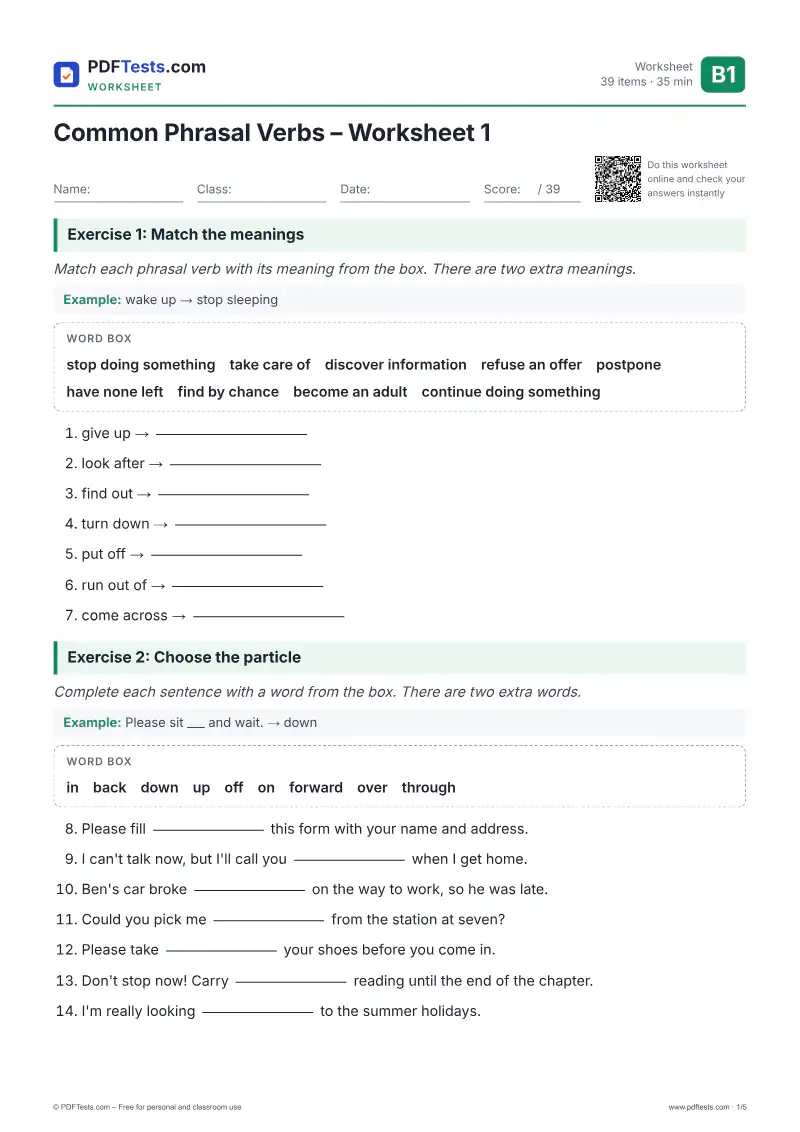
Exercise 3: Use the correct form

Complete each sentence with the phrasal verb in brackets in the correct form.

Example: I usually ___ (wake up) at seven. → wake up

  1. I (grow up) in a small village near the sea, but now I live in the city.

  2. Yesterday we (run out of) milk, so I went to the shop.

  3. Our plane (take off) two hours late last night.

  4. Maria has (give up) eating sugar this year.

  5. I'm (look forward to) meeting your parents.

  6. Sorry, I can't talk now. I'm (look after) my little brother.

  7. Tom (turn up) late for the meeting again this morning.

Exercise 4: Nouns from phrasal verbs

Form a noun from the phrasal verb in capitals to complete each sentence.

Example: Every morning I go to the gym for a ___. (WORK OUT) → workout

  1. Our car had a on the motorway and we waited two hours for help. (BREAK DOWN)

  2. The plane's was delayed because of the snow. (TAKE OFF)

  3. Please pay for your shopping at the near the exit. (CHECK OUT)

  4. I do a 20-minute at home before breakfast. (WORK OUT)

  5. The children played in the garden while the talked in the kitchen. (GROW UP)

  6. I forgot my details, so I couldn't open my account. (LOG IN)

Exercise 5: Rewrite the sentences

Rewrite each sentence using the phrasal verb in brackets so that the meaning stays the same.

Example: Please continue working. (carry on) → Please carry on working.

  1. We postponed the meeting until Friday. (put off)

  2. She refused the job offer. (turn down)

  3. Can you search for this word in the dictionary? (look up)

  4. I discovered the truth yesterday. (find out)

  5. My grandmother took care of me when I was little. (look after)

  6. I stopped smoking last year. (give up)

Exercise 6: Correct the mistakes

Each sentence has one mistake. Write the correct sentence.

Example: I wake on at six every day. → I wake up at six every day.

  1. Nobody is watching the TV. Can you turn off it, please?

  2. I'm looking forward to see you next week.

  3. We have run out coffee, so I'll buy some later.

  4. She gets on well to her colleagues.

  5. He woke out at six o'clock this morning.

  6. I looked after the word in the dictionary.

Was this page helpful?

Report a mistake

Spotted a wrong answer, a typo or an unclear explanation? Tell us and we will fix it.

Preview

About this test

Printable B1 worksheet on common phrasal verbs: meanings, particles, verb forms, noun forms and error correction, with answers.

Topics covered

Phrasal verbsMeaning in contextParticlesWord order with objectsNouns from phrasal verbs

Notes for teachers

Start with Exercise 1 to check meanings before learners use the verbs in context. Common mistakes include putting a pronoun after the particle (turn off it instead of turn it off), using the infinitive after look forward to, and forgetting the preposition in three-part verbs such as run out of and get on with. As a follow-up, ask learners to write five true sentences about their week using phrasal verbs from the worksheet.

All English B1 tests →