PDFTests Originals

Preterite (pretérito indefinido) – Worksheet 1

A2 Elementary WorksheetSpanish

This worksheet practises the Spanish preterite (pretérito indefinido) for finished actions in the past. A2 learners form regular and key irregular verbs and write negative sentences and questions. The exercises then move on to correcting common mistakes.
items
38
Time
35 min
PDF
5 pages
Answer key
Included
  • 100% free
  • No sign-up or email
  • Print-ready A4 PDF
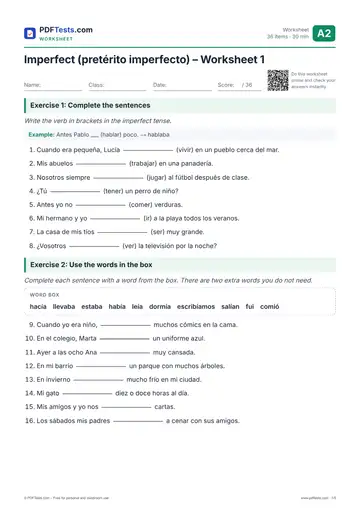
Preview of page 1 of Preterite (pretérito indefinido) – Worksheet 1 Open PDF
New to this topic? Read the guide first: Spanish Preterite (Pretérito Indefinido): Forms, Uses and Common Mistakes

Do the worksheet online

Type your answers, then press “Check my answers”. Alternative correct answers are accepted.

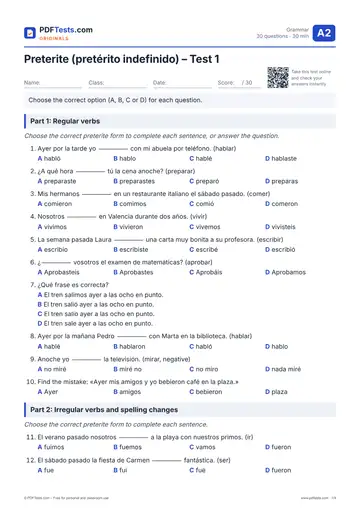
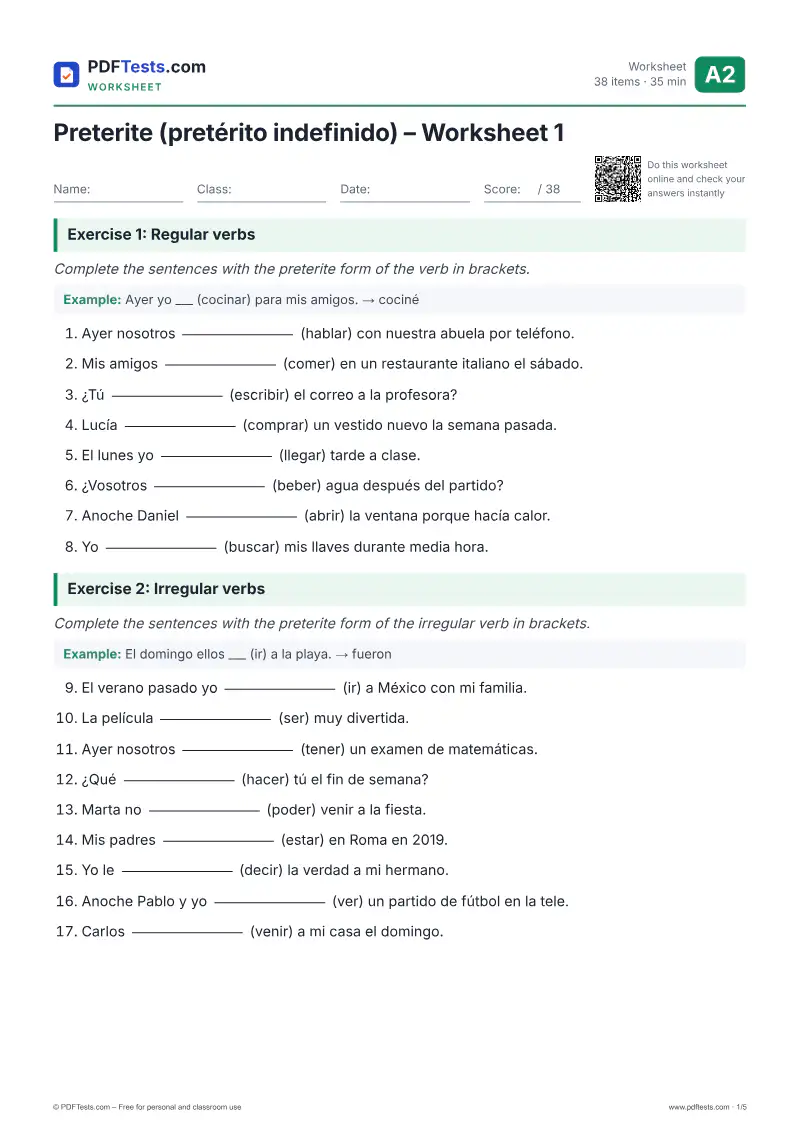
Exercise 1: Regular verbs

Complete the sentences with the preterite form of the verb in brackets.

Example: Ayer yo ___ (cocinar) para mis amigos. → cociné

  1. Ayer nosotros (hablar) con nuestra abuela por teléfono.

  2. Mis amigos (comer) en un restaurante italiano el sábado.

  3. ¿Tú (escribir) el correo a la profesora?

  4. Lucía (comprar) un vestido nuevo la semana pasada.

  5. El lunes yo (llegar) tarde a clase.

  6. ¿Vosotros (beber) agua después del partido?

  7. Anoche Daniel (abrir) la ventana porque hacía calor.

  8. Yo (buscar) mis llaves durante media hora.

Exercise 2: Irregular verbs

Complete the sentences with the preterite form of the irregular verb in brackets.

Example: El domingo ellos ___ (ir) a la playa. → fueron

  1. El verano pasado yo (ir) a México con mi familia.

  2. La película (ser) muy divertida.

  3. Ayer nosotros (tener) un examen de matemáticas.

  4. ¿Qué (hacer) tú el fin de semana?

  5. Marta no (poder) venir a la fiesta.

  6. Mis padres (estar) en Roma en 2019.

  7. Yo le (decir) la verdad a mi hermano.

  8. Anoche Pablo y yo (ver) un partido de fútbol en la tele.

  9. Carlos (venir) a mi casa el domingo.

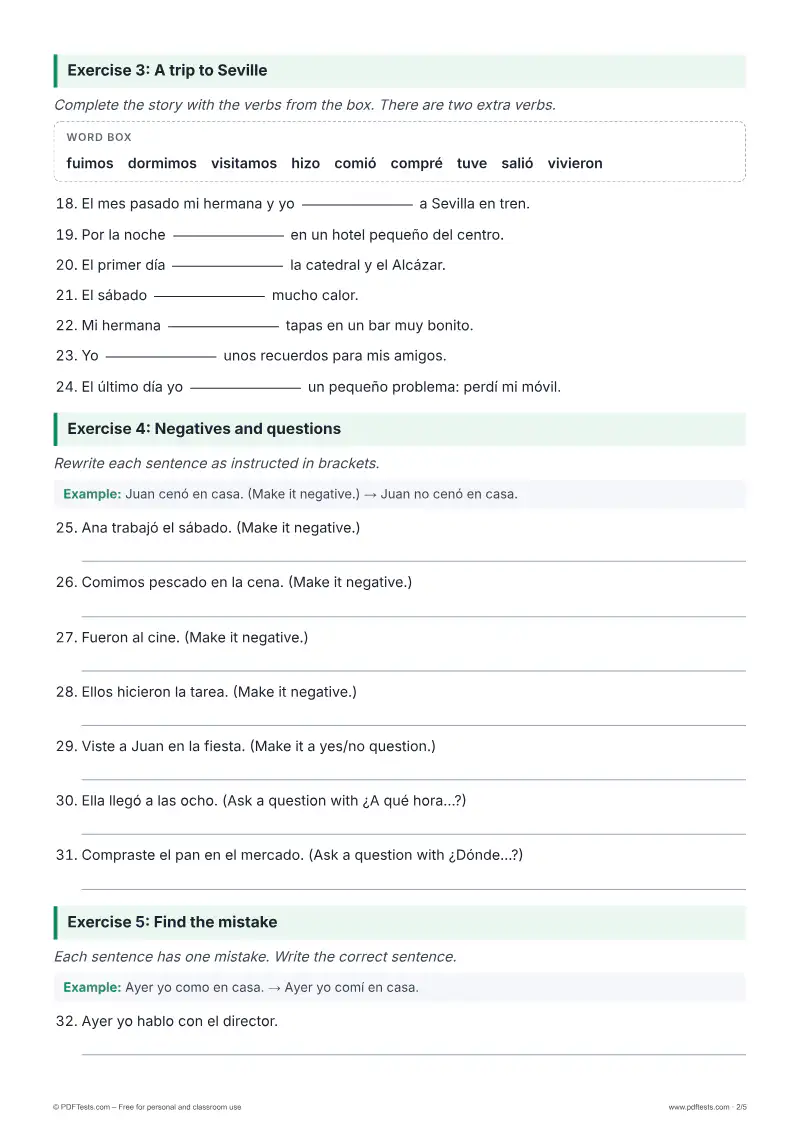
Exercise 3: A trip to Seville

Complete the story with the verbs from the box. There are two extra verbs.

Word box fuimosdormimosvisitamoshizocomiócomprétuvesalióvivieron

  1. El mes pasado mi hermana y yo a Sevilla en tren.

  2. Por la noche en un hotel pequeño del centro.

  3. El primer día la catedral y el Alcázar.

  4. El sábado mucho calor.

  5. Mi hermana tapas en un bar muy bonito.

  6. Yo unos recuerdos para mis amigos.

  7. El último día yo un pequeño problema: perdí mi móvil.

Exercise 4: Negatives and questions

Rewrite each sentence as instructed in brackets.

Example: Juan cenó en casa. (Make it negative.) → Juan no cenó en casa.

  1. Ana trabajó el sábado. (Make it negative.)

  2. Comimos pescado en la cena. (Make it negative.)

  3. Fueron al cine. (Make it negative.)

  4. Ellos hicieron la tarea. (Make it negative.)

  5. Viste a Juan en la fiesta. (Make it a yes/no question.)

  6. Ella llegó a las ocho. (Ask a question with ¿A qué hora…?)

  7. Compraste el pan en el mercado. (Ask a question with ¿Dónde…?)

Exercise 5: Find the mistake

Each sentence has one mistake. Write the correct sentence.

Example: Ayer yo como en casa. → Ayer yo comí en casa.

  1. Ayer yo hablo con el director.

  2. El año pasado mis primos va a Argentina.

  3. Yo jugé al tenis el domingo.

  4. ¿Tú comistes paella en Valencia?

  5. Ella tenió mucho trabajo la semana pasada.

  6. Anoche no podí dormir bien.

  7. Mis amigos hacieron una fiesta en casa.

Was this page helpful?

Report a mistake

Spotted a wrong answer, a typo or an unclear explanation? Tell us and we will fix it.

Preview

About this test

Printable A2 Spanish worksheet on the preterite (pretérito indefinido): regular and irregular verbs, negatives, questions and error correction, with answers.

Topics covered

Pretérito indefinidoRegular -ar/-er/-ir verbsIrregular verbs (ser, ir, tener, hacer…)Spelling changes (-gué, -qué)Negatives and questionsTime expressions (ayer, anoche, el año pasado)

Notes for teachers

Start by reviewing the regular endings on the board, then point out that ser and ir share the same forms (fui, fue, fuimos…). Common mistakes include adding -s to the tú form (comistes*), forgetting accents (hable/hablé), regularising irregular stems (tenió*, hacieron*) and missing the spelling changes in jugué and busqué. For freer practice, ask pairs to interview each other about last weekend with questions such as ¿Adónde fuiste? and ¿Qué hiciste?

All Spanish A2 tests →