PDFTests Originals

Reflexive Verbs – Worksheet 1

A2 Elementary WorksheetSpanish

This A2 worksheet practises Spanish reflexive verbs such as levantarse, ducharse and acostarse in the present tense. Learners practise the reflexive pronouns (me, te, se, nos, os, se), where they go in negative sentences, questions and with ir a + infinitive, and common stem changes. It suits learners who know regular present tense verbs and want to talk about daily routines.
items
38
Time
35 min
PDF
5 pages
Answer key
Included
  • 100% free
  • No sign-up or email
  • Print-ready A4 PDF
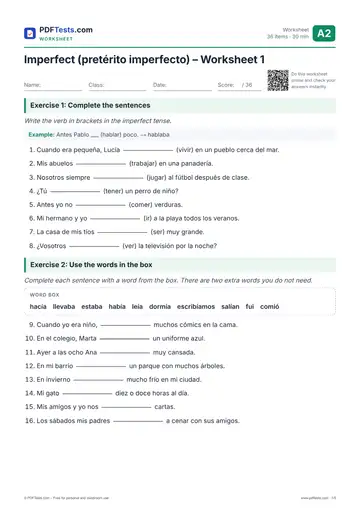
Preview of page 1 of Reflexive Verbs – Worksheet 1 Open PDF
New to this topic? Read the guide first: Spanish Reflexive Verbs: Pronouns, Position and Common Mistakes

Do the worksheet online

Type your answers, then press “Check my answers”. Alternative correct answers are accepted.

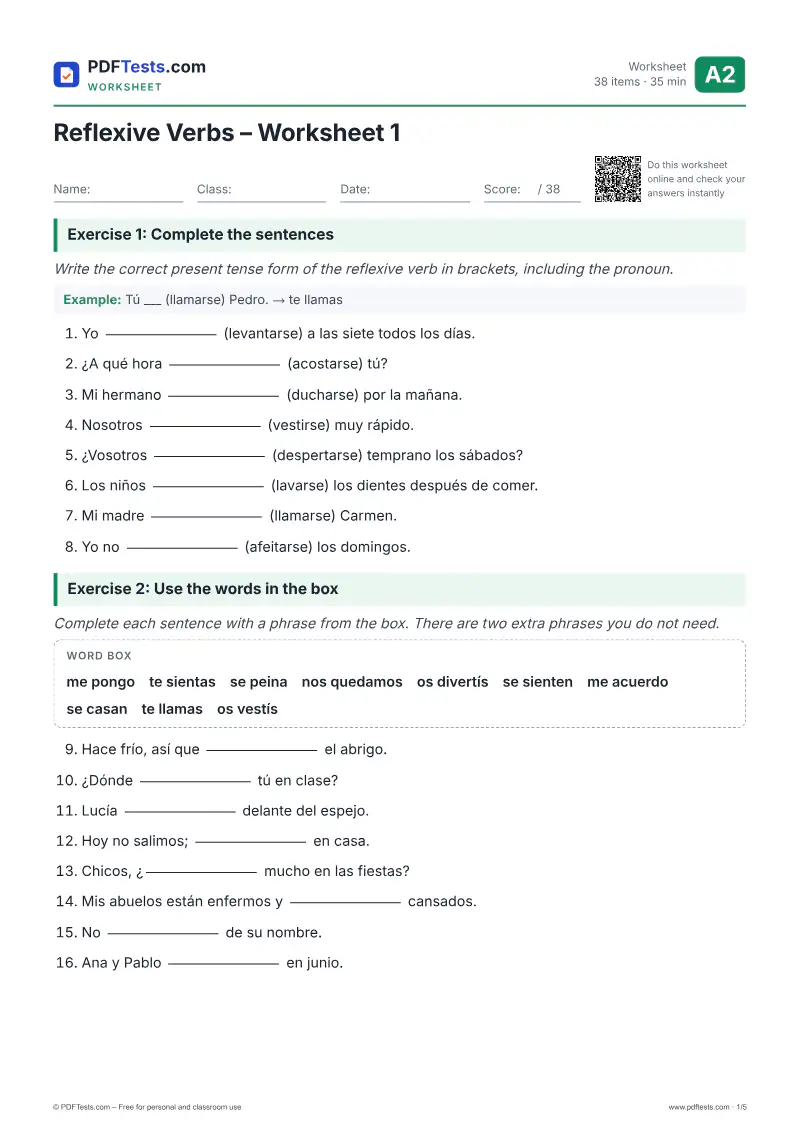
Exercise 1: Complete the sentences

Write the correct present tense form of the reflexive verb in brackets, including the pronoun.

Example: Tú ___ (llamarse) Pedro. → te llamas

  1. Yo (levantarse) a las siete todos los días.

  2. ¿A qué hora (acostarse) tú?

  3. Mi hermano (ducharse) por la mañana.

  4. Nosotros (vestirse) muy rápido.

  5. ¿Vosotros (despertarse) temprano los sábados?

  6. Los niños (lavarse) los dientes después de comer.

  7. Mi madre (llamarse) Carmen.

  8. Yo no (afeitarse) los domingos.

Exercise 2: Use the words in the box

Complete each sentence with a phrase from the box. There are two extra phrases you do not need.

Word box me pongote sientasse peinanos quedamosos divertísse sientenme acuerdose casante llamasos vestís

  1. Hace frío, así que el abrigo.

  2. ¿Dónde tú en clase?

  3. Lucía delante del espejo.

  4. Hoy no salimos; en casa.

  5. Chicos, ¿ mucho en las fiestas?

  6. Mis abuelos están enfermos y cansados.

  7. No de su nombre.

  8. Ana y Pablo en junio.

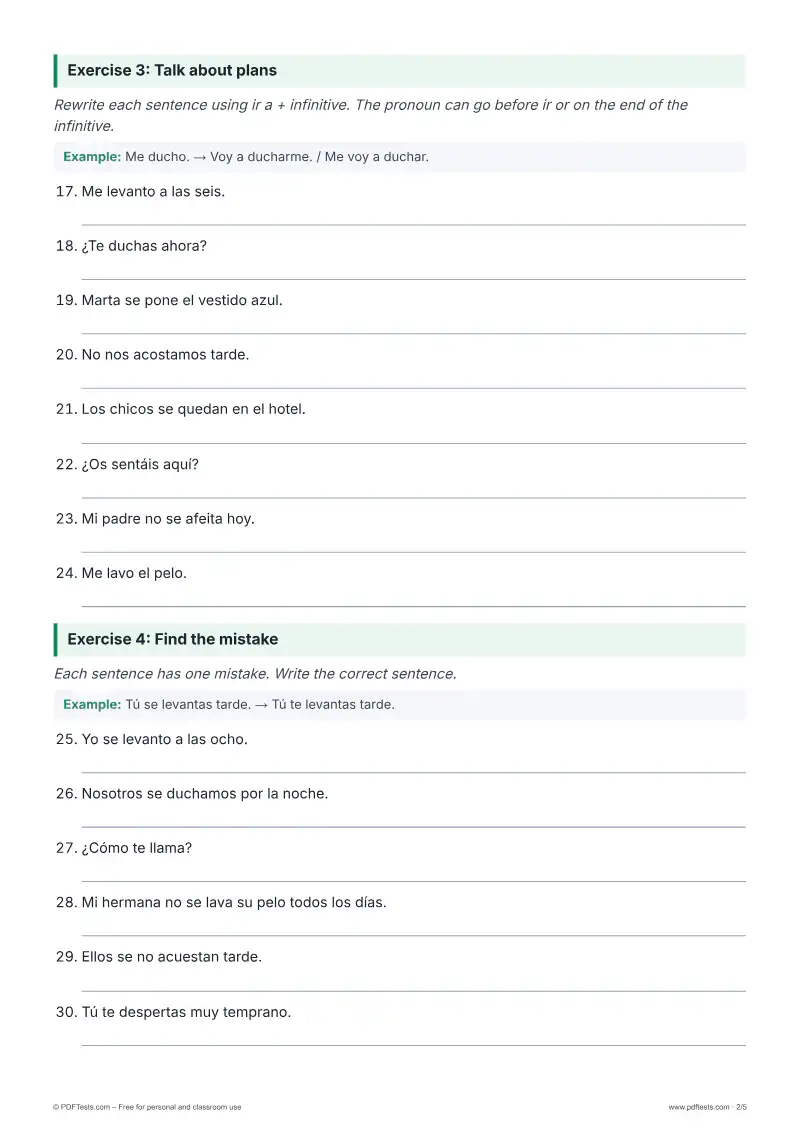
Exercise 3: Talk about plans

Rewrite each sentence using ir a + infinitive. The pronoun can go before ir or on the end of the infinitive.

Example: Me ducho. → Voy a ducharme. / Me voy a duchar.

  1. Me levanto a las seis.

  2. ¿Te duchas ahora?

  3. Marta se pone el vestido azul.

  4. No nos acostamos tarde.

  5. Los chicos se quedan en el hotel.

  6. ¿Os sentáis aquí?

  7. Mi padre no se afeita hoy.

  8. Me lavo el pelo.

Exercise 4: Find the mistake

Each sentence has one mistake. Write the correct sentence.

Example: Tú se levantas tarde. → Tú te levantas tarde.

  1. Yo se levanto a las ocho.

  2. Nosotros se duchamos por la noche.

  3. ¿Cómo te llama?

  4. Mi hermana no se lava su pelo todos los días.

  5. Ellos se no acuestan tarde.

  6. Tú te despertas muy temprano.

  7. Voy a ducharse ahora.

Exercise 5: Put the words in order

Put the words in the correct order to make sentences and questions.

Example: me / temprano / levanto → Me levanto temprano.

  1. me / a las siete / levanto / no

  2. acuestas / ¿A qué hora / te / ?

  3. se / Laura / el pelo / seca

  4. nos / en la playa / divertimos / mucho

  5. van a / mis primos / casarse / en mayo

  6. os / ¿Dónde / sentáis / ?

  7. no / se / mi abuelo / acuerda / de mi cumpleaños

Was this page helpful?

Report a mistake

Spotted a wrong answer, a typo or an unclear explanation? Tell us and we will fix it.

Preview

About this test

Printable A2 Spanish worksheet on reflexive verbs: pronouns, present tense, negatives, questions and ir a + infinitive. Answers included.

Topics covered

Reflexive pronounsPresent tense reflexive verbsDaily routine vocabularyNegatives and questionsPronoun position with ir a + infinitive

Notes for teachers

Start by miming a daily routine (waking up, showering, getting dressed) and eliciting the verbs before learners begin Exercise 1. Typical mistakes are using se for every person, putting no between the pronoun and the verb (se no acuesta), forgetting stem changes (despertas instead of despiertas) and using possessives with body parts (su pelo instead of el pelo). As a follow-up, learners can interview a partner about their weekday routine with questions such as ¿A qué hora te levantas? and then report back in the third person.

All Spanish A2 tests →