PDFTests Originals

Travel and Shopping – Worksheet 1

A2 Elementary WorksheetSpanish

This A2 Spanish worksheet practises everyday travel and shopping vocabulary: stations, airports, hotels, shops and paying. Learners match words to meanings, use common collocations such as hacer la maleta and pagar en efectivo, and build related word forms. It suits teenage and adult learners in class or at home.
items
39
Time
35 min
PDF
5 pages
Answer key
Included
  • 100% free
  • No sign-up or email
  • Print-ready A4 PDF
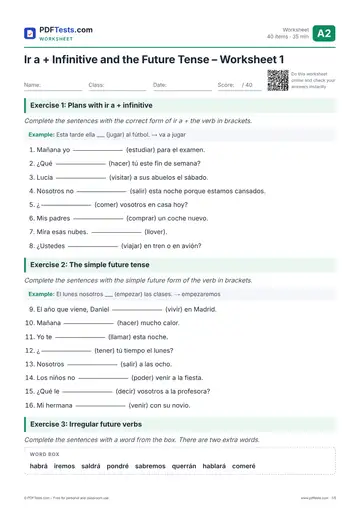
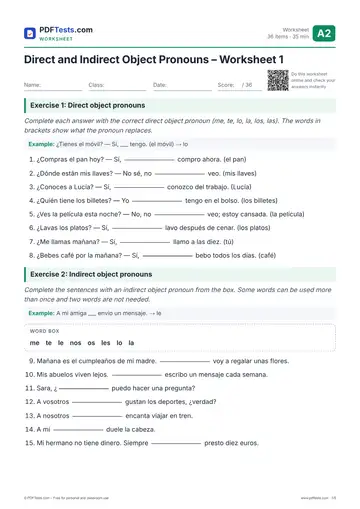
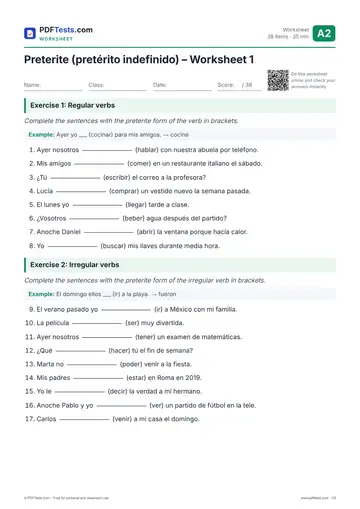
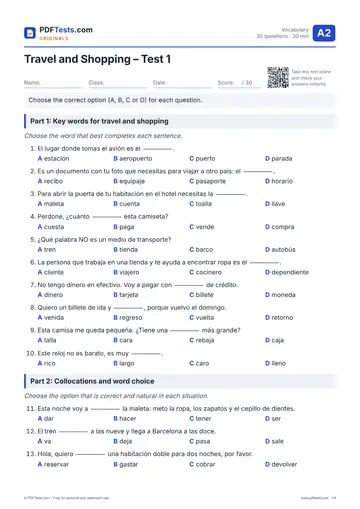
Preview of page 1 of Travel and Shopping – Worksheet 1 Open PDF

Do the worksheet online

Type your answers, then press “Check my answers”. Alternative correct answers are accepted.

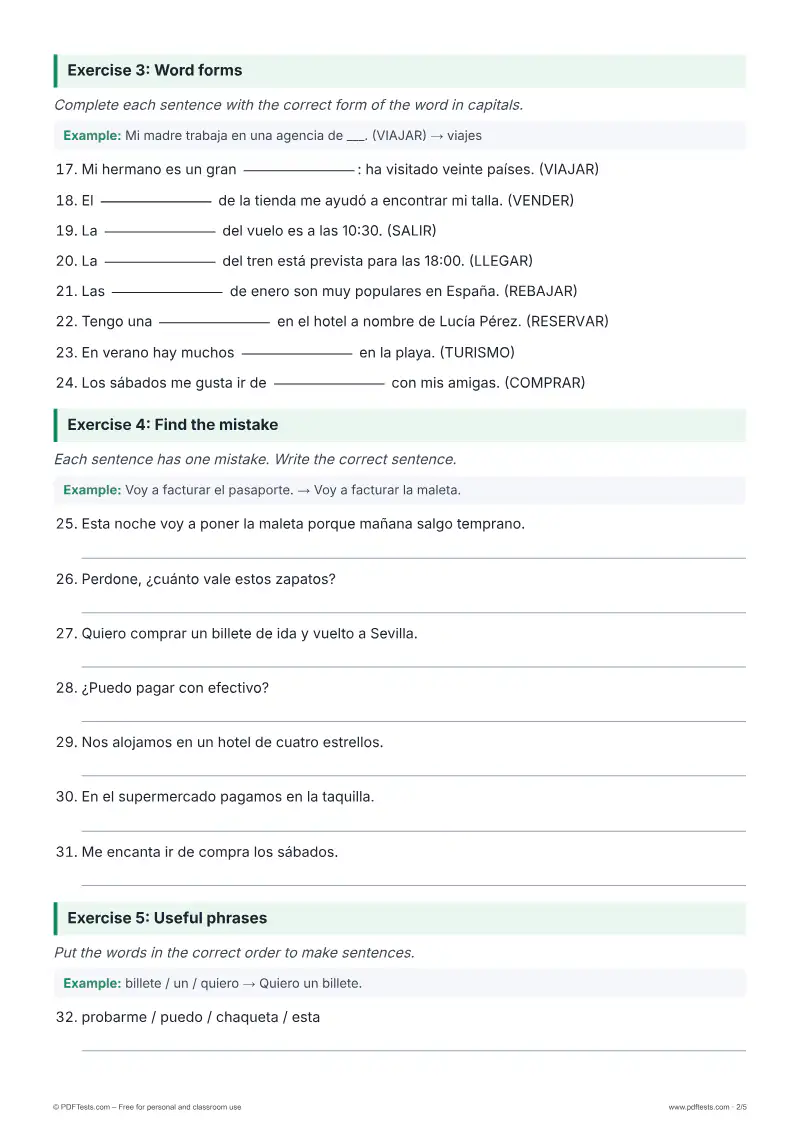
Exercise 1: Match the definitions

Match each definition with a word from the box. There are two extra words.

Word box el pasaportela maletael andénla taquillael probadorla tallael reciboel escaparatela cajael billete de ida y vuelta

  1. Documento que necesitas para viajar a otro país.

  2. Lugar de la estación donde esperas el tren.

  3. Lugar de la tienda donde te pruebas la ropa.

  4. Papel que te dan cuando pagas algo.

  5. Ventana de la tienda donde se ven los productos.

  6. Lugar donde pagas en un supermercado.

  7. Número que indica si la ropa es grande o pequeña.

  8. Billete para ir a un lugar y volver.

Exercise 2: Complete the collocations

Complete the sentences with a word from the box. There are two extra words.

Example: En el hotel, puedes ___ las llaves en recepción. → dejar

Word box hacerfacturarperderreservaralquilarprobarmepagarahorrargastarcambiar

  1. Mañana me voy de viaje y esta noche tengo que la maleta.

  2. En el aeropuerto, primero vamos a el equipaje en el mostrador.

  3. Si no te das prisa, vas a el tren.

  4. Quiero una habitación doble para tres noches.

  5. En la isla no hay autobuses, así que vamos a un coche.

  6. ¿Puedo estos pantalones? ¿Dónde está el probador?

  7. ¿Quiere en efectivo o con tarjeta?

  8. Con estas rebajas puedes mucho dinero: todo cuesta un 50 % menos.

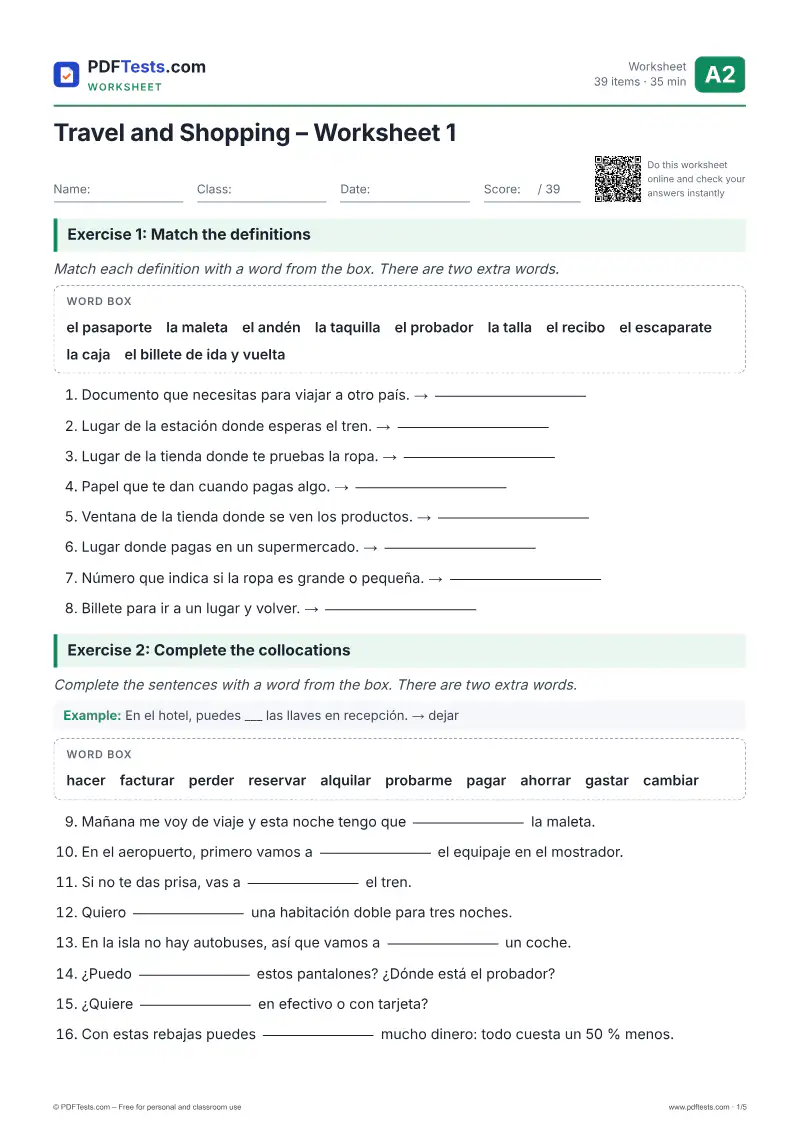
Exercise 3: Word forms

Complete each sentence with the correct form of the word in capitals.

Example: Mi madre trabaja en una agencia de ___. (VIAJAR) → viajes

  1. Mi hermano es un gran : ha visitado veinte países. (VIAJAR)

  2. El de la tienda me ayudó a encontrar mi talla. (VENDER)

  3. La del vuelo es a las 10:30. (SALIR)

  4. La del tren está prevista para las 18:00. (LLEGAR)

  5. Las de enero son muy populares en España. (REBAJAR)

  6. Tengo una en el hotel a nombre de Lucía Pérez. (RESERVAR)

  7. En verano hay muchos en la playa. (TURISMO)

  8. Los sábados me gusta ir de con mis amigas. (COMPRAR)

Exercise 4: Find the mistake

Each sentence has one mistake. Write the correct sentence.

Example: Voy a facturar el pasaporte. → Voy a facturar la maleta.

  1. Esta noche voy a poner la maleta porque mañana salgo temprano.

  2. Perdone, ¿cuánto vale estos zapatos?

  3. Quiero comprar un billete de ida y vuelto a Sevilla.

  4. ¿Puedo pagar con efectivo?

  5. Nos alojamos en un hotel de cuatro estrellos.

  6. En el supermercado pagamos en la taquilla.

  7. Me encanta ir de compra los sábados.

Exercise 5: Useful phrases

Put the words in the correct order to make sentences.

Example: billete / un / quiero → Quiero un billete.

  1. probarme / puedo / chaqueta / esta

  2. retraso / el / tiene / vuelo / un / de / una hora

  3. reservar / habitación / quiero / doble / una

  4. cuesta / billete / cuánto / el / a / Madrid

  5. pagar / tarjeta / puedo / con

  6. que / la maleta / tenemos / facturar

  7. me / estos / quedan / pantalones / grandes

  8. tren / sale / el / del / andén / tres

Was this page helpful?

Report a mistake

Spotted a wrong answer, a typo or an unclear explanation? Tell us and we will fix it.

Preview

About this test

Printable Spanish A2 worksheet on travel and shopping vocabulary: meanings, collocations and word forms, with answers.

Topics covered

Travel vocabularyShopping vocabularyCollocationsWord formationUseful phrases in shops

Notes for teachers

Start with the matching exercise to activate vocabulary, then move through the collocation and word-form tasks. The last task gives useful phrases for role-play. Learners often translate literally (poner la maleta, pagar con efectivo, ¿cuánto vale estos…?), so point out these fixed expressions. As a follow-up, pairs can role-play buying a train ticket or trying on clothes using the phrases from Exercise 5.

All Spanish A2 tests →