Every Spanish noun is either masculine or feminine. The article in front of it must match that gender and its number (singular or plural). There are two kinds of article: definite (el, la, los, las = the) and indefinite (un, una, unos, unas = a, an, some). Learn each new noun together with its article from the start, and the rest of this guide will make much more sense.
Every noun has a gender
In Spanish, objects and ideas have grammatical gender, not just people and animals. There is nothing feminine about a table or masculine about a book. It is simply a feature of the word:
- la mesa the table (feminine)
- el libro the book (masculine)
The good news is that the ending of a noun often tells you its gender.
Endings that are usually masculine
| Ending | Examples |
|---|---|
| -o | el libro the book, el vaso the glass |
| -or | el color the colour, el calor the heat |
| -aje | el viaje the trip, el garaje the garage |
| -ma (many words from Greek) | el problema the problem, el idioma the language, el tema the topic |
Endings that are usually feminine
| Ending | Examples |
|---|---|
| -a | la casa the house, la ventana the window |
| -ción, -sión | la canción the song, la televisión the television |
| -dad, -tad | la ciudad the city, la libertad freedom |
Common exceptions
A small number of very frequent words break the pattern. Memorise these early:
- Masculine words ending in -a: el día the day, el mapa the map, el sofá the sofa, el planeta the planet
- Feminine words ending in -o: la mano the hand, la foto the photo, la moto the motorbike, la radio the radio
- A feminine word ending in -or: la flor the flower
La foto and la moto are feminine because they are short for la fotografía and la motocicleta.
Nouns ending in -e or a consonant
For these there is no reliable rule, so learn the article with the word:
- el coche the car – la noche the night
- el café the coffee – la leche the milk
- el lápiz the pencil – la luz the light
- el hotel the hotel – la flor the flower
People and animals
For people, gender usually follows the person:
| Pattern | Masculine | Feminine |
|---|---|---|
| -o → -a | el chico the boy | la chica the girl |
| consonant → + -a | el profesor the (male) teacher | la profesora the (female) teacher |
| same form, article changes | el estudiante the (male) student | la estudiante the (female) student |
| same form, article changes | el turista the (male) tourist | la turista the (female) tourist |
| different words | el padre the father | la madre the mother |
Words ending in -ista and -nte usually keep the same form for both genders. Only the article shows who you mean.
Plural of nouns
| Noun ends in | Rule | Example |
|---|---|---|
| a vowel | add -s | el libro → los libros the books |
| a consonant | add -es | la ciudad → las ciudades the cities |
| -z | change to -ces | el lápiz → los lápices the pencils |
Spelling note: words ending in -ción or -sión lose their written accent in the plural: la canción → las canciones the songs.
When a group includes both males and females, Spanish uses the masculine plural:
- los padres the parents
- los hijos the children (sons and daughters)
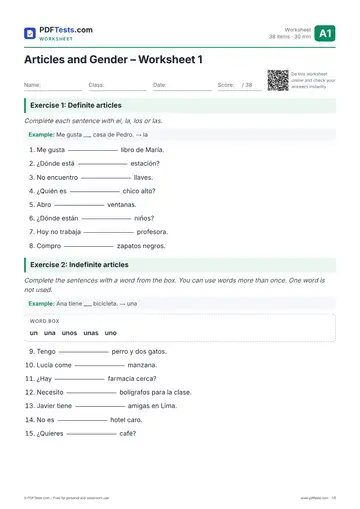
The definite article: el, la, los, las
| Masculine | Feminine | |
|---|---|---|
| Singular | el | la |
| Plural | los | las |
- el perro → los perros the dog → the dogs
- la calle → las calles the street → the streets
The indefinite article: un, una, unos, unas
| Masculine | Feminine | |
|---|---|---|
| Singular | un | una |
| Plural | unos | unas |
- un amigo a friend – unos amigos some friends
- una casa a house – unas casas some houses
With numbers, unos/unas means about: Hay unas veinte personas. There are about twenty people.
Contractions: al and del
When a or de comes before el, they join into one word:
- a + el = al: Voy al mercado. I’m going to the market.
- de + el = del: Vengo del trabajo. I’m coming from work.
This only happens with el. There is no contraction with la, los or las:
- Voy a la playa. I’m going to the beach.
- Es el coche de los vecinos. It’s the neighbours’ car.
Feminine nouns with el: el agua
Feminine singular nouns that begin with a stressed a- or ha- take el and un instead of la and una. This makes them easier to pronounce. The noun is still feminine, so adjectives stay feminine:
- el agua fría the cold water
- el aula the classroom
- Tengo mucha hambre. I’m very hungry.
In the plural, the normal article returns: las aguas the waters, las aulas the classrooms. The rule does not apply when the first syllable is unstressed: la amiga the (female) friend, la hamburguesa the burger.
When to use the definite article
1. Specific or known things. Both speakers know which one:
- Cierra la puerta, por favor. Close the door, please.
2. General statements and likes. Spanish uses the article where English often does not:
- Los perros son muy simpáticos. Dogs are very friendly.
- Me gusta el chocolate. I like chocolate.
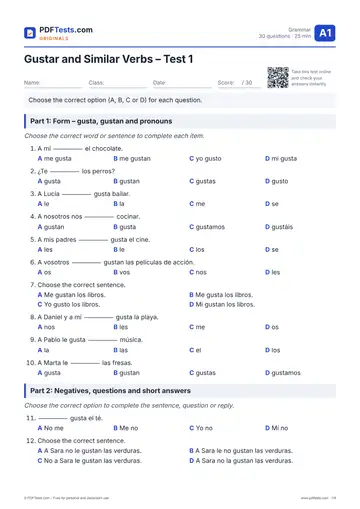
This is why you always see an article after gustar – see our guide to gustar and similar verbs.
3. Days of the week, meaning on:
- El lunes tengo un examen. I have an exam on Monday.
- Los sábados juego al fútbol. I play football on Saturdays.
But after ser there is no article: Hoy es lunes. Today is Monday.
4. Telling the time:
- Es la una. It’s one o’clock.
- Son las ocho. It’s eight o’clock.
5. Titles when you talk about someone:
- El señor García no está. Mr García isn’t here.
When you speak directly to the person, drop the article: Buenos días, señora Ruiz. Good morning, Mrs Ruiz.
6. Body parts, where English uses my, your:
- Me lavo las manos. I wash my hands.
When to use the indefinite article
First mention of something. After that, switch to the definite article:
- Tengo un perro. El perro se llama Max. I have a dog. The dog is called Max.
After hay (there is / there are) with a singular noun:
- Hay un supermercado cerca. There’s a supermarket nearby.
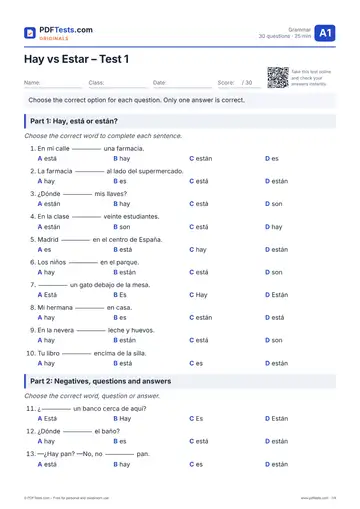
The choice between hay and estar depends on the article, which our guide to hay vs estar explains in detail.
When not to use an article
Professions and nationalities after ser (with no adjective):
- Soy camarero. I’m a waiter.
- Ana es médica. Ana is a doctor.
Add an adjective and the article comes back: Ana es una médica excelente. Ana is an excellent doctor.
Languages after hablar, estudiar and aprender:
- Hablo inglés y francés. I speak English and French.
- But: El español es bonito. Spanish is beautiful.
Unspecified amounts, usually with plural or uncountable nouns:
- ¿Hay leche? Is there any milk?
- No tengo hermanos. I don’t have any brothers or sisters.
Before otro, cien and mil:
- Quiero otro café. I want another coffee.
- Cuesta cien euros. It costs a hundred euros.
Definite vs indefinite at a glance
| Definite | Indefinite |
|---|---|
| a specific, known thing | any one, or something new |
| Tengo el libro. I have the book. (the one we talked about) | Tengo un libro. I have a book. (some book) |
| ¿Dónde está el banco? Where is the bank? | ¿Hay un banco por aquí? Is there a bank around here? |
| general statements: El café es bueno. Coffee is good. | approximate numbers: unos diez euros about ten euros |
Agreement beyond the article
Adjectives also agree with the noun in gender and number:
- el coche rojo the red car – la casa roja the red house
- los coches rojos the red cars – las casas rojas the red houses
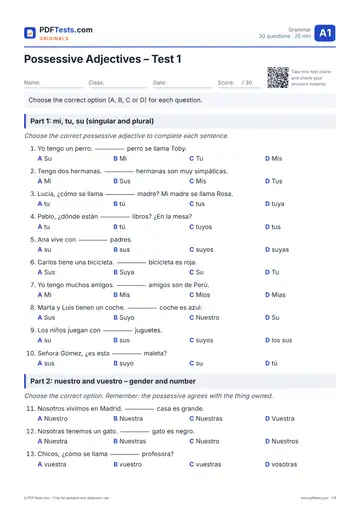
The same agreement appears with words like nuestro/nuestra, covered in our guide to possessive adjectives.
Common mistakes
- ✗ la problema → ✓ el problema – many -ma words from Greek are masculine.
- ✗ el mano → ✓ la mano – an exception: feminine despite ending in -o.
- ✗ Voy a el cine → ✓ Voy al cine – a + el must contract to al.
- ✗ Soy un estudiante → ✓ Soy estudiante – no article with professions or roles after ser.
- ✗ Quiero un otro café → ✓ Quiero otro café – otro never takes un.
- ✗ Me gusta café → ✓ Me gusta el café – general likes need the definite article.
- ✗ la agua / el agua frío → ✓ el agua fría – el for sound, but the noun stays feminine.
- ✗ Hay el banco cerca → ✓ Hay un banco cerca – hay is not used with the definite article.
- ✗ los lápizes → ✓ los lápices – final -z becomes -ces in the plural.
Quick check
Choose or write the correct form.
- ___ problema es difícil. (El / La)
- Vivo en ___ ciudad pequeña. (un / una)
- Vamos ___ parque. (a el / al)
- Mi hermano es ___ ingeniero. (un / no article)
- Write the plural: el lápiz → ___
Answers
- El problema es difícil. The problem is difficult.
- Vivo en una ciudad pequeña. I live in a small town.
- Vamos al parque. We’re going to the park.
- Mi hermano es ingeniero (no article). My brother is an engineer.
- los lápices the pencils
Next step
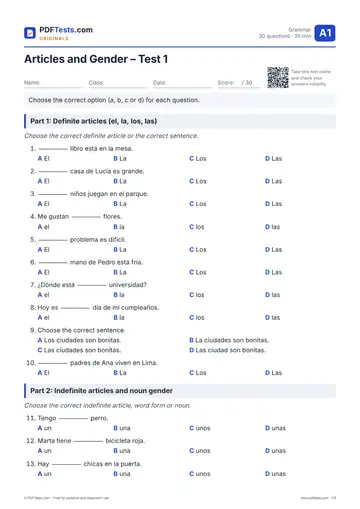
Now put the rules into practice: test yourself with our Spanish A1 Articles and Gender test, and review any question you get wrong against the tables above. To learn more nouns with their articles, try the A1 everyday vocabulary test on family, home and daily routine, then continue with the other Spanish A1 tests to build a solid base.
Practise this topic: Spanish Articles and Gender
Was this page helpful?
What was the problem?
Thank you for your feedback!