Have got and has got mean the same as have when we talk about possession. We use them to say what people own, describe family, appearance and illnesses, and talk about plans or problems in the present. Have got is very common in spoken British English. Use has got with he, she and it, and have got with all other subjects.
I**’ve got** a new phone.
My sister has got long hair.
Have you got a pen?
When do we use have got?
1. Things you own
Use have got for possessions: things that belong to you.
- I’ve got a bike, but I haven’t got a car.
- Tom has got two laptops.
- Have you got an umbrella?
2. Family, friends and pets
- I’ve got two brothers and a sister.
- She’s got a lot of friends at school.
- We haven’t got a dog, but we’ve got a cat.
3. Appearance
Use have got to describe hair, eyes and other features.
- He’s got short black hair.
- My mum has got blue eyes.
- The baby has got very small hands.
4. Illnesses and health problems
- I’ve got a headache.
- Maria has got a cold, so she isn’t at work today.
- Have you got a temperature?
5. Time, plans and appointments
- I’ve got a meeting at three o’clock.
- Sorry, I haven’t got time now.
- We’ve got an English lesson on Monday.
Form of have got
Have got has two parts: have/has + got. The word got never changes. Only have changes to has with he, she and it.
Affirmative
| Subject | Full form | Short form | Example |
|---|---|---|---|
| I | I have got | I’ve got | I’ve got a sandwich. |
| you | you have got | you’ve got | You’ve got a nice smile. |
| he | he has got | he’s got | He’s got a new job. |
| she | she has got | she’s got | She’s got green eyes. |
| it | it has got | it’s got | It’s got four doors. |
| we | we have got | we’ve got | We’ve got a big garden. |
| they | they have got | they’ve got | They’ve got three children. |
In speaking and informal writing, we usually use the short forms: I’ve got, she’s got.
Negative
To make the negative, put not after have or has. The short forms are haven’t got and hasn’t got.
| Subject | Full form | Short form | Example |
|---|---|---|---|
| I / you / we / they | have not got | haven’t got | I haven’t got any money. |
| he / she / it | has not got | hasn’t got | He hasn’t got a brother. |
- We haven’t got a TV in the kitchen.
- My phone hasn’t got a good camera.
Questions
To make a question, put have or has before the subject. Got stays after the subject.
| Have/Has | Subject | got | Rest of sentence |
|---|---|---|---|
| Have | you | got | a pen? |
| Has | she | got | a car? |
| Have | they | got | any children? |
| Has | it | got | Wi-Fi? |
You can also start with a question word:
- What have you got in your bag?
- How many cousins has he got?
- What colour eyes has she got?
For more question words, see our guide to question words (what, where, who, when).
Short answers
In short answers, we don’t use got. Use only have/has or haven’t/hasn’t.
| Question | Yes | No |
|---|---|---|
| Have you got a sister? | Yes, I have. | No, I haven’t. |
| Has he got a car? | Yes, he has. | No, he hasn’t. |
| Have they got a dog? | Yes, they have. | No, they haven’t. |
Do not use the short form in a yes answer: say Yes, I have, not Yes, I’ve.
’s: has or is?
The short form ’s can mean has or is. Look at the next word to understand it.
- She**’s got** a new bag. → She has got (possession)
- She**’s** tired. → She is tired (verb to be)
- He**’s** a teacher. → He is a teacher
- He**’s got** a teacher’s book. → He has got
If got comes after ’s, it means has. If you need to review am, is, are, read our guide to the verb to be.
Have got or have?
You can also say the same thing with have in the present simple. The meaning is the same, but the grammar is different.
| have got | have (present simple) | |
|---|---|---|
| Affirmative | She’s got a bike. | She has a bike. |
| Negative | She hasn’t got a bike. | She doesn’t have a bike. |
| Question | Has she got a bike? | Does she have a bike? |
| Short answer | Yes, she has. / No, she hasn’t. | Yes, she does. / No, she doesn’t. |
Some useful points:
- Have got is more common in British English, especially in speaking.
- Have (with do/does) is common in American English and is correct everywhere.
- Don’t mix the two forms. Say Do you have…? or Have you got…?, not Do you have got…?
- Have with do/does follows the normal present simple rules: he has, she doesn’t have, does it have?
Only have for actions and routines
We use have got for possession and states, not for actions. For actions like eating, drinking or taking a shower, use have without got.
- I have breakfast at 7 a.m. (not I’ve got breakfast)
- We have a party every year.
- She has a shower in the evening.
Have got is only for the present
At A1, use have got to talk about now. For the past, use had.
- Now: I’ve got a red car.
- Past: I had a blue car in 2019.
- Past question: Did you have a pet when you were a child?
Have got with a, an, some and any
Have got is often followed by a noun with a/an, some or any.
- Singular noun: I’ve got a brother. / She’s got an idea.
- Plural or uncountable, affirmative: We’ve got some eggs.
- Negatives and questions: I haven’t got any milk. / Have you got any pets?
You can learn more in our guide to articles a, an and the.
Common mistakes
✗ He have got a dog. → ✓ He has got a dog.
Use has with he, she and it.
✗ She has gets a new phone. → ✓ She has got a new phone.
Got never changes.
✗ Do you have got a pen? → ✓ Have you got a pen? / Do you have a pen?
Don’t mix do with have got.
✗ I don’t have got a car. → ✓ I haven’t got a car.
The negative of have got is haven’t got, not don’t have got.
✗ Have you got a brother? – Yes, I have got. → ✓ Yes, I have.
Don’t use got in short answers.
✗ I have got 25 years. → ✓ I am 25 (years old).
In English, age uses the verb to be.
✗ I’ve got lunch at one o’clock. → ✓ I have lunch at one o’clock.
For actions like eating and drinking, use have, not have got.
✗ Yesterday I have got a headache. → ✓ Yesterday I had a headache.
Use had for the past.
✗ I’ve got cold. → ✓ I’ve got a cold.
With singular illnesses like a cold and a headache, use a.
Quick check
Choose or write the correct form.
- My brother ___ got a new bike. (have / has)
- We ___ got a garden. (negative)
- ___ your parents got a car?
- Has Anna got a sister? – Yes, she ___.
- Correct the mistake: Do you have got any brothers?
Answers
- has – My brother has got a new bike.
- haven’t – We haven’t got a garden.
- Have – Have your parents got a car?
- has – Yes, she has.
- Have you got any brothers? or Do you have any brothers?
Next step
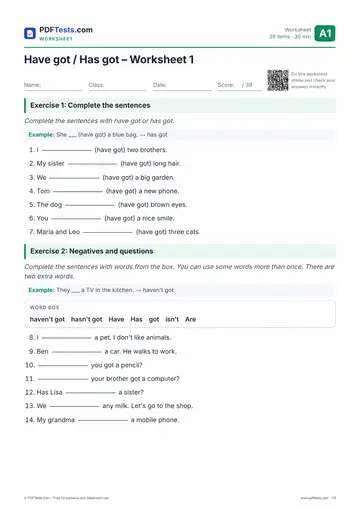
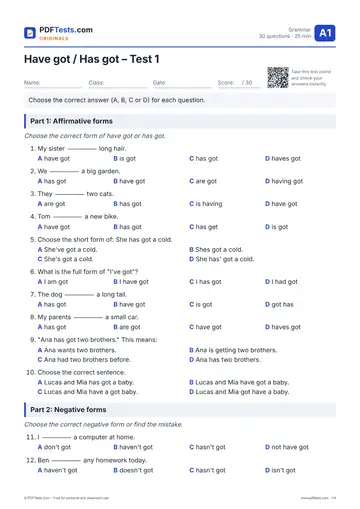
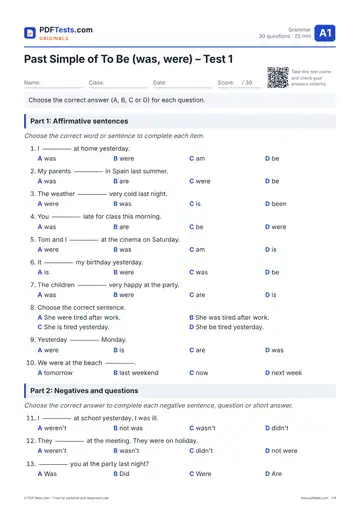
Now practise what you have learned: test yourself with our A1 Have got / Has got test, and check your score to see which forms you still need to review. When you feel confident, try more grammar and vocabulary practice in our English A1 tests.
Was this page helpful?
What was the problem?
Thank you for your feedback!